
Door to Door Freight: 5 Steps to Keep U.S. Customs Roles Clear
Door to door freight is a service where one logistics arrangement moves your cargo from the pickup address at the origin to the delivery address at the destination. The main benefit is simpler coordination: one contract and one point of contact across every leg. International moves still need attention to Incoterms and to who acts as the U.S. importer of record.
TL;DR:
- Check the sales contract’s Incoterm: DAP leaves import clearance and duties to the buyer; use DDP only if the seller can legally act as importer.
- For an accurate quote, provide packed weight and dimensions, cargo form, address type, dock access, liftgate needs, and any restricted site conditions upfront.
- Carrier liability can fall below cargo value; confirm separate insurance covers the door to door route and check exclusions for poor packing or delays.
- Customs delays stem from missing paperwork; identify the importer of record, and confirm the delivery site can receive the truck at the booked time.
Table of Contents
- What door to door freight covers and which service types fit your load
- How a door to door shipment works, step by step
- Incoterms and customs: how DAP and DDP change who handles clearance
- Benefits and use cases for door to door freight
- How to prepare your shipment for accurate quotes
- Typical timelines and cost drivers for door to door freight
- How to choose a door to door provider
- Insurance options and coverage for door to door freight
- Tracking and communication protocols during door to door shipment
- Customs brokerage services and how they fit into door to door freight
- Handling special cargo within door to door freight
- Claims process and dispute resolution in case of damage or loss
- Last-mile delivery challenges and solutions for door to door services
- Why we believe integrated freight forwarding, customs and fulfillment reduces delays
- How we help with door to door freight and how to get a quote
- FAQ
- Sources
What door to door freight covers and which service types fit your load
“Door to door” describes the scope of the move, not a single vehicle or mode. A shipment can ride one truck from a warehouse in Ohio to a store in Texas, or it can cross an ocean, clear customs, and finish on a delivery van. In both cases, one party arranges the pickup, the main transport, and the final drop.
Domestic door to door freight stays inside one country and usually runs by truck. International door to door freight crosses a border, so it adds export and import formalities between the first and last mile. The modes you will meet most often:
- Full truckload (FTL): one shipper fills a whole trailer, typically many pallets or a single large machine moving point to point.
- Less than truckload (LTL): a few pallets share trailer space with other shippers’ freight, which suits mid-sized shipments.
- Air freight: the fastest option for smaller, high-value or urgent cargo, from a single carton to several pallets.
- Ocean freight: the cost-efficient choice for large volume, shipped as full or shared containers.
- Multimodal: a combination, such as ocean to port, rail to an inland hub, then truck to the door.
One point trips up many buyers: “door to door” does not automatically mean customs clearance or import duties are included. Those depend on the contract terms, which we cover below.
How a door to door shipment works, step by step
Knowing the handoffs helps you see where information is needed and where delays tend to appear. A typical international move runs like this:
- Booking. You give the provider dimensions, weight, commodity description, the Incoterm in your sales contract, and contact details for both ends.
- First-mile pickup. A driver collects the cargo from your dock or address. Non-standard pickups, such as a farm, a construction site or a home, need advance notice so the right truck and equipment are sent.
- Main carriage. The cargo travels by air, ocean, rail or road. It may be consolidated with other freight and passed between carriers, so ask how milestones will be tracked.
- Customs clearance. For imports, entry paperwork is filed and the shipment is released by the authorities. Clearance is a legal step with a named responsible party, not just a delivery milestone.
- Last-mile delivery. A local carrier brings the freight to the final address, handles any liftgate or inside delivery, and collects a signed proof of delivery.
Pro Tip: Confirm the delivery address type before booking. A residential or limited-access address changes the truck, the equipment and the price.
Delays most often appear at clearance, when documents are incomplete, and at last mile, when the consignee is unavailable or the site cannot take a full-size truck.
Incoterms and customs: how DAP and DDP change who handles clearance
The Incoterm in your sales contract decides who deals with customs, and a door to door quote can hide that. Under Incoterms® 2020, DDP (Delivered Duty Paid) puts import tariffs and customs formalities on the seller, while DAP (Delivered at Place) leaves import clearance and duties with the buyer, as the ICC’s DAP and DDP guidance explains.
- DDP can backfire. ICC guidance warns that DDP is problematic when the seller cannot legally act as the importer in the destination country.
- DAP is the common fallback. When the seller cannot act as importer, DAP is usually the safer practical choice for regulatory compliance.
- Check the contract first. Look at the Incoterm on your sales contract before assuming a door to door quote includes clearance.
For U.S. imports, the importer of record carries the filing duties. U.S. Customs and Border Protection sets the clock:
Most importers hand this work to a licensed customs broker, as the CBP’s guide for commercial importers describes. Missing the windows can mean storage fees and held cargo, so settle who files before the boat or plane leaves.
Benefits and use cases for door to door freight
The appeal comes down to fewer moving parts for you:
- One contract, one tracking view. You deal with a single provider instead of stitching together trucker, forwarder and broker.
- Less coordination work. Fewer handoffs mean fewer emails, and a clear party to call when something slips.
- Clear accountability. If a leg fails, one partner owns the fix.
Typical use cases include oversized equipment that needs special trucking at both ends, ecommerce inventory moving from a supplier to a warehouse, household goods for a relocation, and urgent shipments where every handoff costs time.
Other arrangements can still make sense. If you already run your own trucking and only need a port handoff, a narrower service may fit your goal better. The test is simple: choose the structure that gets your cargo where it needs to be with the least risk to you.
How to prepare your shipment for accurate quotes
Most quote surprises trace back to missing or wrong details. Work through this checklist before you request pricing:
- Gather the documents: commercial invoice, packing list, bill of lading or air waybill, country of origin, and any permits or certificates for regulated goods.
- Pack for the journey: palletize cartons, strap and wrap the load, and mark fragile items clearly.
- Measure honestly: record actual weight and outer dimensions after packing, not the product’s specs.
- State the site conditions: commercial or residential pickup and delivery, dock or no dock, and whether a liftgate is needed.
- Declare the form: pallets, crates or loose cartons price differently.
Limited-access sites, residential delivery and liftgates are common accessorial fees. Reporting them upfront keeps the quote honest.
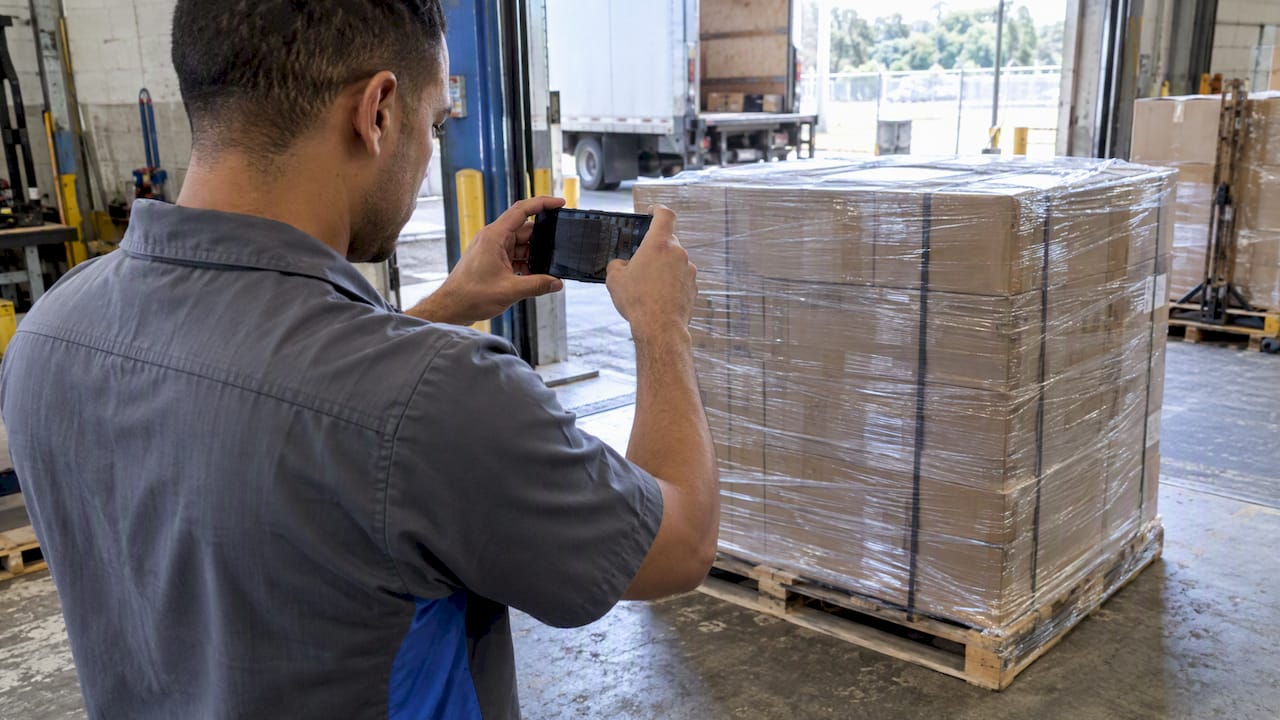
Pro Tip: Photograph the packed shipment before pickup. It speeds up any later damage claim and confirms the stated condition.
For FDA-regulated products such as food or medical items, check the requirements at Fda before booking, since missing paperwork stops cargo at the border.
Typical timelines and cost drivers for door to door freight
Timelines depend on mode. Air is the fastest, ocean is the slowest but cheapest for volume, and domestic trucking sits between depending on distance and whether you ship FTL or LTL. Customs, weather and carrier capacity can stretch any of them, so ask for a range rather than one promised date. Our air freight guide covers the time-sensitive case, and our port to door timeline walks through the ocean path.
What moves the price:
- Mode and distance: air costs more per pound than ocean, and longer routes cost more.
- Weight, volume and density: bulky, light cargo is priced on space, not just weight.
- Accessorials: liftgate, inside delivery, limited access, appointments and waiting time.
- Fuel surcharge: often a separate line that changes with the market.
- Customs charges: duties, broker fees and bond costs for international moves.
When you compare quotes, check whether clearance and duties are included, and which accessorials are assumed. A low freight-only number can cost more than a fuller landed-cost quote once duties and delivery fees arrive.
How to choose a door to door provider
A good provider is easy to question and honest in its answers. Judge candidates on:
- Customs brokerage ability: in-house or a clearly named broker, not a vague promise.
- Licensing and insurance: current credentials and stated coverage limits.
- Technology and tracking: milestone updates you can see without calling.
- Itemized quotes: line items you can compare, not one lump sum.
- Route and commodity experience: proof they have moved your type of cargo on your lane.
Ask each candidate how they treat your Incoterm, who acts as importer of record, which accessorials are included, how claims work, and whether they can share references. If you need a broker to act for you, a customs power of attorney is the document that authorizes it, as CBP’s Form 5106 guidance notes, and our customs POA checklist shows what to verify.
| What to verify | Why it matters |
|---|---|
| Customs broker credentials | Confirms who can legally file your entry |
| Insurance limits | Shows how much a loss would actually be covered |
| Operating authority for trucking | Confirms the carrier is permitted to haul your freight |
| Sample service terms | Reveals liability caps and claim deadlines before you sign |
For a hands-on look at the paperwork side of cross-border moves, this logistics guide for textile imports shows how an importer handles documentation in practice.
Insurance options and coverage for door to door freight
Carrier liability is not the same as insurance. By default, a carrier’s responsibility for lost or damaged cargo is limited, and the cap is often far lower than your goods’ real value. Many shippers learn this only when they file a claim.
Cargo insurance, sometimes called all-risk coverage, is a separate policy that covers your declared value against loss or damage in transit. It can be arranged through your provider or bought independently. When you review a policy, look at four things:
- Insured value: declare the full commercial value, and consider including freight cost and duties.
- Door to door scope: confirm the policy follows the cargo from the first pickup to the final delivery, including warehouse stops and handoffs between carriers.
- Exclusions: common ones include improper packing, delay, and certain high-risk commodities.
- Deductible and claim steps: know what you pay first and what proof the insurer needs.
Packing quality affects coverage directly. An insurer can refuse a claim if the goods were poorly protected, so the photos and packing records mentioned earlier are worth keeping. For high-value or fragile cargo, ask your provider to put the coverage terms in writing before pickup, and decide whether you want the shipment insured under your policy or theirs. Clear answers upfront prevent arguments later.
Tracking and communication protocols during door to door shipment
Good tracking tells you where the cargo is and what happens next. A reliable setup combines system milestones with human contact:
- Pickup confirmation: a notice that the cargo has been collected, ideally with a signed receipt.
- Transit milestones: departures, arrivals and handoffs between carriers, shown in one portal or feed.
- Customs status: filed, held for review, or released, since this is the stage most likely to stall.
- Delivery scheduling: an appointment notice before the truck arrives, followed by proof of delivery.
Tracking differs by mode. Parcel-style and truck shipments often update more frequently, while ocean freight may report a few key events across the journey. Know what to expect so a quiet stretch does not look like a lost shipment.
Agree on communication rules at booking. Name a primary contact for exceptions, say who tells the consignee about delivery windows, and decide how fast you expect a reply when something goes wrong. Share an accurate phone number for the person at the delivery site, since a missed call is a common cause of rescheduled deliveries. When one provider owns the whole chain, you ask one party for an update instead of chasing several.
Customs brokerage services and how they fit into door to door freight
A customs broker prepares and files the entry paperwork, classifies the goods, calculates duties, and coordinates release with the authorities. CBP’s importer guidance notes that importers often use licensed brokers to file entries and handle release, because goods are not legally entered until they arrive and are released.
Within a door to door move, the broker sits between the main carriage and the last mile. The cargo cannot be delivered until it clears, so late or wrong paperwork stalls everything behind it. Practical points to settle early:
- Who is the importer of record? That party answers to customs for accuracy and duties.
- Is a power of attorney signed? The broker acts as your agent only with one in place.
- Is a customs bond in place? Most commercial imports need one, and our customs bond types guide explains the options.
- Who pays duties, and when? Estimated duties are due within a short window after entry, so cash flow matters.
Bundling brokerage with the freight booking keeps data consistent, since the same shipment details feed both the carrier and the filing. Our customs clearance services are built around that single flow.
Handling special cargo within door to door freight
Hazardous, oversized and perishable freight all need extra planning, and each can be handled inside a door to door service if you disclose it at booking.
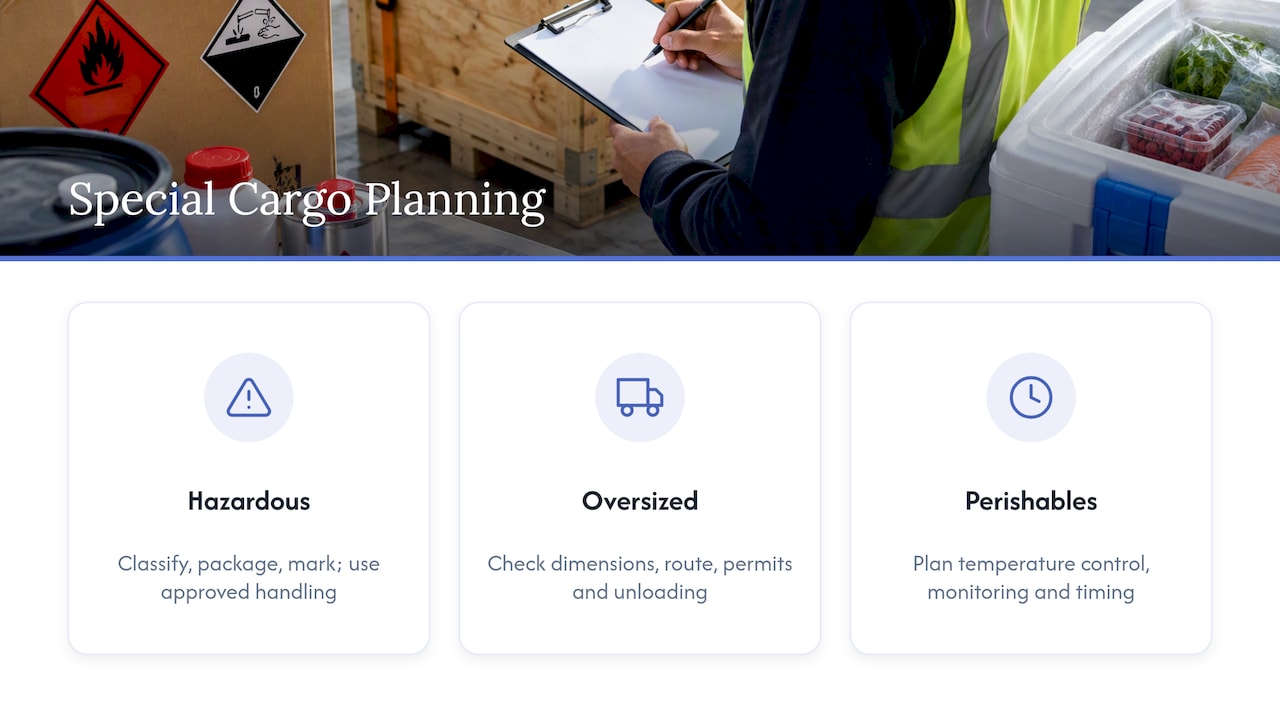
Hazardous materials. Dangerous goods require correct classification, packaging, marking and paperwork, and not every carrier or mode will accept them. Hiding a hazard is a safety and legal problem, so state it upfront and let your provider select an approved route.
Oversized cargo. Equipment that exceeds standard trailer dimensions or weight may need flatbeds, permits, escort vehicles or route surveys. Confirm both ends can unload it, since a site without the right equipment can strand the truck.
Perishables. Food, plants and some medical products need temperature control and tight timing. Ask about refrigerated equipment, how temperature is monitored, and what happens if clearance runs long. Many food and drug items also fall under FDA rules, so check fda.gov for what applies.
Across all three, give complete details early: exact dimensions, weight, commodity, handling needs and any required certificates. Special cargo usually costs more and needs more lead time, which is a good reason to raise it at the quote stage and not at pickup.
Claims process and dispute resolution in case of damage or loss
Even a well-run shipment can arrive damaged or late. What you do promptly can affect the outcome.
- Inspect at delivery. Check the freight before the driver leaves, and note any visible damage or shortage on the delivery receipt.
- Document everything. Take photos of the packaging and the goods, and keep the bill of lading, invoice and packing list.
- Notify in writing, fast. Claim deadlines can be short, so report the problem to your provider right away.
- File the claim with proof. Include the documents above, the value of the loss and a repair or replacement estimate.
- Follow up. Ask for a claim number and a clear timeline for a decision.
Concealed damage, found after unpacking, is harder to win, which is why prompt inspection and photos matter. If the carrier’s liability cap is lower than your loss, your cargo insurance is the path to full recovery.
When a claim is disputed, start with the contract terms: they set liability limits, deadlines and the dispute process, which may be negotiation, mediation or arbitration. Having one accountable provider helps, because you present one claim to one party instead of arguing over which leg failed.
Last-mile delivery challenges and solutions for door to door services
The last mile is where a smooth shipment can still go wrong, because it meets real streets, real buildings and real people. Common problems include:
- Access limits: narrow streets, low bridges, loading docks that are closed or too small for the truck.
- Residential delivery: no dock, no forklift, and drivers who cannot enter a home.
- Missed appointments: no one is on site to receive the freight.
- Equipment gaps: no liftgate or pallet jack when the consignee has none.
Most of these have simple fixes when planned early. Book a delivery appointment, share a reachable on-site phone number, and state the address type and any restrictions at booking. Order a liftgate when there is no dock, and request inside delivery when the freight must go past the doorway. For awkward loads, a smaller local truck can replace a full-size trailer.
Delivery ends with a signed proof of delivery, so have the receiver check the count and condition before signing, and write exceptions on the paperwork. When the same provider handles warehousing and local delivery, a failed drop can often be held and redelivered without starting over, which saves time and fees.
Why we believe integrated freight forwarding, customs and fulfillment reduces delays
Our view is simple: most delays are not caused by distance, they are caused by handoffs. Every time cargo or data passes from one company to another, details get lost, and no one owns the gap. That is why we think the most reliable door to door setup puts freight forwarding, customs brokerage and fulfillment under one accountable partner.
When the same team books the freight, files the entry and receives the goods into a warehouse, the shipment details are entered once and used everywhere. Problems surface sooner, because one party sees the whole chain and cannot point at someone else. The common advice to shop each leg separately for the lowest price often costs more once delays, storage and finger-pointing are counted. If you want to talk through a shipment or request a custom quote, we are glad to help.
— Akbar
How we help with door to door freight and how to get a quote
We cover the pieces a door to door move depends on: freight forwarding by air, ocean and land, FTL and LTL trucking, customs brokerage, warehousing and last-mile delivery, all coordinated by one team. That means one point of contact from the pickup address to the final drop.
To get an accurate quote quickly, have these ready: pickup and delivery addresses with address type, commodity description, weight and dimensions, your Incoterm, the commercial invoice and packing list, and any special handling needs. Request your quote through our freight forwarding page, or see our pricing options for warehousing and fulfillment services. Send us your shipment details today and we will come back with a clear, itemized plan.
FAQ
What does door to door mean in transportation?
It means one provider arranges the whole move, from pickup at the origin address to delivery at the final address. It describes the scope of service, not whether customs or duties are included, so confirm that separately.
What is the difference between DAP and DDP?
Under Incoterms® 2020, with DAP the buyer handles import clearance and duties, while with DDP the seller handles them, according to the ICC’s explanation. DDP can be a poor fit when the seller cannot legally act as importer in the destination country.
What services does a freight forwarder provide?
A freight forwarder arranges transport across modes, books carriers, prepares shipping documents and coordinates customs clearance. Many also offer warehousing, insurance and last-mile delivery, which is how they support a door to door move.
Does a door to door quote include customs duties?
Not automatically. Check the Incoterm and ask whether clearance, duties and broker fees are listed as separate lines. A freight-only quote can look cheaper than a landed-cost quote while leaving those costs to you.
Sources
- Entry Summary and Post Release Processes | U.S. Customs and Border Protection
- DAP & DDP Incoterms® 2020 explained: Key differences