
Cut Port to Door Costs: Timeline and U.S. Entry Checklist for Importers
Port to door shipping moves your cargo from the arrival port straight to a final address, handling customs clearance, drayage, and inland delivery so you never touch origin pickup. The main advantage is fewer handoffs after your goods land: one provider (or a tightly coordinated set of them) manages terminal release through final delivery. Customs entry and last-mile delivery are usually handled by a customs broker and a trucking or drayage partner working under the forwarder’s coordination.
TL;DR:
- Port-to-door shipping includes terminal handling, customs entry, drayage, inland trucking, and final delivery, starting after vessel discharge.
- Delays often occur at customs exams, port congestion, or paperwork issues, and can extend transit to two or three weeks during peak seasons.
- Costs are itemized into freight, terminal fees, drayage, customs, tariffs, storage, and last-mile delivery, influenced by Incoterms such as FOB or DDP.
- Pre-clearance and accurate documentation, including a bill of lading and commercial invoice, significantly speed up customs clearance and reduce delays.
- Using a single integrated forwarder that handles all steps minimizes errors, reduces idle time, and improves shipment visibility from discharge to final delivery.
Table of Contents
- What port-to-door includes and how it differs from door-to-door and port-to-port
- How port-to-door shipments move: transport chain, timeline and tracking milestones
- Cost breakdown: what you’ll pay and how to control charges
- Customs entry and documentation for U.S. imports
- Incoterms and liability: how DDP, FOB, and others affect port-to-door responsibilities
- When port-to-door is the right choice: decision checklist and use cases
- Insurance and practical risk-reduction steps for port-to-door movements
- How an integrated forwarder like Universal Shipping Inc. handles port-to-door complexity
- What I look for before recommending a forwarder
- How A logistics provider supports your port-to-door shipment
- Where to check official rules on entry and Incoterms
- Sources
- FAQ
What port-to-door includes and how it differs from door-to-door and port-to-port
Port-to-door starts once your cargo reaches the destination port and ends at the buyer’s address. It leaves origin pickup and export clearance out of scope, which is where door-to-door and port-to-port diverge.
- Port-to-port covers only ocean or air transit between two ports: someone else arranges pickup on both ends.
- Door-to-door covers the full chain, from the seller’s warehouse to the buyer’s address, including export clearance at origin.
- Port-to-door picks up where port-to-port ends: terminal handling, customs entry, drayage, inland trucking, and final delivery.
Typical handoffs look like this: the ocean carrier discharges the container at the terminal, a drayage company hauls it to a rail yard or warehouse, a customs broker files entry paperwork before or during that move, and a local carrier completes final delivery. The forwarder booking port-to-door usually owns coordination across all of these legs, even when different companies execute each one.
How port-to-door shipments move: transport chain, timeline and tracking milestones
Once your container clears the vessel, a predictable sequence starts. Delays tend to cluster around three main points: documentation gaps, port congestion, and customs exams.
- Vessel arrival and discharge: the container is offloaded at the terminal, usually within a day or two of the ship docking.
- Customs entry filing: your broker submits entry documents, sometimes before the vessel even arrives, to speed release.
- Terminal hold or release: CBP authorizes delivery once duties are paid and documentation checks out; a random or targeted exam can add several days.
- Drayage to a yard or warehouse: a trucker pulls the container from the terminal, often within 24 to 48 hours of release.
- Devanning and inland transport: cargo is unloaded, consolidated if needed, and routed to its final destination by truck.
- Final delivery: last-mile carriers deliver to the business or residence, completing the port-to-door cycle.
A clean shipment with no exam can move from discharge to delivery in a short period, often about a week or so. Add a customs exam, a missing packing list, or terminal congestion, and that stretches to two or three weeks. Expect status updates at discharge, entry filing, release, and out-for-delivery: if a shipment sits without a status change for more than 48 hours during peak season, that is the point to call your broker or forwarder.
Cost breakdown: what you’ll pay and how to control charges
Port-to-door pricing is a stack of separate charges, not one flat rate. Knowing each bucket helps you spot where a quote is padded or where a provider is cutting a corner.
- Ocean freight: the base line-haul charge from origin to destination port.
- Terminal handling charges (THC): fees the terminal collects for loading and unloading containers.
- Drayage: the short truck haul from the port to a warehouse, rail yard, or distribution center.
- Chassis fees: rental charges for the wheeled frame that carries the container inland.
- Customs broker fees: charges for filing entry paperwork and managing CBP compliance.
- Duties and tariffs: government-assessed charges based on the goods’ classification and value.
- Storage and demurrage: daily fees when a container sits at the terminal past its free time.
- Last-mile delivery: the final truck leg to the buyer’s address.
Under FOB terms, the buyer typically absorbs everything from the port onward, including duties. Under DDP, the seller has already covered duties and import formalities, so the buyer’s port-to-door invoice looks lighter.
Consolidating smaller shipments into a single container, submitting accurate paperwork on the first pass, and pulling containers before free time expires are the three levers that cut cost the fastest.
Pro Tip: Ask your broker to file entry before vessel arrival whenever the carrier allows it: pre-clearance shaves days off dwell time and avoids storage charges that pile up while cargo sits at the terminal.
Customs entry and documentation for U.S. imports
Every commercial import needs an importer of record, the party legally responsible for duties, accuracy of entry data, and compliance with CBP rules. Many importers designate a licensed customs broker to file entries on their behalf, particularly once shipment volume or product complexity grows.
According to CBP’s importer guidance, goods are not legally entered until CBP authorizes delivery and estimated duties are paid, which makes complete documentation the single biggest factor in how fast a shipment clears.
- Bill of lading: proof of the contract for carriage between shipper and carrier.
- Commercial invoice: the seller’s itemized bill, used to calculate duties owed.
- Packing list: a breakdown of what is in each carton or pallet, cross-checked against the invoice.
- Agency permits: FDA, USDA, or other agency clearances required for regulated goods like food or agricultural products.
Some shipments move in-bond, meaning they travel under CBP bond to a different port before formal entry is filed there, using CBP Form 7512. This is common when a container lands at a congested port but the importer wants entry filed closer to the final delivery point.
Incoterms and liability: how DDP, FOB, and others affect port-to-door responsibilities
Incoterms set who handles export and import clearance and who pays duties, which changes what “port-to-door” actually costs the buyer.
- FOB (Free on Board): the seller’s responsibility ends once goods are loaded at origin; the buyer owns everything from that point, including destination duties and clearance.
- DDP (Delivered Duty Paid): the seller covers duties and import formalities, so the buyer’s port-to-door invoice excludes those charges.
- DAP (Delivered at Place): the seller delivers to a named location, but the buyer still handles import clearance and duties.
Say a shipment lands under FOB: the buyer pays ocean freight, THC, drayage, and duties as separate line items. Under DDP for the same shipment, the seller has already absorbed duties, so the buyer’s port-to-door cost only covers domestic legs. ICC guidance on tariff risk recommends DDP mainly for buyers who want one predictable landed cost, and suggests sellers only accept it when they can reliably manage tariff exposure over the life of the contract.
When port-to-door is the right choice: decision checklist and use cases
Port-to-door fits importers who don’t want to manage origin pickup but still need direct control over customs and final delivery. It’s a strong match for consolidated LCL shipments, e-commerce importers without a warehouse presence at origin, and businesses that already have a reliable overseas supplier handling export logistics.
Door-to-door makes more sense when you need a single accountable party for the entire chain, including origin pickup. Port-to-port fits importers who already have their own trucking and customs relationships at destination.
Run through this checklist before booking:
- Does your supplier already handle export clearance and origin pickup?
- Do you have or need a customs broker at destination?
- Will your goods require agency permits like FDA or USDA clearance?
- Do you need inland trucking to a specific warehouse or address?
- Is your shipment volume large enough to justify a dedicated forwarder relationship?
- Do you want one landed price (DDP) or itemized cost visibility (FOB)?
Four or more “yes” answers point toward port-to-door as the practical fit.
Insurance and practical risk-reduction steps for port-to-door movements
Ocean carrier liability is capped by law and rarely covers the full replacement value of cargo, which is why most port-to-door shippers buy separate all-risks cargo insurance. Before buying, check whether the policy covers inland transit, warehouse dwell time, and concealed damage, not just the ocean leg.
- Carrier liability: limited by tariff and often far below actual cargo value.
- All-risks cargo insurance: covers loss or damage across the full port-to-door chain, including drayage and inland legs.
- Packing and documentation: accurate packing lists and secure palletizing reduce exam triggers and damage claims alike.
Pro Tip: Photograph cargo condition at origin and again at final delivery: it’s the fastest way to settle a damage claim without a dispute over when the damage happened.
How an integrated forwarder like Universal Shipping Inc. handles port-to-door complexity
Usiship’s freight forwarding and customs brokerage services map directly onto the port-to-door chain: drayage coordination, entry filing, inland trucking, warehousing, and last-mile delivery under one point of contact. For e-commerce importers, FBA prep and Send to Amazon workflows add warehouse steps like labeling and palletizing before goods move on to Amazon fulfillment centers.
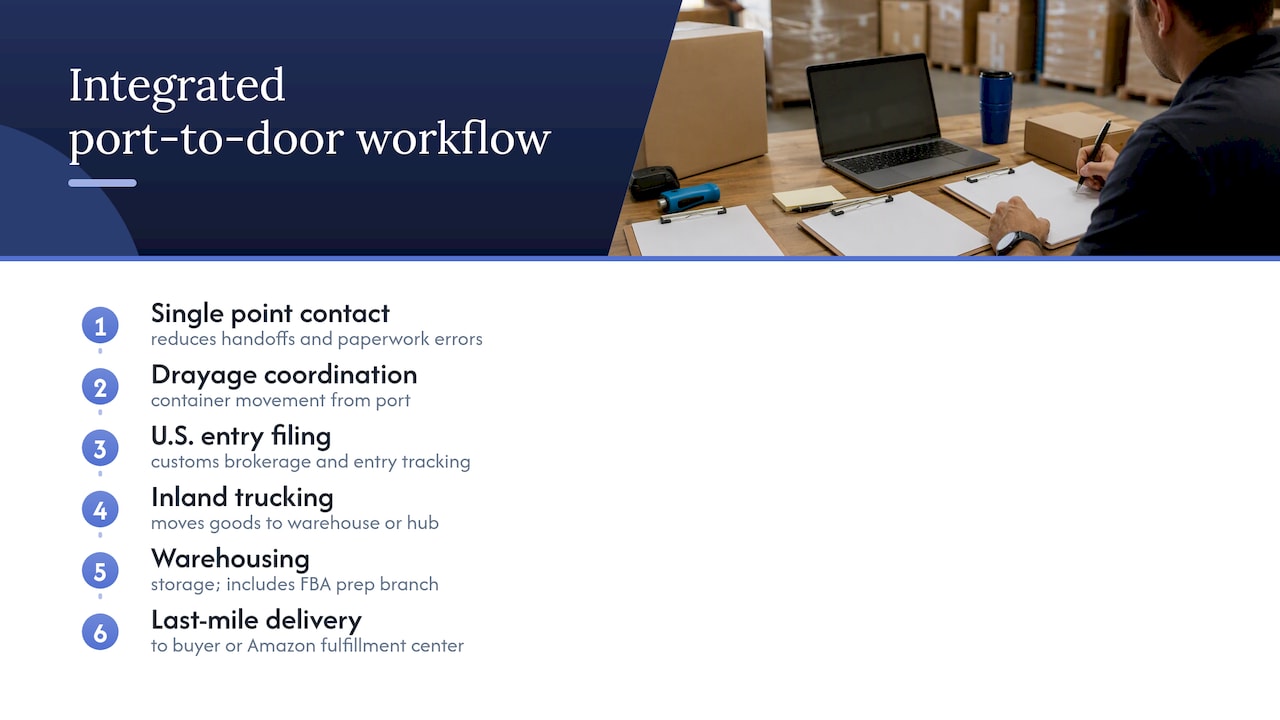
Running these functions through one provider cuts the number of handoffs where paperwork errors or idle time typically creep in, since the same team tracking your customs entry is also scheduling your drayage and inland delivery.
What I look for before recommending a forwarder
I’ve found that port-to-door works best when the forwarder treats customs and inland delivery as one coordinated job, not two separate vendors passing a container back and forth. Before signing with anyone, ask three questions: how much customs experience do they have with your product category, can they handle bonded or in-bond moves if your container lands at the wrong port, and what shipment visibility do they actually give you between release and delivery.
— Akbar
How A logistics provider supports your port-to-door shipment
If you’re importing without a warehouse at origin or destination, Usiship’s 3PL fulfillment and warehousing and fulfillment services cover the gap between terminal release and final delivery.
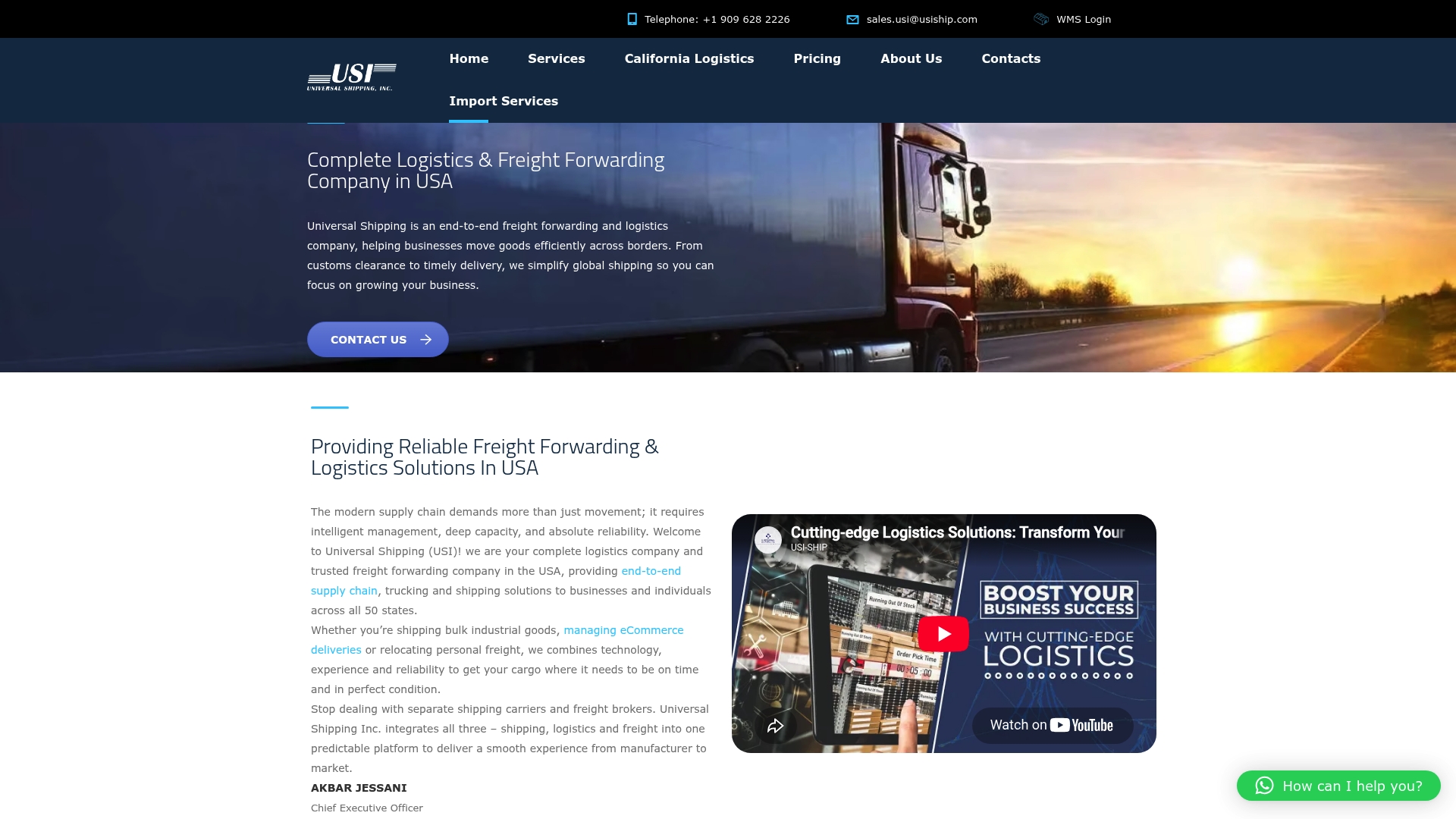
- Customs Brokerage files entry paperwork and manages CBP compliance so cargo clears without avoidable delay.
- 3PL Fulfillment Services handle receiving, storage, and order processing once cargo reaches a warehouse.
- Last-Mile Delivery Solutions complete the final leg to a business or residential address.
Request a quote through Usiship’s pricing page or talk to a customs specialist before your next shipment lands.
Where to check official rules on entry and Incoterms
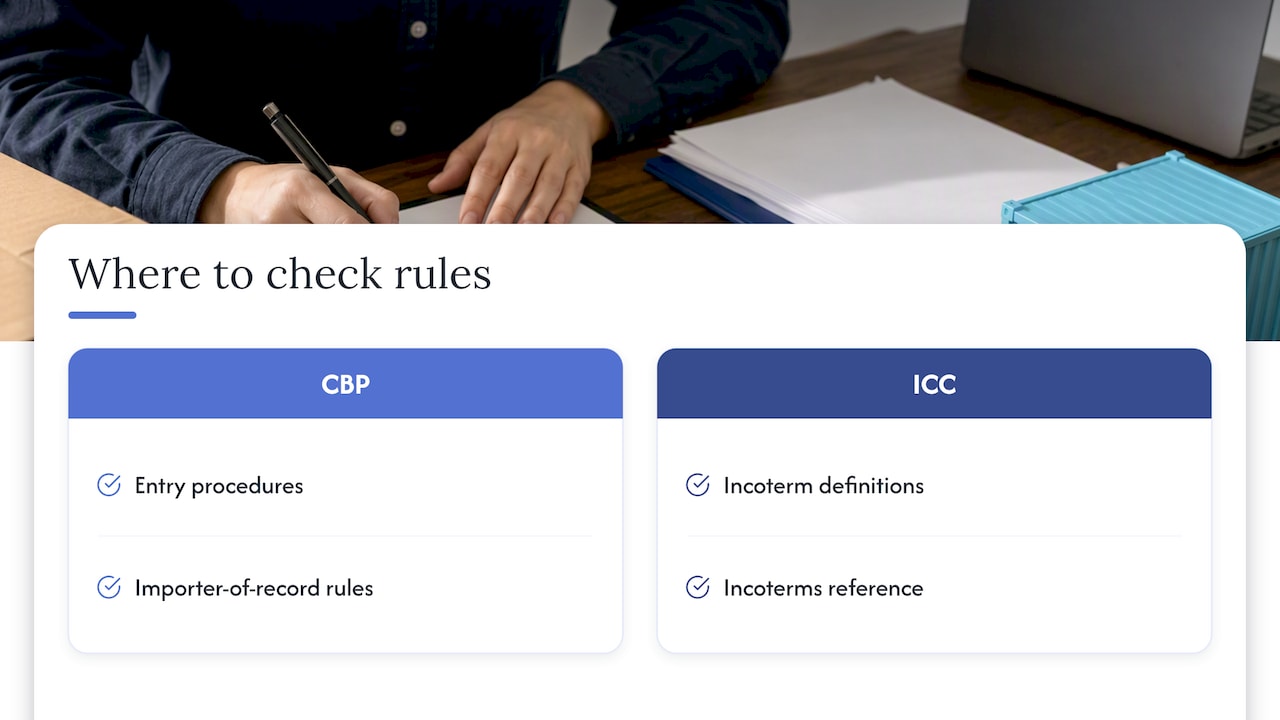
For entry procedures and importer-of-record rules, see CBP’s importer guide. For Incoterm definitions, see the ICC Incoterms reference.
Sources
- Importing into the United States: A Guide for Commercial Importers
- Incoterms® 2020 | ICC Knowledge 2 Go
- Using the Incoterms 2020 to manage tariff risks (ICC)
FAQ
Is door-to-door the same as DDP?
No. Door-to-door describes the physical scope of transport, from origin pickup to final delivery, while DDP is an Incoterm that assigns duty and clearance responsibility to the seller. A shipment can be door-to-door without being DDP if the buyer still handles import duties.
What are the three types of bill of lading?
Common types include the straight bill of lading, which is non-negotiable and names a specific consignee, and the order bill of lading, which is negotiable and transferable. A third common type is the seaway bill, used when no physical document needs to change hands at destination.
How much does it cost to ship 300 pounds?
Cost depends on mode, distance, and service level, since ocean freight, THC, drayage, and last-mile delivery are all priced separately. Usiship’s storage and additional-service rates are listed on its pricing page, and a full port-to-door quote requires shipment-specific details.
What is FOB versus DDP?
Under FOB, the buyer takes responsibility once goods are loaded at origin, covering destination duties and clearance themselves. Under DDP, the seller covers duties and import formalities, giving the buyer one landed price instead of itemized charges.