
Warehouse Receiving Process: 8 Steps and a Checklist
The warehouse receiving process is how a facility accepts an inbound shipment: it schedules the delivery, unloads the truck, checks the goods against the purchase order, inspects them, records them in inventory and puts them away. Done well, every later step (storage, picking, packing, shipping) starts from numbers you can trust. Below are the eight steps in order, a checklist you can adapt, and the exceptions that cause most of the pain.
TL;DR
- Receiving has eight steps: prepare and schedule, check the trailer, unload, verify, inspect, document discrepancies, record, and put away.
- Verify against the purchase order (PO) or advance shipping notice (ASN), never against the driver’s paperwork alone.
- Note every shortage or damage on the delivery receipt before the driver leaves. A signed clean receipt makes a later claim much harder to prove.
- Electronic ASNs and barcode scanning cut handling time per pallet and reduce keying errors.
- Receiving errors travel with the stock into putaway and picking, so fix them at the dock.
Table of Contents
- What receiving means and why it matters
- The warehouse receiving process, step by step
- A warehouse receiving checklist you can adapt
- Handling the exceptions
- Technology that speeds up receiving
- Our perspective: receiving is where fulfillment is won
- Outsourcing receiving to a 3PL
- FAQ
- Sources
What receiving means and why it matters
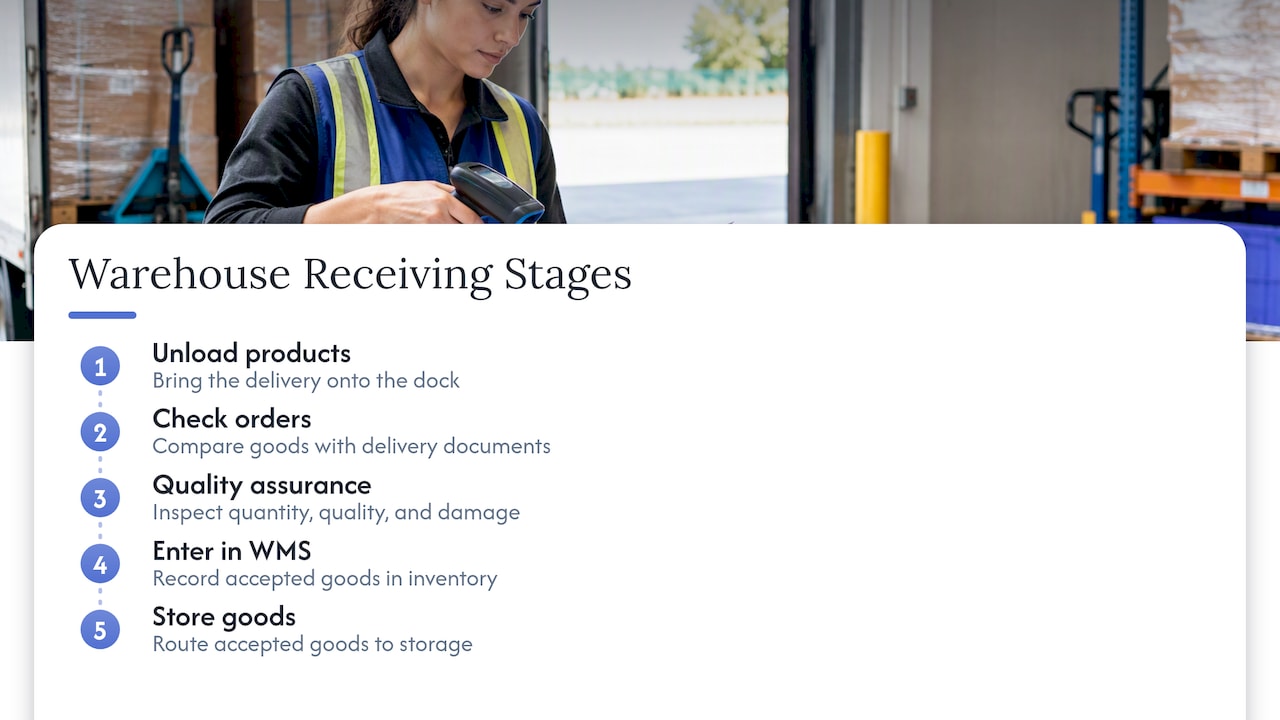
Receiving shipments means inspecting, verifying and accepting a delivery into warehouse inventory. SSI Schaefer describes it as unloading products, checking they are the correct orders, passing them through inbound quality assurance, entering them in a warehouse management system (WMS) and storing them. The U.S. Postal Service’s supply manual puts the same idea in procurement terms: check delivered goods against the delivery documents and contract requirements, visually inspect quantity, quality and damage, document discrepancies, and route accepted goods to inventory or the department that ordered them.
Why it matters comes down to accuracy. WarehousePMO notes that receiving moves inventory into the site’s records, and that errors made there carry into putaway and picking and can take far more effort to correct later. A pallet received as 48 cartons when it held 44 means four phantom units on your system. Those units show as available, get sold, and turn into backorders and refunds.
It also matters financially. The receiving record supports later invoicing and payment, and it is your evidence if goods arrive damaged or short.
The warehouse receiving process, step by step
1. Prepare and schedule the delivery
Receiving starts before the truck arrives. According to the Global Cold Chain Alliance’s warehouse operations guide, the process usually begins when the customer or carrier notifies the warehouse of an inbound shipment and the warehouse books a specific day and time.
At this stage, collect and confirm:
- The PO number and the supplier name
- The carrier and the expected pallet, carton and unit counts
- Any special handling: temperature, hazmat, oversize, serialized or lot-tracked items
- A dock door and labor slot for the appointment
An appointment keeps trucks from stacking up at the gate and lets you staff the dock for the load. If you ship to retailer or third-party docks, how to book a delivery appointment and avoid fees covers the booking side. Send the supplier a short inbound routing guide as well: how to label pallets, what documents to attach, and which ASN format you expect. Our guide to the 14 packing list requirements shows what a usable packing list contains.
2. Check the trailer, seal and dock
When the truck arrives, log the arrival time, carrier, trailer number and driver. Before opening the doors, compare the seal number to the bill of lading (BOL). The GCCA guide says that if the seal is broken or tampered with, you should notify a supervisor or manager immediately to decide whether the customer must be contacted. Photograph the seal as found.
Then run the dock safety basics: wheel chocks or vehicle restraint in place, dock plate secure, floor of the trailer sound. For refrigerated loads, the same guide says product temperatures should be checked immediately after the doors open and recorded by trailer location.
3. Unload to a receiving zone
Unload into a designated receiving area, not directly into racking. A staging zone gives you room to count and inspect without blocking the dock, and it keeps unverified stock separate from sellable stock. Mark the zone clearly. Anything in it is “not yet inventory.”
Watch how the load is built as it comes off. Crushed bottom cartons, shifted pallets and wet corrugate are easier to spot during unloading than after the pallets are stacked. Floor-loaded freight (cartons stacked loose to the ceiling) takes longer to count, so plan more labor for it. Pallet quality matters too: our pallet stacking checks for U.S. warehouses explain what an unsafe stack looks like.
4. Verify quantities and items against the PO or ASN
This is the core of the process. Verification means comparing what is physically on the dock with what was ordered and what the supplier says it shipped. The California Department of General Services says staff should confirm the shipment is meant for their department and matches the PO or contract on manufacturer, model number, quantities and quality specifications. It also says to check that delivery terms, such as inside or tailgate delivery, were met, and to check piece counts, item descriptions and absence of damage against POs, packing slips and contracts.
In practice, check three layers:
- Shipment level: carrier, BOL, pallet count versus the documents.
- Item level: SKU, description and variant (size, color, model) versus the PO line.
- Quantity level: units per carton and cartons per pallet versus the ASN or packing list.
A blind count, where the receiver counts without seeing the expected quantity, catches more errors than a confirm-the-number count, because people tend to agree with the figure in front of them. Many teams use blind counts for high-value or high-variance items and a scan-to-confirm for the rest. The ASN data levels behind single-scan receiving show how pallet, carton and item data can be pre-loaded so the dock only confirms.
For teams reconciling inbound documents, the principle in these inventory list best practices applies equally: compare every item against the paperwork line by line instead of trusting a total.
5. Inspect the condition of the goods
There are two kinds of inspection, and they should not be blurred. The New York Office of General Services guidelines call for a general receipt inspection for damage and a separate technical or functional inspection to confirm the product meets contract requirements. The technical check should be done promptly, especially for items with limited warranty periods.
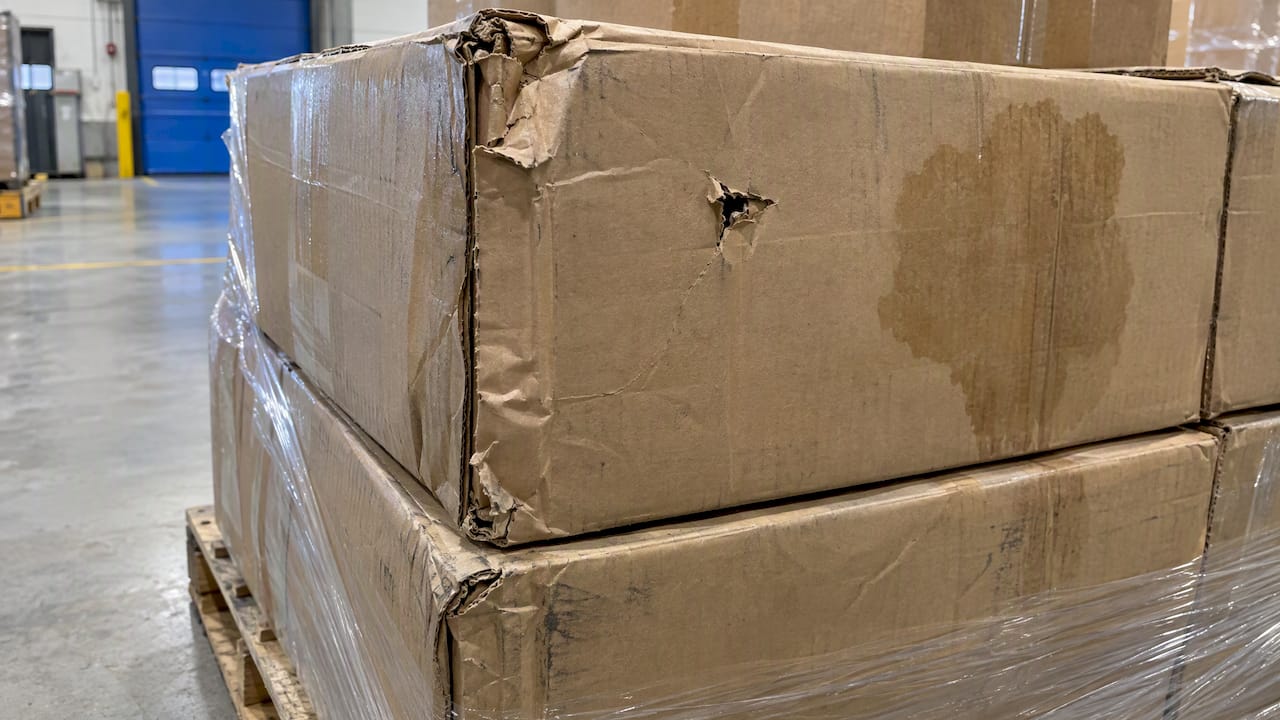
On the dock, the general inspection means looking at outer cartons and pallet wrap for crushing, punctures, water marks and opened flaps. Open a sample when the outside looks wrong, or when your rules call for sampling by lot. For ecommerce inventory, a functional check might be as simple as confirming labels are scannable, or powering on one unit per carton.
6. Document discrepancies before you sign
This step protects your money. Quantity and quality discrepancies should be written on the receiving copy of the PO, according to the New Mexico Public School Facilities Authority warehouse procedures, and goods damaged in shipping should follow written shipping-claims procedures. The USPS manual adds that damaged goods should be held, and that shipment damage or pilferage should be reported and noted on the bill of lading.
Timing matters. Cleverence points out that signing a clean delivery note without noting discrepancies makes claims harder to prove later, turning a counting problem into a financial loss. So:
- Count before the driver leaves, or write “subject to count” and inspection on the receipt.
- Describe damage specifically: “3 of 12 cartons crushed, pallet 2, corner torn,” not just “damaged.”
- Take dated photos of the damage, the labels and the pallet as received.
- Get the driver’s signature on the exception notes where possible.
If freight arrives damaged, the next move is a claim. This overview of what to do in the first hour after a loss pairs well with our own freight claims playbook for U.S. shippers, which covers the filing deadline and the paperwork.
7. Record the receipt in your system
Once counted and inspected, record the receipt against the PO: quantities accepted, quantities rejected or held, lot and expiry data where relevant, date and time, and who received it. The receiving record is the source of truth for inventory, so enter it the same shift, not the next week. Delays create the gap in which orders get sold against stock that is physically there but not yet visible.
Receive to the PO line, not to a generic “misc” location. Over-shipments should be recorded as an overage and held pending a decision from the buyer, rather than silently absorbed.
8. Put away to an assigned location
Putaway moves accepted goods from the receiving zone to a storage location and records that location. Assign locations by velocity, size and handling needs: fast movers close to packing, heavy items low, small parts in bins. Scan the location label and the product label so the system knows where each item sits. Layout choices shape how quickly this goes, which is why we recommend measuring first and piloting one zone before reslotting a whole building.
Held or rejected goods go to a separate area. The Pennsylvania Department of General Services warehouse manual says non-conforming material should carry a hold tag and be placed in the material review board (MRB) area. That keeps it from being picked by mistake.
A warehouse receiving checklist you can adapt
The GCCA guide gives a full U.S. checklist outline. Here it is condensed into a version for a typical dry-goods dock:
Before arrival
- [ ] Appointment confirmed; PO and ASN on file
- [ ] Dock door and labor assigned
- [ ] Special handling flagged
At the door
- [ ] PO, BOL and carrier verified
- [ ] Arrival and unload times logged
- [ ] Seal number matches BOL; trailer and dock safety checks done
- [ ] Temperature recorded if the load is refrigerated
During unloading and counting
- [ ] Pallets, cases and items identified, with lot numbers where used
- [ ] Quantities reconciled against documents
- [ ] Damage and other discrepancies noted, with driver signature
After counting
- [ ] Receipt recorded in the system
- [ ] Goods accepted, held, rejected or put away
- [ ] Photos and documents filed against the PO
A standardized checklist matters because, as SKUNexus puts it, it makes every shipment follow the same procedure no matter which person is on the dock. Train to it, audit against it, and revise it when an exception repeats.
Handling the exceptions
Most receiving problems fall into a handful of patterns. Decide your response before the truck shows up.
| Situation | What to do at the dock | Record |
|---|---|---|
| Shortage | Recount, then note the shortage on the delivery receipt before the driver leaves | Received quantity versus PO, photo of the count |
| Overage | Receive to PO quantity, hold the excess, notify the buyer | Overage line, hold location |
| Visible damage | Note on the receipt, photograph, hold the goods | Damage description, claim file opened |
| Concealed damage | Report promptly once found, keep packaging | Date found, photos, packaging retained |
| Wrong item | Do not put away; hold and tag | Item received versus item ordered |
| Broken seal | Escalate to a supervisor right away | Seal number, photos, who was notified |
| Missing paperwork | Receive as blind and flag for follow-up, or hold per policy | Exception log |
Keep a running exceptions log by supplier. If one supplier is responsible for most of your shortages, the fix is a conversation about their packing and ASN accuracy, not more labor on your dock. Our piece on ASN accuracy with EDI explains how chargebacks arise from bad notices.
Technology that speeds up receiving
Paper and spreadsheets work at low volume. Past a certain point, the cost is in rekeying and mismatches.
Three upgrades pay off most:
- Electronic ASNs. CXTMS reports that ASN-enabled shipments can be processed 50 to 70% faster than blind receiving. In a GS1 US case study, Dot Foods reported about 20 seconds to receive a pallet with an electronic ASN versus about 40 seconds manually, using an SSCC barcode scan to validate pallet data against the ASN.
- Barcode scanning. Scanning the pallet and item labels removes transcription errors. GS1 US says 2D barcodes can carry a GTIN with lot, expiry and serial data, improving verification and data integrity compared with older 1D workflows.
- A WMS with directed putaway. The system suggests a location when you scan, so putaway follows rules and not memory.
The same GS1 US paper cautions that new labels and scanners alone are not enough. A phased, coordinated approach with supply-chain partners, using shared standards, is what improves data capture. In plain terms: the technology only works when your suppliers label to the standard you specify.
Our perspective: receiving is where fulfillment is won
We see receiving as the first promise to the end customer. Every order we pick later depends on a count taken at the dock, so we treat that count as a controlled step with a name on it, not a chore to clear quickly.
Three habits matter most to us. First, ask for the ASN and the PO before the truck is booked, so the dock knows what “right” looks like. Second, never let a discrepancy leave the dock without a note and a photo. Third, close the loop with the shipper quickly: a shortage reported the same day gets resolved, while one reported three weeks later becomes an argument.
This is why we integrate transportation, warehousing and fulfillment on one platform with real-time tracking. When inbound freight, receiving and inventory sit in one system, the shipper sees what we see and exceptions surface while they are still fixable. Our clients are often small and mid-sized ecommerce brands, importers and manufacturers. They usually do not have a dock team of their own, so a clean receiving process is the cheapest accuracy gain available to them.
— Akbar
Outsourcing receiving to a 3PL
If you do not have a dock, staff or a WMS, receiving is a natural process to hand to a third-party logistics provider. At Universal Shipping we receive inbound containers and pallets, verify them against your PO or ASN, record them and store them, then pick and ship orders from the same inventory. Our warehousing and fulfillment solutions cover the full flow, and our 3PL fulfillment services suit brands that want one partner from dock to doorstep.
Our pricing page lists receiving per container, order processing, additional picks, returns and packaging as separate line items. Published storage rates are $5 to $6 per bin per month and $17 to $19 per pallet per month, and additional services are $37 per hour. For container imports, see our freight forwarding services to bring goods in and have them received on arrival.
FAQ
What does receiving shipments mean?
It means accepting a delivery into a warehouse’s inventory. Staff unload the goods, check them against the purchase order, inspect for damage, record the receipt and store the goods. Only after those checks does the stock count as available inventory.
What is the difference between receiving and putaway?
Receiving covers everything from arrival to an accurate, recorded receipt: unloading, counting, inspecting and documenting. Putaway is the last step, where accepted goods move from the receiving zone to a storage location and that location is recorded. Putaway cannot be accurate if receiving was not.
Why use an ASN in receiving?
An advance shipping notice tells the warehouse in advance what is coming, down to pallets, cartons and items. Receivers can then confirm the shipment by scanning instead of keying data by hand. One source reports ASN-enabled shipments are processed 50 to 70% faster than blind receiving, though results depend on how accurate the supplier’s ASN is.
What should I do if a shipment arrives damaged?
Note the damage on the delivery receipt before the driver leaves, photograph it, and hold the goods. Then follow your shipping-claims procedure and start the carrier claim promptly. Our freight claims guide explains the filing deadline and documents.
How long should receiving take?
It depends on the load type, the count method and whether you have an ASN. A palletized, pre-noticed, scan-verified delivery goes quickly. Floor-loaded cartons or mixed pallets with no paperwork take far longer, so schedule labor to match the load.
Sources
- SSI Schaefer: goods-in material handling
- USPS Supplying Principles and Practices: Receiving Process
- WarehousePMO: Warehouse Process Basics, Receiving
- Guide to Effective Warehouse Operations (GCCA)
- California Department of General Services: receiving
- New York OGS: Receiving Agency Inspection Guidelines
- New Mexico PSAB Warehouse Procedures
- Pennsylvania DGS Warehouse and Distribution Division manual
- Cleverence: Warehouse Receiving Process Step by Step
- SKUNexus: Warehouse Receiving SOP
- CXTMS: Warehouse Receiving and Putaway Operations
- GS1 US: Advancing Intelligent Data Capture in Modern Logistics
- GS1 US case study: Dot Foods
- Interstate moving inventory list best practices
- Trucking insurance claims: the first 60 minutes