
Full-Service Freight Forwarding + 3PL: U.S. Guide
For most U.S. e-commerce brands that ship internationally and fulfill domestically, Usiship (Universal Shipping Inc.) is the recommended full-service partner. One provider handling both inbound freight and outbound fulfillment removes the handoff where inventory gets miscounted and delays compound.
TL;DR:
- Stay in-house if you ship fewer than 500 orders per month and store fewer than 500 SKUs in a single location.
- Run a hybrid if you’re between 500 and 1,000 orders monthly, have mixed SKU complexity, or import from one region while fulfilling domestically.
- Outsource fully above 1,000 orders per month, especially when you’re importing internationally and can’t meet delivery expectations in-house.
The evaluation checklist, onboarding timeline, and cost breakdown are in the sections below.
Table of Contents
- What does full-service freight forwarding and 3PL fulfillment actually cover?
- When should you outsource fulfillment instead of keeping it in-house?
- How do you choose the right combined freight-forwarding + 3PL partner?
- How Usiship delivers a combined freight-forwarding + 3PL solution
- What does onboarding actually look like, step by step?
- What does it cost, and how do you calculate total cost of ownership?
- What contract traps should you watch for?
- How do the interfaces of label-based shipping tools compare to full 3PL platforms?
- How does customer support differ between shipping tools and full-service 3PLs?
- How do label generation and carrier partnerships differ across service models?
- How do pricing models compare between subscription tools and full-service 3PLs?
- How do scalability and flexibility differ between the two service models?
- Key Takeaways
- The case for integration over convenience
- Usiship handles both legs of your supply chain
What does full-service freight forwarding and 3PL fulfillment actually cover?
These two services are often confused or bundled loosely. Freight forwarders manage international transport and customs: ocean and air freight, bills of lading, customs clearance, and trade documentation. A 3PL handles what happens after the cargo clears the port: receiving, warehousing, pick and pack, label generation, last-mile delivery, and returns.
Most importers need both. The problem is that using separate providers creates a handoff where inventory gets miscounted or sits in limbo. A combined partner that owns both legs removes that friction, provided their WMS and TMS systems are tightly integrated.
| Activity | Pre-Port | Post-Port | Last-Mile |
|---|---|---|---|
| Ocean/air freight booking | ✓ | ||
| Customs clearance | ✓ | ||
| FTL/LTL drayage | ✓ | ✓ | |
| Receiving + warehousing | ✓ | ||
| Pick, pack, label | ✓ | ||
| Amazon FBA prep | ✓ | ||
| Returns processing | ✓ | ||
| Last-mile delivery | ✓ |
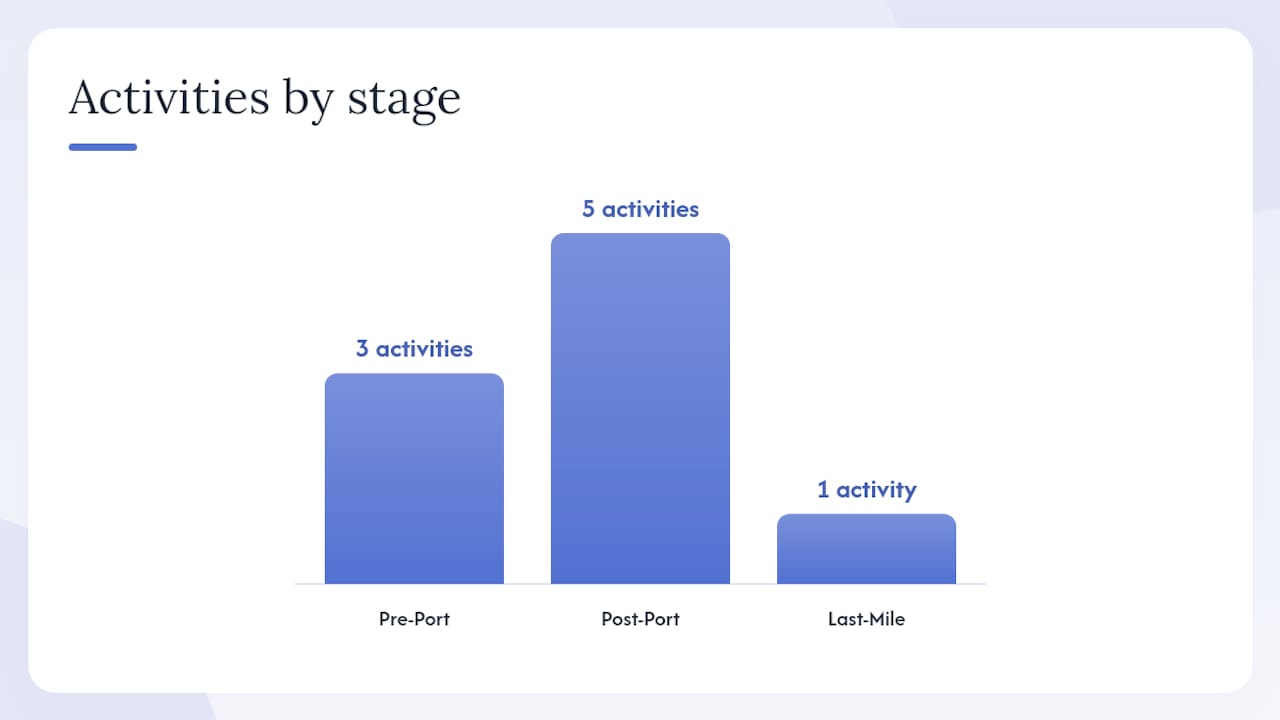
Usiship’s logistics transportation services cover every row in that matrix, from ocean freight booking through customs brokerage to domestic FTL/LTL and final delivery.
When should you outsource fulfillment instead of keeping it in-house?
Volume is the clearest signal. A relatively low order volume, most brands are better off fulfilling in-house. In an intermediate order volume range, it’s worth getting 3PL quotes. Above 1,000, the math almost always favors outsourcing or a hybrid model.
Beyond volume, watch for these triggers:
- 3PL in Ecommerce: How to Choose the Right Partner (2026) – Shopify
- Order Fulfillment Models Compared: 3PL vs In-House vs Hybrid (2026) – AcquireX
- 3PL vs Freight Forwarder: Which Model Fits Your Business? | GoFreight
- 3PL vs freight forwarder | Maximize supply chain coverage with flexible logistics | Lumenalta
- ShipStation vs. Extensiv in 2026: Which Fulfillment Platform Wins? – Ecommerce Times
The breakeven point for outsourcing fulfillment typically falls between 1,000 and 3,000 orders per month, depending on your average order value and SKU complexity.
Hybrid patterns that work: Keep slow-moving or oversized SKUs in-house (or in a local storage unit) and route fast-moving, standard-size products through a 3PL. Brands importing furniture or specialty items often use this split, sending standard SKUs to a fulfillment center while handling bulky items separately.

How do you choose the right combined freight-forwarding + 3PL partner?
Evaluate on three dimensions: operational fit, technology fit, and cost fit.
Operational fit checklist
- Can they handle your SKU mix — fragile, bulky, kitted, or subscription boxes?
- Do they support Amazon FBA prep and multi-channel labeling?
- What’s their peak-season capacity, and do they have overflow agreements?
- How many fulfillment nodes do they operate, and where?
- What does their returns workflow look like — grading, restocking, disposal?
Technology fit checklist
- Does their WMS integrate with your e-commerce platform (Shopify, WooCommerce, BigCommerce)?
- Can they sync order status in real time across channels?
- Do they offer an EDI connection or client portal for inventory visibility?
- WMS and multi-node reconciliation — fragmented software across fulfillment nodes causes reconciliation gaps, especially in returns. Ask specifically how they handle this.
Cost fit checklist
- Is the fee schedule fully itemized — receiving, storage, pick/pack, packaging, surcharges?
- Are there monthly minimums or peak surcharges?
- What’s the shipping markup over carrier base rates?
- Are there account management or onboarding fees?
Pro Tip: Ask for two or three past invoices from a client with a similar order profile. The line items on a real invoice reveal surcharges that never appear in a proposal.
| Evaluation Dimension | Questions to Ask | SLA to Demand in Writing |
|---|---|---|
| Order accuracy | How is accuracy measured and reported? | high order accuracy |
| Fulfillment speed | Same-day cutoff for orders placed by when? | Same-day for orders before 2 PM |
| Exception response | How are mispicks, shorts, and damages handled? | quick exception response |
| Returns processing | What’s the average time from receipt to restocked? | several days |
| Inventory visibility | Is inventory updated in real time or batch? | Real-time or sub-hourly sync |
How Usiship delivers a combined freight-forwarding + 3PL solution
Usiship covers the full service matrix described above. Their omnichannel fulfillment services include pick and pack, Amazon FBA prep, multi-channel inventory sync, and returns processing. On the freight side: international ocean and air freight, FTL and LTL domestic transport, customs clearance through licensed brokerage, and last-mile delivery across all 50 states.
Their warehouse solutions include real-time inventory dashboards, SLA reporting, and order-accuracy tracking — the metrics that matter most when you’re scaling.
Usiship’s integrated WMS and TMS means your inbound freight data and outbound fulfillment data live in the same system. Inventory counts update as containers clear customs, not after a manual reconciliation cycle. For brands that have lost a peak season to a miscounted pallet, that single integration point is worth more than any per-label discount.
Pro Tip: Ask Usiship specifically about their customs clearance services if you import from China, Southeast Asia, or the EU. Licensed brokerage in-house means fewer handoffs and faster clearance times.
What does onboarding actually look like, step by step?
Expect 2–4 months from contract signing to full go-live. Complex implementations with EDI or multi-node routing can run 10–16 weeks or longer.
- Audit and quote (Weeks 1–2): Share your SKU list, order volume, channel mix, and current carrier contracts. The provider builds a cost model.
- Contract and SLA negotiation (Weeks 2–3): Finalize fee schedule, SLA thresholds, pilot terms, and exit clauses.
- Systems integration (Weeks 3–6): Connect your e-commerce platform, WMS, and any EDI feeds. This is where most delays happen.
- Test shipments (Weeks 6–7): Ship a small batch to verify receiving accuracy, label generation, and order sync.
- Pilot period (Weeks 7–10): Run 30–60 days at partial volume. Measure against SLA targets before scaling.
- Full go-live (Week 10+): Ramp to full volume once the pilot hits targets.
Documents and decisions you must supply:
- Complete SKU list with dimensions, weights, and pack specs
- Channel credentials (Shopify, Amazon Seller Central, etc.)
- Customs paperwork for imported goods (commercial invoices, packing lists, HTS codes)
- Carrier account numbers if you want to keep negotiated rates
- Returns policy and disposition instructions
A useful reference for inventory documentation during transitions is this long-distance moving inventory checklist, which covers verification and condition-tracking practices applicable to warehouse receiving.
Pro Tip: Avoid scheduling your go-live between October and December. A Q4 launch during peak season means your team is troubleshooting integrations while order volume spikes. Target a Q1 or Q2 go-live and run your pilot in Q3.
What does it cost, and how do you calculate total cost of ownership?
| Cost Component | Self-Fulfillment | 3PL (Outsourced) | Hybrid |
|---|---|---|---|
| Receiving | Your labor cost | $25 per pallet | Split by SKU type |
| Storage | Lease + utilities | — | Partial lease + 3PL |
| Pick and pack | Your labor cost | several dollars per item | Mixed |
| Shipping | Carrier list rate | Negotiated 3PL rate | Mixed |
| Returns processing | Your labor cost | $2–$5 per unit | Mixed |
| Peak surcharges | Overtime labor | Contractual cap | Partial |
Sample per-order all-in cost for simple products at a 3PL is typically $5–$9 before shipping, based on typical industry ranges.
Step-by-step TCO calculation:
- Count your current monthly orders and average units per order.
- Add your fully loaded labor cost (wages, benefits, space allocation).
- Add your current carrier spend.
- Compare against a 3PL quote using the fee ranges above.
- Factor in returns volume at 19.3% of orders.
Pro Tip: The line items most brands miss: long-term storage fees (charged after 180 days at many 3PLs), account management fees, and “uncaptured” surcharges billed after the fact. Demand a cap on uncaptured charges in writing before you sign.
What contract traps should you watch for?
Red flags:
- No itemized fee schedule — only a “per-order” all-in rate with no line-item breakdown
- Lock-in clauses longer than 12 months with no performance-based exit
- Vague peak-capacity language (“best efforts” instead of guaranteed capacity)
- No defined SLA metrics or no financial remedy if SLAs are missed
- Returns handling described as “case by case”
Negotiation moves that work:
- Request a 60–90 day pilot period with defined performance gates before the full contract activates.
- Cap uncaptured surcharges at a fixed percentage above the quoted rate.
- Require a 30-day exit clause if SLA targets are missed for two consecutive months.
- Ask for itemized invoices from a current client with a similar profile.
- Negotiate a rate review schedule (annually, not at the provider’s discretion).
Pro Tip: Have your legal or ops team review the “force majeure” and “liability cap” clauses specifically. Many 3PL contracts cap liability at 30 days of fees — far below the cost of a lost peak-season shipment.
How do the interfaces of label-based shipping tools compare to full 3PL platforms?
Label-generation tools built for merchants buying parcel rates differ fundamentally from WMS-driven fulfillment platforms. A merchant-facing shipping UI prioritizes rate shopping, label printing, and carrier selection across a single screen. A full 3PL platform prioritizes inventory location, pick-path optimization, receiving workflows, and multi-node reconciliation.
The practical difference shows up at scale. A label tool works well when you’re printing 50 labels a day from your own warehouse. Once you’re routing orders across multiple fulfillment nodes, syncing inventory in real time, and processing returns at volume, you need a WMS with tighter operational controls. The two tool categories serve different jobs, and choosing the wrong one for your stage creates reconciliation friction that compounds quickly.
How does customer support differ between shipping tools and full-service 3PLs?
Merchant-facing shipping software typically offers tiered support: email and chat at lower plan levels, phone support at higher tiers. Response times vary by plan, and complex operational questions often get escalated to documentation rather than a live specialist.
Full-service 3PL and freight-forwarding providers operate differently. You get a dedicated account manager, not a support queue. That person knows your SKU mix, your carrier contracts, and your SLA commitments. When a container is delayed or a pallet is miscounted, you call one person who owns the resolution. The tradeoff is that this model requires a minimum volume commitment to justify the dedicated attention.
How do label generation and carrier partnerships differ across service models?
Merchant-facing shipping tools aggregate carrier APIs and let you compare rates across carriers like UPS, FedEx, USPS, and DHL at the point of label purchase. The value is rate transparency and multi-carrier flexibility for parcel shipments.
Full-service 3PLs negotiate volume-based carrier contracts that individual merchants can’t access. The 3PL’s aggregate volume across all clients produces rates below what any single brand can negotiate. Labels are generated inside the WMS as part of the pick-and-pack workflow, not as a standalone step. For international freight, a licensed customs broker generates the documentation set: commercial invoice, packing list, bill of lading, and any required certificates of origin.
How do pricing models compare between subscription tools and full-service 3PLs?
Merchant-facing shipping software typically charges a monthly subscription fee plus per-label costs or a per-shipment fee. Entry-level plans start low; higher tiers unlock more users, automation rules, and carrier integrations.
Full-service 3PL pricing has no subscription fee. You pay for what you use: receiving fees per pallet, storage fees per cubic foot per month, pick-and-pack fees per order, and shipping at the 3PL’s negotiated carrier rate. The per-order all-in cost typically runs $5–$9 for simple products before shipping. Monthly minimums often apply, which is why the model makes sense above 1,000 orders per month.
How do scalability and flexibility differ between the two service models?
Subscription shipping tools scale by adding users and automation rules. They don’t scale your physical capacity. If your order volume doubles, you still need more warehouse space, more labor, and more carrier capacity on your own.
A full-service 3PL scales physical capacity with you. Peak-season overflow, additional fulfillment nodes, and new carrier lanes are the provider’s problem to solve, not yours. The flexibility tradeoff is that you’re bound by the 3PL’s existing network and technology stack. Brands with highly unusual SKUs, extreme fragility requirements, or very specialized packaging sometimes find that a general 3PL can’t match what a dedicated in-house operation delivers.
Key Takeaways
For U.S. e-commerce brands importing internationally and fulfilling domestically, a combined freight-forwarding and 3PL partner like Usiship eliminates the handoff risk that causes inventory miscounts and missed SLAs.
| Point | Details |
|---|---|
| Volume thresholds matter | Under 500 orders/month: stay in-house. 500–1,000: get quotes. Above 1,000: outsource or go hybrid. |
| TCO includes hidden fees | Budget for receiving ($25 per pallet), pick/pack ($2.50–$4 first item), returns, and peak surcharges. |
| Onboarding takes time | Plan 2–4 months from contract to go-live; avoid a Q4 launch without a completed pilot. |
| SLAs must be in writing | Demand high order accuracy, same-day fulfillment cutoffs, and quick exception response. |
| Usiship covers both legs | Usiship handles inbound freight, customs clearance, warehousing, fulfillment, and last-mile delivery across all 50 states. |
The case for integration over convenience
The conventional wisdom in logistics says to pick the best specialist for each function: one freight forwarder, one 3PL, one customs broker. The logic sounds right. In practice, it creates three separate systems, three separate invoices, and three separate people to call when something goes wrong at the port.
What most operations teams underestimate is the cost of the handoff itself. When your freight forwarder releases a container and your 3PL receives it, the inventory count at that moment is the source of truth for everything downstream. If those two systems don’t talk to each other, you’re reconciling manually. At 500 orders a month, that’s manageable. At 5,000, it’s a full-time job that still produces errors.
The brands I’ve seen struggle most with logistics aren’t the ones who picked the wrong carrier rates. They’re the ones who built a patchwork of specialized vendors and then couldn’t see their own inventory clearly. A combined partner with tight WMS/TMS integration isn’t a convenience play. It’s an operational control decision.
Usiship handles both legs of your supply chain
When you’re comparing 3PL services vs. in-house shipping and realize you need both international freight and domestic fulfillment covered, Usiship is built for exactly that. One provider, one account manager, one system tracking your inventory from the moment a container leaves the origin port to the moment an order lands at your customer’s door.
Usiship offers ocean and air freight forwarding, FTL and LTL domestic transport, licensed customs clearance, warehousing, pick and pack, Amazon FBA prep, returns processing, and last-mile delivery across all 50 states. Real-time inventory dashboards and SLA reporting are standard, not an upsell.
Request a quote or schedule an integration audit at usiship.com. Bring your SKU list and current order volume, and the team will build a cost model against your actual numbers.