
What Is Omnichannel Fulfillment and Why It Matters
Omnichannel fulfillment means treating all your inventory as one shared pool and routing every order, no matter where it was placed, to whichever location can ship it fastest and cheapest. That single shift, unified inventory plus centralized routing, is what separates a modern retailer from one still running separate warehouses for its website, stores, and marketplace listings.
The payoff shows up fast. 73% of shoppers now use multiple channels during a single purchase journey, browsing on a phone, checking a store, buying online. Retailers that can’t fulfill across all of those touchpoints from one inventory pool end up splitting orders, missing delivery windows, and eating avoidable shipping costs. An Order Management System (OMS) and a Warehouse Management System (WMS) are the two pieces of technology that make it work.
Here’s what changes when you get it right:
- Fewer split shipments because orders route to the node with full stock, not just the nearest one
- Lower fulfillment cost per order once routing accounts for landed shipping cost, not just distance
- Faster delivery promises you can actually keep, because inventory visibility is real time instead of nightly batch updates
Key Takeaways
Omnichannel fulfillment succeeds when unified inventory visibility, centralized order routing through an OMS, and capacity-aware node selection work together to cut split shipments and delivery costs.
| Point | Details |
|---|---|
| Start with one model | Launch one or two fulfillment models, like BOPIS and ship-from-warehouse, before expanding further. |
| OMS and WMS are non-negotiable | An OMS handles routing and inventory visibility; a WMS executes picking, packing, and returns. |
| Route on landed cost, not distance | Combine carrier rates, zone distance, and capacity thresholds to avoid overloading nearby nodes. |
| Track five core KPIs | Monitor fulfillment cost per order, accuracy, on-time delivery, split-shipment rate, and return cycle time. |
| Partner to scale faster | Usiship’s integrated warehousing, FTL/LTL, FBA prep, and last-mile services help retailers add node coverage without building facilities from scratch. |
Table of Contents
- What Omnichannel Fulfillment Is and How It Differs From Multichannel
- Which Fulfillment Model Fits Your Business?
- What Systems Do You Need to Run Omnichannel Fulfillment?
- How Should Order Routing Logic Work?
- Where Omnichannel Fulfillment Usually Breaks Down
- How Do You Roll Out Omnichannel Fulfillment Step by Step?
- Which KPIs Actually Measure Omnichannel Success?
- How Usiship Supports Omnichannel Rollouts
- How Do You Communicate With Customers During Omnichannel Fulfillment?
- What Legal and Tax Issues Come With Shipping Across Channels?
- What Staffing and Training Does Omnichannel Fulfillment Require?
- How Do You Scale Omnichannel Fulfillment as You Grow?
- Where to Focus First (And Where Most Rollouts Go Wrong)
- Ready to Build Your Omnichannel Fulfillment Network?
- Frequently Asked Questions
- Sources
What Omnichannel Fulfillment Is and How It Differs From Multichannel
Multichannel retail means you sell in more than one place, your website, a marketplace, a physical store, but each channel usually has its own inventory allocation and sometimes its own warehouse. Omnichannel fulfillment removes those walls. Every channel draws from the same available-to-sell pool, and a central system decides which location actually ships the order.
The operational flow looks like this:
- Order capture. A customer places an order on any channel, web, app, marketplace, or in-store kiosk.
- Inventory check. The system checks available-to-sell (ATS) inventory across every connected node, not just the warehouse tied to that channel.
- Routing. An OMS applies rules, proximity, stock, capacity, cost, to pick the best fulfillment location.
- Fulfillment execution. The chosen node, whether a distribution center, a store, or a micro-fulfillment hub, picks, packs, and ships or hands off for pickup.
- Delivery and returns. The order ships or gets picked up, and returns can often go back to any node rather than only the original shipping point.
Picture a customer who orders a lamp online. Under multichannel, the order routes automatically to the ecommerce warehouse, even if that warehouse is out of stock and a store two miles away has three sitting on a shelf. Under omnichannel order fulfillment, the system sees that store’s inventory, routes the order there, and the customer gets it same day instead of waiting five. That’s the entire value proposition in one example.
Which Fulfillment Model Fits Your Business?
Not every order should ship the same way, and trying to run all five models at once before you’ve mastered one is how omnichannel rollouts stall. Each model trades speed against cost and operational complexity differently.
- Ship-from-warehouse: Lowest cost per unit, best for bulk SKUs and non-urgent orders, but slowest for last-mile delivery.
- Ship-from-store: Uses store inventory to fill online orders, cutting delivery time in dense markets, but it pulls labor away from the sales floor.
- BOPIS and curbside: Buy-online-pickup-in-store eliminates last-mile shipping costs entirely and drives store traffic, but it demands tight inventory accuracy or you get cancellation complaints.
- Micro-fulfillment: Small, automated or semi-automated hubs stocked with your top-selling SKUs near dense customer clusters, built for same-day or next-day promises.
- Drop shipping: No inventory held at all; a supplier ships direct, which minimizes capital tied up in stock but gives you the least control over packaging and delivery timing.
Your SKU profile and customer density should drive the decision. A bulky furniture retailer with a national customer base leans on ship-from-warehouse and regional 3PLs. A grocery or beauty brand with dense urban demand gets more value from BOPIS and micro-fulfillment.
Pro Tip: Don’t launch more than one or two new fulfillment models in the same quarter. Pick the one that solves your biggest customer complaint, measure the result for 60 to 90 days, then expand.
What Systems Do You Need to Run Omnichannel Fulfillment?
An OMS is the control tower. It centralizes inventory visibility, applies routing rules, tracks available-to-sell inventory in real time, and manages exceptions when a node runs out of stock mid-order. Without it, you’re routing orders manually or, worse, letting each channel’s legacy system make its own call, which is exactly how split shipments happen.
A WMS or Warehouse Execution System (WES) handles what happens once the order lands at a node: picking, packing, wave planning, and returns processing on the ground. The OMS and WMS work together, one decides where an order goes, the other executes it.
Integration priorities, in rough order of urgency:
- Real-time inventory sync between POS, ecommerce platform, and warehouse systems, since nightly batch updates are the single biggest cause of overselling
- Carrier rate shopping connectors so routing can compare landed cost, not just distance, across UPS, FedEx, and regional carriers
- POS and marketplace connectors so Amazon, Walmart Marketplace, and your storefront all read from the same stock pool
- Automation and micro-fulfillment technology once volume in a dense region justifies the capital investment, usually not a phase-one priority
A functioning OMS typically reduces split shipments through order consolidation logic that holds items briefly to combine them into one box rather than shipping three separate packages from three nodes. That single feature often pays for the integration work within a year for retailers running high SKU counts.
How Should Order Routing Logic Work?
Routing rules decide, order by order, which node fulfills it. Get the inputs wrong and you’ll ship from the wrong location every time, even with a perfectly good OMS sitting on top of the data.
The core inputs that should feed every routing decision:
- Proximity to the delivery address, but never in isolation
- Inventory availability at each candidate node, checked in real time against ATS data
- Carrier rates, since a farther distribution center with a negotiated bulk rate can beat a nearby store paying retail shipping costs
- Capacity, so a node already at its daily pick volume doesn’t get slammed with more orders than its staff can handle
- Service-level requirements, since a next-day promise eliminates slower nodes regardless of cost
Nodes themselves play different roles. A distribution center carries deep, broad inventory and handles bulk and non-urgent orders. A store-as-node fills fast local orders and BOPIS. A micro-fulfillment hub holds a narrow, high-velocity SKU set for speed. A third-party logistics (3PL) partner extends your footprint into regions where building your own facility doesn’t pencil out, informed by the future of same-day delivery trends and best practices.
The more advanced routing engines calculate total landed cost, carrier rate plus zone distance, rather than picking the geographically closest node by default. They also apply dynamic capacity thresholds, so once a node hits a set order volume, new orders overflow automatically to a secondary node instead of burying that location’s staff during a peak.
Where Omnichannel Fulfillment Usually Breaks Down
Every retailer that scales omnichannel hits the same handful of failure modes. Knowing them in advance is the difference between a rough patch and a customer-facing disaster.
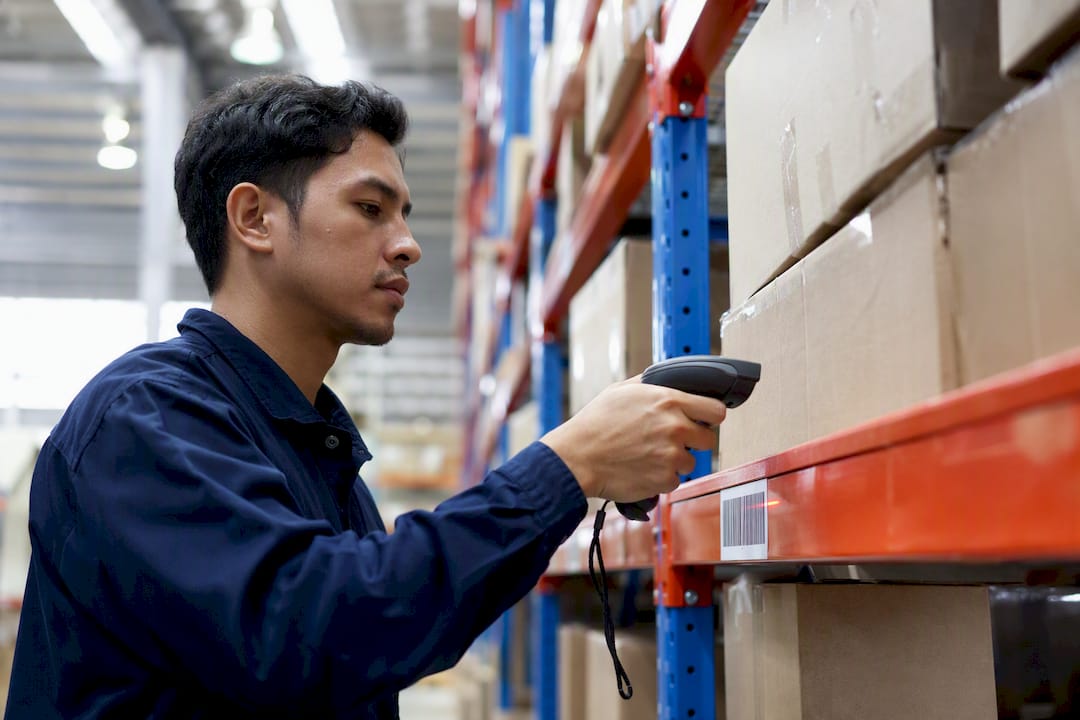
Inventory inaccuracy tops the list. It usually stems from returns that never get re-added to available stock, or from cycle counts that happen too infrequently to catch drift. Run more frequent, targeted cycle counts on your highest-velocity SKUs, and build an automated reinventory step into your returns workflow so returned stock becomes sellable again within hours, not weeks.
Split shipments and cost creep happen when routing rules chase speed without a cost floor. Order consolidation logic and a landed-cost routing rule fix most of this.
Store capacity and labor strain during peaks catch retailers who lean too hard on ship-from-store without accounting for holiday traffic. Capacity-aware routing with automatic overflow to a distribution center or 3PL protects both the customer experience and your store staff.
Integration latency and data mismatches between POS, OMS, and WMS create phantom stockouts or oversells. A daily reconciliation report comparing system counts against physical counts catches drift before it becomes a customer complaint.
- Inventory inaccuracy → more frequent cycle counts, automated returns reinventory
- Split shipments → consolidation logic, landed-cost routing floor
- Peak capacity strain → dynamic overflow rules to secondary nodes
- Data mismatches → daily reconciliation between POS, OMS, and WMS
Pro Tip: Set up a weekly exception report from your OMS showing every order that failed to route on the first attempt. That list tells you exactly where your rules or your data are breaking before customers notice.
How Do You Roll Out Omnichannel Fulfillment Step by Step?
Retailers that try to flip every switch at once usually stall out around month three, buried in exceptions their team wasn’t ready to handle. A phased rollout gets you live faster and gives you room to fix problems before they compound.
- Assess readiness. Audit data quality across your inventory systems, rationalize SKUs so you’re not trying to make omnichannel work for discontinued items, and get warehouse, store, and ecommerce stakeholders aligned on what “success” looks like.
- Phase one: inventory visibility. Connect your systems so available-to-sell inventory is visible in real time across channels. Choose one or two fulfillment models, often BOPIS plus ship-from-warehouse, to launch first.
- Phase two: connect OMS and WMS, then pilot. Run a limited pilot in one region or on one product category before going company-wide. This is where you catch integration bugs cheaply.
- Phase three: expand your node network. Bring in additional stores as fulfillment points, add a micro-fulfillment hub if density justifies it, or bring on a 3PL partner to extend geographic coverage without capital investment. Automate routing rules as node count grows.
- Phase four: continuous improvement. Track KPIs monthly, tighten capacity thresholds, and revisit routing rules quarterly as order volume and node mix shift.
Pro Tip: Run your first pilot on your highest-margin, highest-volume SKU category. You’ll get a cleaner read on whether the model works, and any mistakes stay contained to a small slice of revenue.
Readiness work in step one is where most timelines slip, so budget more time for data cleanup than feels necessary. It’s almost never the routing logic that fails first. It’s the inventory feed underneath it.
Which KPIs Actually Measure Omnichannel Success?
Five metrics tell you almost everything you need to know about whether your omnichannel fulfillment strategy is working:
- Fulfillment cost per order, tracked by channel and by node, to catch cost creep early
- Order accuracy, the percentage of orders shipped correctly the first time
- On-time delivery rate, measured against the promise shown at checkout, not an internal target
- Split-shipment rate, the clearest signal of whether your routing and consolidation rules are working
- Return cycle time, how fast a returned item becomes sellable inventory again
Cost and speed pull in opposite directions almost every time. Pushing on-time delivery up by shipping from more, smaller nodes tends to push cost per order up too, since you lose volume discounts. Review these numbers weekly during your first two rollout phases, then move to monthly reporting once the system stabilizes. Ecommerce operations should own accuracy and split-shipment rate, while logistics or warehouse leadership typically owns cost per order and on-time delivery.
How Usiship Supports Omnichannel Rollouts
Building the node network behind an omnichannel strategy, warehousing, last-mile capability, and cross-border capacity, is usually the hardest part to execute in house. Usiship operates warehousing, fulfillment, FTL and LTL transportation, customs clearance, Amazon FBA prep, and last-mile delivery as one connected network across all 50 states.
That combination matters most in a few specific situations:
- Adding multi-node coverage fast without building or leasing your own facilities in every region
- Orchestrating 3PL relationships so inventory stays visible across every partner location, not siloed by vendor
- Handling FBA prep and inbound compliance for sellers running Amazon alongside their own direct-to-consumer channel
- Managing customs clearance for retailers sourcing internationally while fulfilling domestically
How Do You Communicate With Customers During Omnichannel Fulfillment?
Customers don’t care which node shipped their order. They care whether they know what’s happening with it. That expectation gets harder to meet the more fulfillment paths you add, since a BOPIS order, a ship-from-store order, and a warehouse order all generate different tracking events.
Notifications need to stay consistent regardless of fulfillment path. A customer who orders online and picks up in-store should get the same caliber of update, order confirmed, ready for pickup, as a customer waiting on home delivery. Gaps here are where BOPIS programs lose trust fastest: a “ready for pickup” text sent before the item is actually pulled and staged creates a wasted trip and an angry customer.
Returns deserve equal attention. Letting customers return an online purchase to any store, not just mail it back, is one of the most requested features in omnichannel retail, but it only works if your inventory system re-adds that returned item to the shared pool immediately rather than treating it as store-specific stock stuck in limbo. A return that sits unprocessed for a week is inventory you’re failing to sell twice.
Set a standard: every order, regardless of channel or fulfillment node, gets the same notification cadence, confirmation, processing update, ship or ready-for-pickup alert, and delivery confirmation. Build that as a rule in your OMS rather than leaving it to each channel’s default settings, and you avoid the inconsistency that erodes trust fastest.
What Legal and Tax Issues Come With Shipping Across Channels?
Fulfilling from multiple nodes across state lines changes your regulatory footprint in ways a single-warehouse operation never has to think about. The biggest issue is sales tax nexus: once you have inventory physically sitting in a state, whether in your own warehouse, a store, or a 3PL facility, you may trigger economic or physical nexus requiring you to collect and remit sales tax there, even if you’d never have crossed that state’s revenue threshold on ecommerce sales alone.
Adding fulfillment nodes in new states is a business decision with tax consequences attached, so loop in your accounting or tax advisory team before finalizing a new warehouse or 3PL location, not after inventory has already landed there.
Cross-state shipping also touches product-specific regulations, certain categories like alcohol, cosmetics, or supplements carry different labeling and shipping rules by state, and those rules apply regardless of which node fulfills the order. A routing rule that sends a restricted product to the wrong state’s customer is a compliance problem your OMS configuration needs to prevent up front, not catch after the fact.
International sourcing adds customs and import compliance on top of domestic tax questions, particularly for Amazon FBA sellers bringing inventory in from overseas suppliers. Working with a partner that handles customs clearance as part of the broader fulfillment relationship removes one more variable from an already complex rollout.
What Staffing and Training Does Omnichannel Fulfillment Require?
Store employees who’ve spent years focused purely on the sales floor now need to pick, pack, and ship online orders accurately, on top of their existing responsibilities. That’s a real skill and workflow shift, not a minor addition to the job description.

Ship-from-store and BOPIS programs typically need dedicated fulfillment staff, or dedicated fulfillment hours, carved out separately from sales floor coverage. Retailers that try to layer fulfillment duties onto existing staff without adjusting labor hours usually see either sales suffer or fulfillment accuracy drop, sometimes both.
Training needs to cover more than the technology. Staff need to understand why inventory accuracy matters beyond their own store, since a miscounted item doesn’t just create a local problem, it corrupts the available-to-sell number the entire routing system relies on. A single untrained employee who skips a scan step at receiving can cause phantom stockouts that ripple across every channel drawing from that node.
Warehouse and distribution center staff need parallel training on the OMS and WMS interfaces, particularly around exception handling: what to do when a pick fails, when a system flags an item as available but the shelf is empty, when a return doesn’t match its original order record. Building a clear escalation path for these exceptions, and naming who owns each type, cuts resolution time from days to hours.
Plan for this staffing shift before your rollout, not during it. Retailers that treat training as a checkbox item during launch week are the ones fielding the most customer complaints in month two.
How Do You Scale Omnichannel Fulfillment as You Grow?
The systems and rules you build for your first ten fulfillment nodes rarely survive contact with node fifty unchanged. Growth means order volume climbing, geographic footprint expanding, and SKU counts multiplying, and each of those pressures your routing logic and inventory infrastructure differently.
Build your OMS routing rules to be node-agnostic from the start rather than hardcoding logic around your current handful of locations. A rule that says “check the Chicago warehouse first” breaks the moment you open a second Midwest facility; a rule based on proximity, inventory, and capacity thresholds scales without a rewrite.
Capacity thresholds need regular revisiting as volume grows. A node that comfortably handled 200 orders a day at launch may need its overflow trigger reset once daily volume hits 800, and retailers that forget to revisit these thresholds end up with chronically overloaded nodes even after adding capacity elsewhere in the network.
Adding a 3PL partner is often the fastest way to scale geographic coverage without the capital and lead time of a new company-owned facility, particularly when entering a new region where demand is still unproven. It lets you test a market’s fulfillment economics before committing to a lease.
Review your fulfillment model mix at least annually. A model that made sense at your prior order volume, drop shipping for long-tail SKUs, for instance, may need reconsidering once volume in that category justifies holding inventory instead.
Where to Focus First (And Where Most Rollouts Go Wrong)
Most omnichannel rollouts fail not from bad technology but from trying to do too much simultaneously. Retailers that enable five fulfillment models in the same quarter can’t tell which one actually moved the needle, and they burn credibility with customers when routing rules built on thin data misfire.
Start with the single fulfillment model that fixes your biggest known customer complaint, whether that’s delivery speed or return friction. Measure it honestly for a full quarter before adding the next one.
That’s usually where inventory inaccuracy hides, and where fixing it pays off fastest.
Ready to Build Your Omnichannel Fulfillment Network?
You’ve read the roadmap: unify inventory, connect your OMS and WMS, pick the right fulfillment models, and route orders with capacity and cost in mind. The part most retail teams underestimate is the physical infrastructure behind all of it, warehousing, transportation, and last-mile coverage that actually spans the country instead of one region.
Usiship runs omnichannel and ecommerce fulfillment as an integrated service rather than a patchwork of vendors, combining warehousing, FTL and LTL transportation, Amazon FBA prep, and last-mile delivery under one operational team. That means you’re not stitching together a WMS provider, a separate trucking contract, and a third last-mile vendor while trying to keep inventory data in sync across all three. For retailers managing bulky or specialty items, Usiship’s furniture shipping services handle the handling and delivery complexity those SKUs demand. If your current setup is a patchwork of vendors that don’t share data, request a fulfillment network review and see exactly where consolidation would cut cost and shipping time.
Frequently Asked Questions
What is the difference between omnichannel fulfillment and multichannel fulfillment?
Multichannel fulfillment means selling across several channels with separate inventory pools for each. Omnichannel fulfillment shares one inventory pool across all channels and routes each order to the best available node.
Which fulfillment model should a small retailer start with?
Most small and mid-size retailers get the fastest return from BOPIS combined with ship-from-warehouse, since both require limited new infrastructure and directly address delivery speed and cost.
Does omnichannel fulfillment require a full OMS from day one?
Not necessarily. Some retailers start with basic real-time inventory syncing between two systems before investing in a full OMS, then add centralized routing once order volume justifies the cost.
How does omnichannel fulfillment affect sales tax obligations?
Placing inventory in a new state, whether your own warehouse, a store, or a 3PL facility, can trigger nexus requirements to collect and remit sales tax there, independent of your online revenue in that state.
What causes most split shipments in omnichannel fulfillment?
Routing rules that prioritize speed or proximity without an order consolidation step usually cause split shipments, since items get pulled from multiple nodes instead of combined into a single shipment.
Sources
- Omnichannel order fulfillment — Wikipedia
- The Ultimate Guide for Omnichannel Fulfillment Success — Tecsys