18 NMFC Classes: NMFTA Signals and Dock Checklist for U.S. Shippers
NMFC codes are the article numbers NMFTA assigns to commodities so carriers can classify LTL freight consistently. Each code maps to a freight class between 50 and 500, and that class number sets your rate, drives billing disputes, and determines what happens if a carrier reweighs or reclassifies your shipment. NMFTA’s ClassIT+ platform is the authoritative source for the current codes and rules.
TL;DR:
- Accurate measurement of dimensions and density is crucial, as even a small error can lead to costly reclassification fees.
- Shipping tightly palletized loads generally results in a lower freight class, reducing transportation costs and risk of reweigh disputes.
- Documenting and photographing each pallet with measurements before pickup helps prevent reclassification disputes during carrier reweighs.
- Using ClassIT+ as the authoritative source ensures the correct NMFC code is identified, factoring in packaging exceptions and updated notes.
- Regular audits of top SKUs and confirming carrier classes before pickup can significantly reduce billing disputes and improve shipping consistency.
Table of Contents
- What Is an NMFC Code and How Do the 18 Freight Classes Work?
- What Are the Four Factors That Determine Freight Class?
- How Do You Find and Confirm the Correct NMFC Code?
- How Can One NMFC Article Map to Multiple Freight Classes?
- What Causes Carrier Reclassification, and How Do You Avoid Disputes?
- How Universal Shipping Reduces Classification Risk for Shippers
- A Practical Checklist Before You Tender Your Next LTL Shipment
- Get Help With Classification Audits and LTL Execution
- Where to Verify NMFC Codes and Classification Rules
- Sources
What Is an NMFC Code and How Do the 18 Freight Classes Work?
An NMFC code, or article number, identifies a specific commodity in the National Motor Freight Classification system. The freight class is a separate number, from 50 to 500, that tells carriers how expensive that commodity is to haul. Think of the article number as the product’s ID card and the class as its price tier. The two are linked but not identical: one article number can carry different classes depending on density and packaging, which trips up a lot of shippers who assume “NMFC code” and “freight class” are the same thing.
The scale runs across 18 freight classes, and where a commodity lands depends on four factors covered below. Generally:
- Class 50 to 85: dense, durable freight like steel, hardware, or palletized water. Cheapest to ship per pound.
- Class 92.5 to 150: mid-range goods such as auto parts, machinery, or canned food.
- Class 175 to 250: bulkier, lighter items like furniture, appliances, or certain plastics.
- Class 300 to 400: low-density or fragile freight, including some lighting fixtures and foam products.
- Class 400 to 500: the lightest, bulkiest, or highest-risk freight, like ping pong balls or gold leaf.
Lower classes cost less per hundredweight because carriers can pack more weight into the same trailer space. NMFTA is the de facto U.S. standard for this system, and every major LTL carrier prices against it.
What Are the Four Factors That Determine Freight Class?
Every NMFC classification decision comes down to four criteria, and NMFTA weighs all four when assigning a class to a commodity.
- Density. Pounds per cubic foot. This is the factor that most often decides the sub-item you land in, and it’s calculable before you ever call a carrier.
- Handling. Whether the freight requires special equipment, is fragile, or needs extra labor to load and unload.
- Stowability. Whether the item stacks cleanly or wastes trailer space because of odd shapes, hazmat restrictions, or weight limits per axle.
- Liability. Value per pound, theft risk, and perishability. High-value electronics carry more liability weight than a pallet of bricks even at identical density.
Density has become the dominant lever in modern classification, largely because it’s objective and easy to audit. But treating it as the only factor is a common and costly mistake. A shipment of glass panes might hit a favorable density bracket and still get bumped to a higher class because of fragility and stacking restrictions.
Statistic to know: the NMFC system spans 18 distinct classes from 50 to 500, and a swing of even one class can move your per-hundredweight rate by double digits on the same lane.
Industry analysts note that density gets emphasized for simplicity, but handling and stowability still create real exceptions that catch shippers off guard.
How Do You Find and Confirm the Correct NMFC Code?
Getting this step wrong is how shippers end up eating reclassification fees months later. Here’s the process that actually holds up.
- Measure the shipment. Get length, width, and height in inches for the pallet or package, then calculate cubic feet: L × W × H ÷ 1,728.
- Calculate density. Divide total weight in pounds by cubic feet. This single number determines which density-based sub-item you fall into.
- Search ClassIT+. NMFTA’s ClassIT+ platform is the only reliably current source for item numbers and rules. There’s no static public PDF you can bookmark and trust long term.
- Match density to the correct sub-item. Third-party lookup APIs can speed up bulk searches, but treat ClassIT+ as the tiebreaker whenever a number looks off.
- Read the item notes. Packaging requirements, minimum densities, and exceptions are often buried in fine print that changes the sub-item entirely.
- Document everything on the bill of lading. Write the NMFC item number and class explicitly, and get carrier confirmation before the truck leaves the dock.
- Request an interpretation if you’re unsure. NMFTA runs a formal interpretations process for commodities that don’t fit cleanly into existing items.
Pro Tip: Keep a density calculator on a shared spreadsheet your warehouse team can access from the floor. A five-second math error on cubic feet is the single most common cause of a freight bill that doesn’t match the quote.
How Can One NMFC Article Map to Multiple Freight Classes?
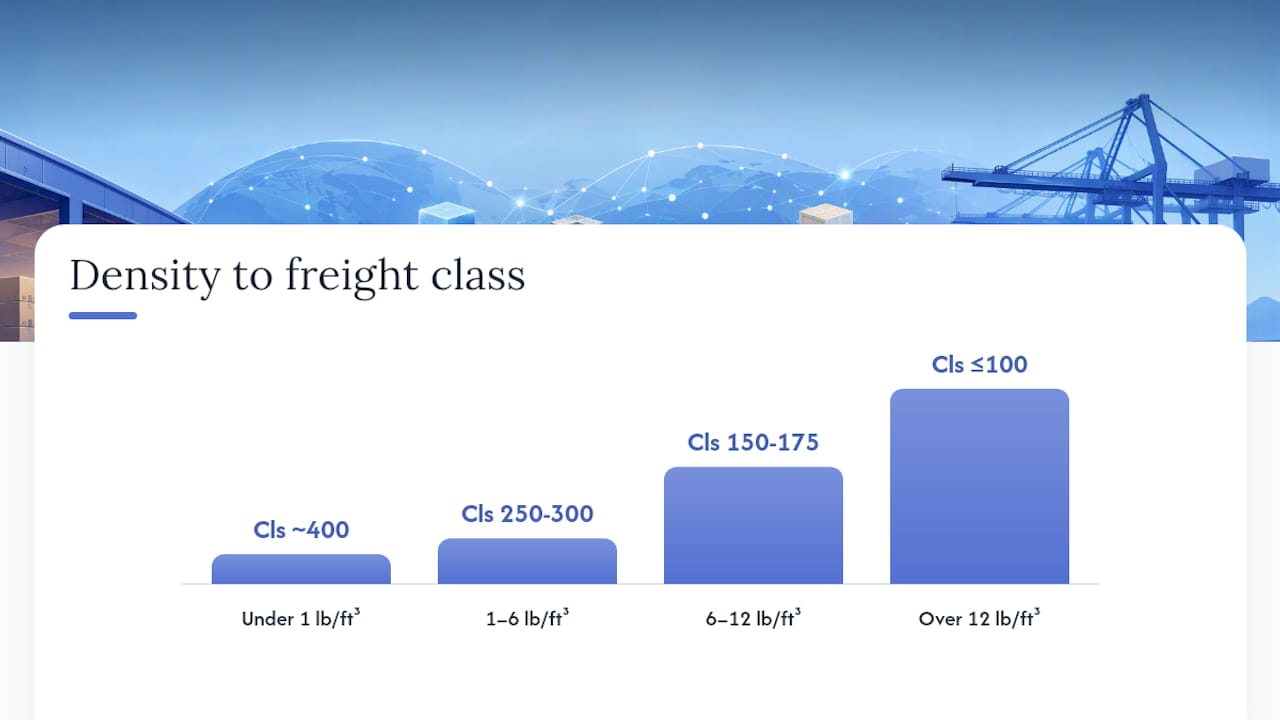
Density-based sub-items are why the same commodity name can produce wildly different classes on two different shipments. This is where a lot of the confusion between “NMFC code” and “freight class” actually comes from.
Take a common example: unassembled furniture parts often fall under a single NMFC article, but the article splits into sub-items by density.
- Under 1 pound per cubic foot: often lands around Class 400.
- 1 to 6 pounds per cubic foot: typically Class 250 to 300.
- 6 to 12 pounds per cubic foot: often Class 150 to 175.
- Over 12 pounds per cubic foot: can drop to Class 100 or lower.
Two pallets of the same furniture parts, packed differently, can land two or three classes apart. A well-compressed, tightly palletized load beats a loosely stacked one on density every time, which is why furniture shipping providers pay close attention to packing method before quoting a rate. The lookup tools that return sub-item tables make this fast to check, but the shipper still has to measure the actual handling unit rather than assume a class based on the commodity’s name.
What Causes Carrier Reclassification, and How Do You Avoid Disputes?
Reclassification disputes almost always trace back to the same handful of errors, and most are preventable with better documentation at the dock.
- Estimating density instead of measuring it. Carriers reweigh and remeasure at terminals, and a mismatch triggers an automatic reclass and a balance-due invoice.
- Not itemizing mixed pallets. Under Shipment Rule 640, if a pallet contains multiple commodities and the shipper doesn’t break them out separately on the bill of lading, the carrier can class the entire pallet at the highest class present on it.
- Vague or missing packaging notes. “Boxed” isn’t enough; carriers want carton type, cushioning, and whether it’s palletized.
- No photo or measurement record. Without proof of your original dimensions and weight, you have nothing to contest a reweigh.
Pro Tip: Photograph every pallet before it leaves your dock, with a tape measure visible in the frame. That single habit has saved shippers thousands in disputed reclassification fees.
When a dispute does happen, an official NMFTA interpretation carries real weight. Carriers typically accept documented interpretations as a defense during billing challenges, which makes the interpretation request worth the wait for high-volume or ambiguous SKUs.
How Universal Shipping Reduces Classification Risk for Shippers
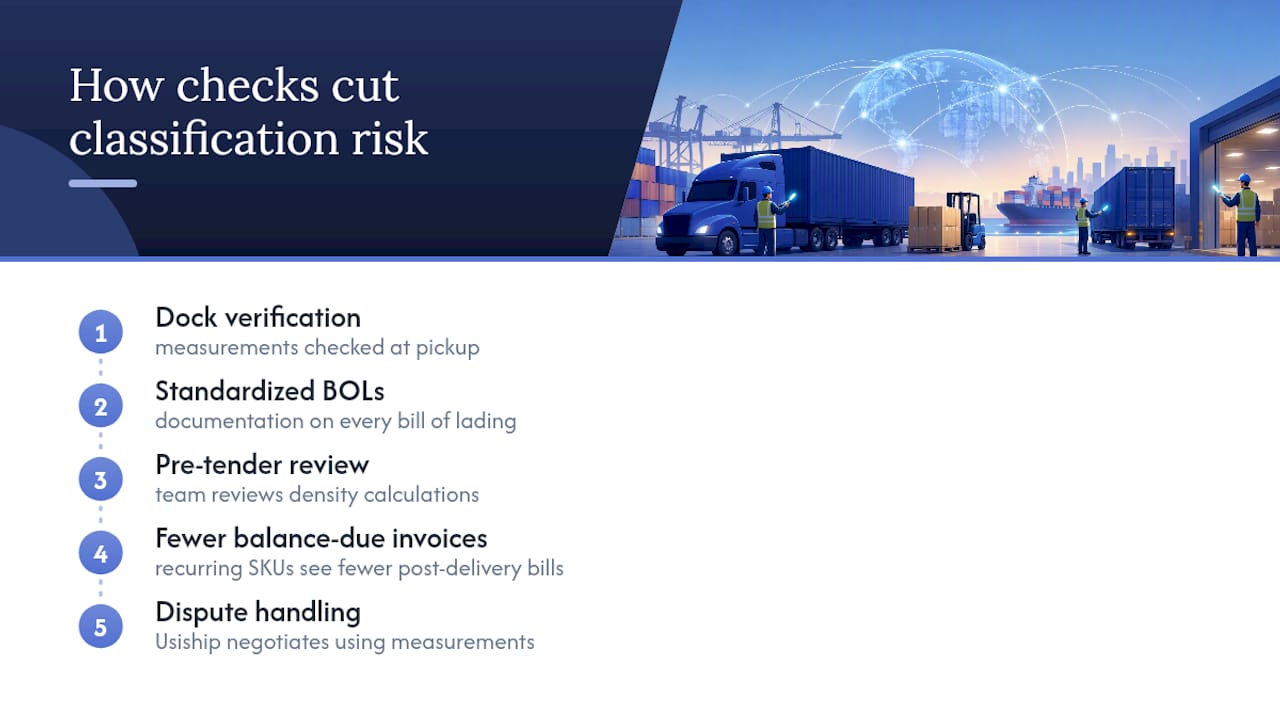
Usiship builds classification checks directly into its LTL and freight management process instead of treating it as an afterthought at pickup. That means measurement verification at the dock, standardized documentation on every bill of lading, and a team that reviews density calculations before freight ever gets tendered to a carrier.
For clients with recurring SKUs, that translates into fewer balance-due invoices landing weeks after delivery. When a reclassification dispute does come up, Usiship’s team handles the carrier negotiation directly, using documented measurements and packaging records instead of leaving the shipper to fight it alone. Readers can browse recent transport case examples to see how that plays out on real freight.
A Practical Checklist Before You Tender Your Next LTL Shipment
Run through this before any pallet leaves the dock:
- Measure every dimension yourself; don’t trust a vendor’s spec sheet.
- Calculate density and cross-check it against the ClassIT+ sub-item bracket.
- Itemize mixed pallets on the bill of lading, every time, no exceptions.
- Photograph the load with a visible measurement reference.
- Palletize tightly; loose stacking almost always pushes you into a worse density bracket.
- Get written carrier confirmation of the class before pickup.
- Run an annual audit on your top SKUs, since NMFTA docket updates can shift sub-item brackets.
Most classification disputes I’ve seen trace back to skipping step one and trusting an old spec sheet instead of measuring the actual load in front of you.
— Akbar
Get Help With Classification Audits and LTL Execution
Getting NMFC codes right on paper is one thing. Getting a carrier to honor that class on every shipment, month after month, is a different problem, and it’s the one Usiship solves for freight teams that don’t have the bandwidth to fight every reweigh dispute themselves. Usiship runs classification audits, verifies measurements before pickup, and standardizes bill of lading documentation so the numbers your team submits match what shows up on the invoice.
If mixed pallets or recurring reclassification fees are eating into your margins, that’s a documentation and process gap Usiship’s logistics and transportation team is built to close. Furniture and other low-density freight in particular benefit from the packing standards used in Usiship’s furniture shipping service, which is designed around exactly the density brackets covered above. Get a rate quote and a classification review started at Usiship.
Where to Verify NMFC Codes and Classification Rules
For direct lookups, go to NMFTA’s classification standard page and the ClassIT+ update portal. For definitions of terms like article, sub-item, and SCAC, check the NMFTA glossary. For disputed classifications, request a formal NMFTA interpretation.