
ISF Filing (10+2): Requirements, Deadline and How to File
An ISF filing, also called 10+2, is the advance cargo data you send to U.S. Customs and Border Protection (CBP) for ocean shipments before the cargo is loaded on the vessel overseas. The importer owns it, most of the data is due no later than 24 hours before loading, and a late, wrong or missing filing can bring penalties, extra inspections and delayed cargo. This guide covers who must file, the ten data elements, the exact timing, how the filing is transmitted, and the mistakes that cause trouble.
TL;DR
- ISF 10+2 applies to cargo arriving in the United States by vessel. Air, truck and rail shipments are outside the rule.
- The ISF importer is responsible for the filing and cannot hand that responsibility to someone else, even when a broker transmits the data.
- Importers provide 10 data elements. Carriers provide 2 more. Eight of the importer elements are due no later than 24 hours before the cargo is laden aboard the vessel at the foreign port.
- The filing must go through a CBP-approved electronic system, which in practice means a licensed customs broker or a filing service.
- Non-compliance can mean monetary penalties, increased inspections and cargo delays, so collect your data from suppliers well before the booking cutoff.
Table of Contents
- What the ISF importer security filing is
- Who has to file: the ISF importer
- The 10 data elements
- The ISF filing deadline
- How to file an ISF with CBP
- Penalties and what goes wrong
- Our perspective: treat ISF as part of the shipment, not a form
- Getting your ISF filed with Universal Shipping
- Practical checklist before every ocean shipment
- FAQ
- Sources
What the ISF importer security filing is
The Importer Security Filing and Additional Carrier Requirements, known in the trade as “10+2,” is a CBP rule that applies to import cargo arriving in the United States by vessel. The “10” is the number of data elements the importer supplies. The “2” is the pair of additional data sets the carrier supplies.
The purpose is risk screening. CBP receives information about what is in the container, who made it, who is buying it and where it was packed while the cargo is still at the foreign port, so it can decide what to examine before the ship ever sails.
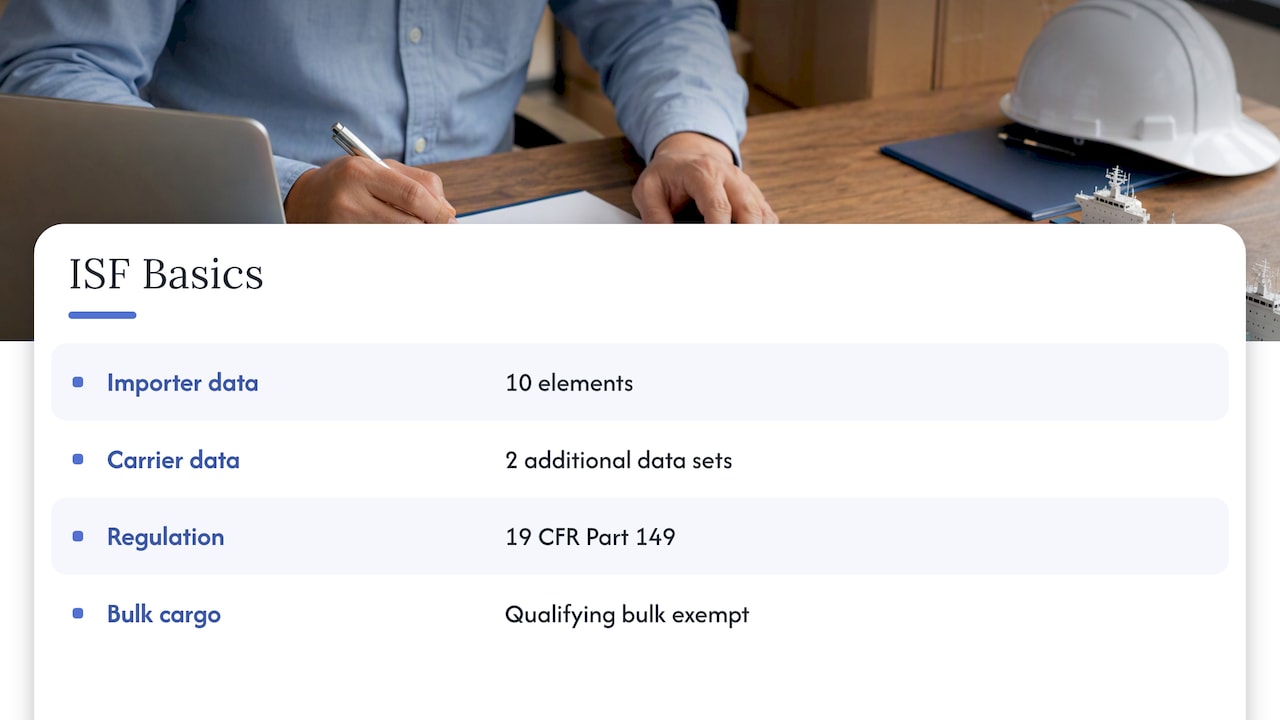
The regulation behind it is 19 CFR Part 149. It says that for cargo arriving by vessel, except bulk cargo, the ISF importer or an authorized agent must submit the prescribed elements. Qualifying bulk cargo is exempt. Containerized cargo, break bulk and roll-on/roll-off shipments are what most importers actually move, and all of those are covered.
Which shipments need an ISF
| Mode of arrival | ISF required? |
|---|---|
| Ocean container (FCL or LCL) | Yes |
| Break bulk or Ro-Ro by vessel | Yes |
| Qualifying bulk cargo by vessel | No, exempt under the regulation |
| Air freight | No, the rule covers vessel cargo |
| Truck or rail from Canada or Mexico | No, the rule covers vessel cargo |
The fact that air cargo does not need an ISF does not mean it needs no advance data. Air shipments have their own advance information requirements and a separate customs entry process. If you move both modes, our notes on air freight and customs holds cover the air side.
Who has to file: the ISF importer
The ISF importer is usually the party that will be the importer of record for the shipment, though it can be other parties in certain cases, such as a cargo owner or a freight forwarder acting in specific roles. What matters in practice is this: CBP’s program FAQ states that the responsibility for the filing sits with the ISF importer and cannot be transferred to another party. The importer also remains ultimately liable for a complete, accurate and timely filing.
That has a plain consequence. You can hire a broker to transmit the filing. You cannot hire away the liability. If your supplier sends the wrong manufacturer address or your broker never receives the commodity number, the exposure still lands on you.
What the carrier adds
The “+2” belongs to the vessel operator: vessel stow plans and container status messages. You do not file these, but they are the reason the rule is described as importers and carriers sharing the work. Your only job on the carrier side is to choose a carrier that is set up for U.S. advance filing and to give accurate booking details.
The 10 data elements
Under 19 CFR 149.3(a), the importer provides these ten items:
- Seller
- Buyer
- Importer of record number or FTZ applicant identification number
- Consignee number(s)
- Manufacturer (or supplier)
- Ship to party
- Country of origin
- Commodity HTSUS number
- Container stuffing location
- Consolidator (stuffer)
Where each item usually comes from
Most late filings are not caused by a broker’s slowness. They happen because the data sits in different hands. A practical way to organize it:
| Data element | Who usually holds it | Common trap |
|---|---|---|
| Seller and buyer | Your purchase order and commercial invoice | Using a trading company name where the legal seller differs |
| Importer of record and consignee numbers | You, or your broker through your customs power of attorney | Number mismatch with the entry later filed |
| Manufacturer (or supplier) | Your supplier | Giving the supplier’s office address instead of the factory address |
| Ship to party | Your logistics plan | Listing the port or the forwarder, not the delivery location |
| Country of origin | Supplier, verified against the product | Confusing country of origin with country of export |
| Commodity HTSUS number | Your classification | Guessing the code from a similar product |
| Stuffing location | Supplier or factory | Naming the port rather than the place where the container was packed |
| Consolidator (stuffer) | Supplier or consolidator | Missing when cargo is consolidated by a third party |
For the commodity number, the rule asks for a minimum level of detail, and the same code should line up with the one you will use on your customs entry. A packing list that is vague about contents makes this harder, which is why we wrote up the packing list details that prevent holds.
The ISF filing deadline
Timing is where importers get caught. The deadline is tied to when the cargo is loaded at the foreign port, not to when the vessel reaches the U.S. According to 19 CFR Part 149:
| Elements | Submit no later than |
|---|---|
| Seller, buyer, importer of record or FTZ applicant number, consignee number(s) | 24 hours before the cargo is laden aboard the vessel at the foreign port |
| Manufacturer, ship to party, country of origin, commodity HTSUS number | 24 hours before the cargo is laden aboard the vessel at the foreign port |
| Container stuffing location and consolidator | As early as possible, and no later than 24 hours before arrival at a U.S. port, or upon lading if the voyage to the nearest U.S. port is under 24 hours |
Treat 24 hours as the legal floor, not your working target. Carriers set cargo cutoffs that fall before loading, and your supplier needs time to answer questions. If the first time anyone asks for the manufacturer’s address is the day of the cutoff, you are already at risk.
A working timeline
There is no regulatory timeline beyond the 24-hour rule, so the following is our suggested practice, not a CBP requirement:
- At booking: send your broker the purchase order, supplier details and your customs power of attorney.
- When the supplier confirms the cargo is ready: get the factory address, stuffing location and the commodity description from the supplier in writing.
- Several days before the cutoff: have the broker file the ISF so you have time to correct it. An ISF can be amended if details change.
- After filing: check the acceptance response and keep a copy with the shipment record.
The last step matters because the filing is yours. A confirmation in your files shows what was submitted and when.
How to file an ISF with CBP
You cannot type your ISF into a CBP web form. The regulation requires submission through a CBP-approved electronic interchange system. CBP’s ISF FAQ points importers to its list of Sea AMS service providers or the ABI software vendor listing when looking for a provider.
In practice you have three routes:
- A licensed customs broker. The most common route. The broker files the ISF, then typically handles the entry too, so the data lines up. See how our customs clearance services work.
- A freight forwarder or NVOCC with filing capability. Convenient when the forwarder already books your ocean freight.
- Your own software. Large, frequent importers sometimes connect directly through approved software. For most small and mid-sized importers, the cost and upkeep make it impractical.
What to give your filer
Before the first shipment with a new filer, prepare:
- A signed customs power of attorney and a check that the importer of record details match your bond and records
- Your importer of record number
- Supplier and factory names and addresses
- HTS classification for each product line
- The booking number, vessel and port details
- The party that will stuff the container and where
Penalties and what goes wrong
CBP states that failure to comply with the 10+2 rule could result in monetary penalties, increased inspections and delay of cargo. Each of those costs money even before a penalty is assessed. A held container accrues port storage and demurrage, may need a trucker rebooked, and can miss a retail receiving window.
We will not quote a penalty figure here, because the amount depends on the type of violation and on mitigation decisions made case by case. Ask your broker for the current CBP penalty guidance when you set up your account.
The mistakes we see most
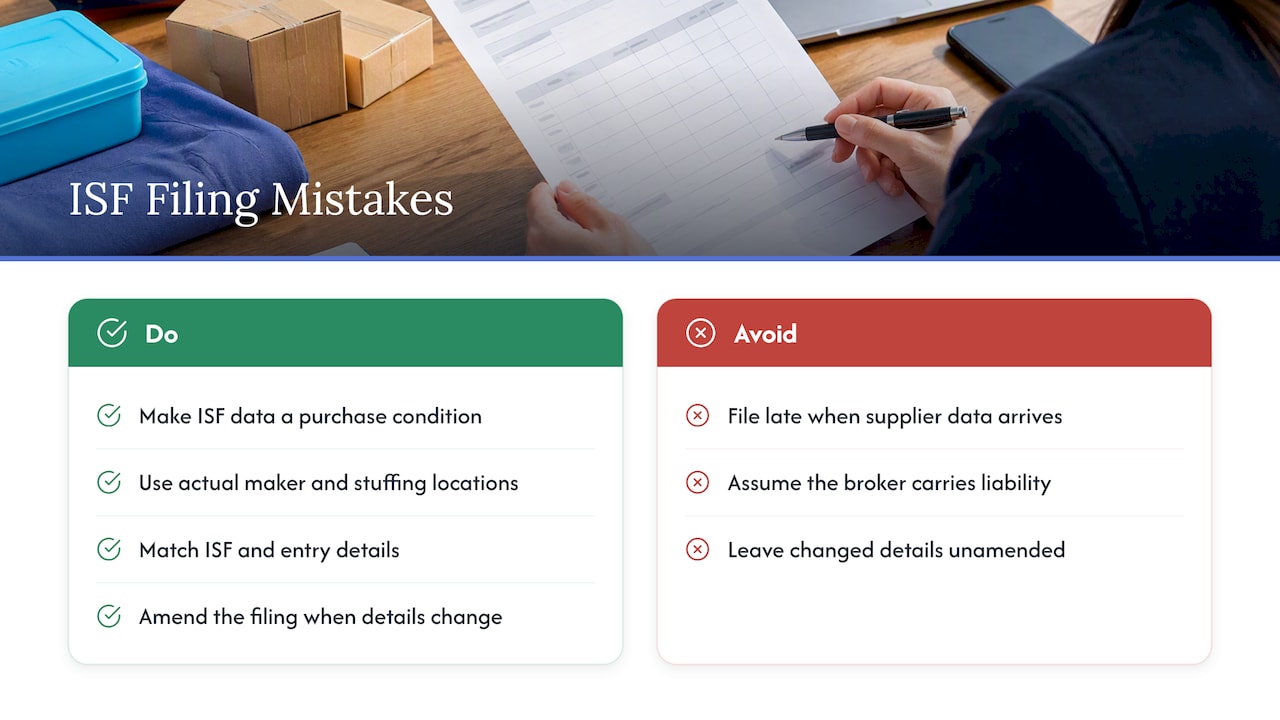
Filing late because data arrived late. The supplier controls the clock. Make delivery of ISF data a condition in your purchase terms.
Wrong manufacturer or stuffing location. A trading company often sells the goods but a different factory makes them. A container may also be stuffed at a consolidator’s warehouse far from the factory. The filing needs the real places.
Mismatched data between the ISF and the entry. Your HTS number, importer number and parties should agree across documents. Differences invite questions.
Assuming the broker carries the risk. As noted above, liability stays with the ISF importer.
Not amending when something changes. If the container is restuffed or the supplier changes, the filing should be updated.
When you cannot verify the data
The regulation recognizes that an importer or filer sometimes receives information it cannot independently check. 19 CFR Part 149 permits submission based on what the presenter reasonably believes to be true when the information comes from another party and cannot reasonably be verified. That is not a shortcut. It means you should be able to show you asked, and what you were told.
Our perspective: treat ISF as part of the shipment, not a form
We handle freight forwarding, customs brokerage and warehousing for importers, so we see the same pattern on shipments that run into trouble. The ISF is rarely the hardest document. It is the first one that exposes a weak handoff between supplier, forwarder, broker and warehouse.
Three habits help our customers most:
- Collect the data once, in one place. The same supplier details feed the ISF, the commercial invoice, the packing list and the customs entry. If they are typed four times, they will differ somewhere.
- Keep the roles clear. Who books the ocean leg, who files the ISF and who files the entry should be written down before the cargo moves. We explain how to sort that out in our guide to keeping customs roles clear on door to door freight.
- Plan the landing, not just the departure. ISF cleared and entry cleared still leave you with a container to devan. If part of your cargo may be examined, choosing the right CFS warehouse can reduce delays and handling surprises.
Our positioning is simple: transportation, customs and warehousing under one platform, with real-time tracking and people reachable around the clock. For an importer, that means the party filing your ISF can see where the container is and where it is going next, instead of passing questions between three companies.
— Akbar
Getting your ISF filed with Universal Shipping
If you import by ocean and want one team across the filing, the customs entry, and the delivery, our freight forwarding services include customs brokerage and air and ocean freight. Pair it with our warehousing and fulfillment solutions if the cargo is headed to inventory, and review the published warehouse pricing to plan your landed costs. Freight and brokerage quotes are given per shipment, so send us your lane and commodity details to get one.
Practical checklist before every ocean shipment
- Confirm the shipment is by vessel and not bulk cargo that qualifies for the exemption
- Confirm who the ISF importer is, and that your broker has your power of attorney
- Get the factory address and stuffing location in writing from the supplier
- Verify country of origin and the HTS number against the product, not a similar item
- Ask the filer for the target filing date, which should be well ahead of the carrier’s cargo cutoff
- Save the acceptance message with the shipment file
- Amend promptly when anything changes after filing
If you are screening your trading partners as well, our piece on denied party screening shows how that check fits before booking.
FAQ
Who should file an ISF 10+2?
The ISF importer is responsible, and that responsibility cannot be transferred. Most importers hire a licensed customs broker or other approved filer to transmit the data for them. You still need to make sure the information is complete, accurate and on time.
Is ISF required for air or truck shipments?
No. The 10+2 rule covers import cargo arriving in the United States by vessel. Air, truck and rail shipments follow other advance information and entry processes. Qualifying bulk cargo by vessel is also exempt.
When should an ISF be filed?
Most of the importer data must be submitted no later than 24 hours before the cargo is laden aboard the vessel at the foreign port. Container stuffing location and consolidator data are due as early as possible, and no later than 24 hours before arrival at a U.S. port. Filing several days ahead leaves room for corrections.
How do I file an ISF with U.S. Customs?
You submit it through a CBP-approved electronic interchange system, usually via a customs broker or filing service. CBP suggests searching its Sea AMS service provider list or the ABI software vendor listing to find one. Provide the ten data elements and your power of attorney to the filer.
What happens if my ISF is late or wrong?
CBP says non-compliance could lead to monetary penalties, increased inspections and delay of cargo. A held container also adds storage and rebooking costs. Correct errors quickly and talk to your broker about the specific situation.
Sources
- Importer Security Filing “10+2”, U.S. Customs and Border Protection
- 19 CFR Part 149, Importer Security Filing (eCFR)
- Importer Security Filing “10+2” Program FAQ, CBP
- List of FAQs for the Importer Security Filing, CBP, May 2023