

Finding a dependable logistics partner can make or break your fulfillment operations. Whether you’re scaling an e-commerce brand or streamlining a manufacturing supply chain, working with the right outsourced fulfillment partner determines how quickly, accurately, and cost-effectively your products reach customers. With hundreds of third-party logistics companies operating across the country, narrowing down the right fit requires more than a quick online search. This guide breaks down the key factors business owners should evaluate before signing a contract with a logistics outsourcing partner.
Why Your Logistics Partner Matters More Than Ever
Supply chains have grown more complex over the past few years, and businesses can no longer afford to treat warehousing and shipping as an afterthought. A capable third-party logistics provider does far more than move boxes from point A to point B — it becomes an extension of your operations team. Delayed shipments, inaccurate inventory counts, or poor communication from a fulfillment partner can quickly damage customer trust and repeat business.
Choosing wisely also affects your bottom line. Freight rates, storage fees, and labor costs vary significantly between providers, and a poorly matched partnership can lead to unnecessary overhead. On the other hand, a well-aligned logistics outsourcing relationship can reduce transportation spend, shorten delivery windows, and free up internal resources to focus on growth. Before comparing vendors, it helps to define your own priorities: Are you looking for nationwide distribution, faster last-mile delivery, or specialized handling for fragile or high-value goods? Having clarity on your needs makes the evaluation process far more efficient and prevents costly trial-and-error switching later on.
Assess Their Warehousing and Fulfillment Capabilities
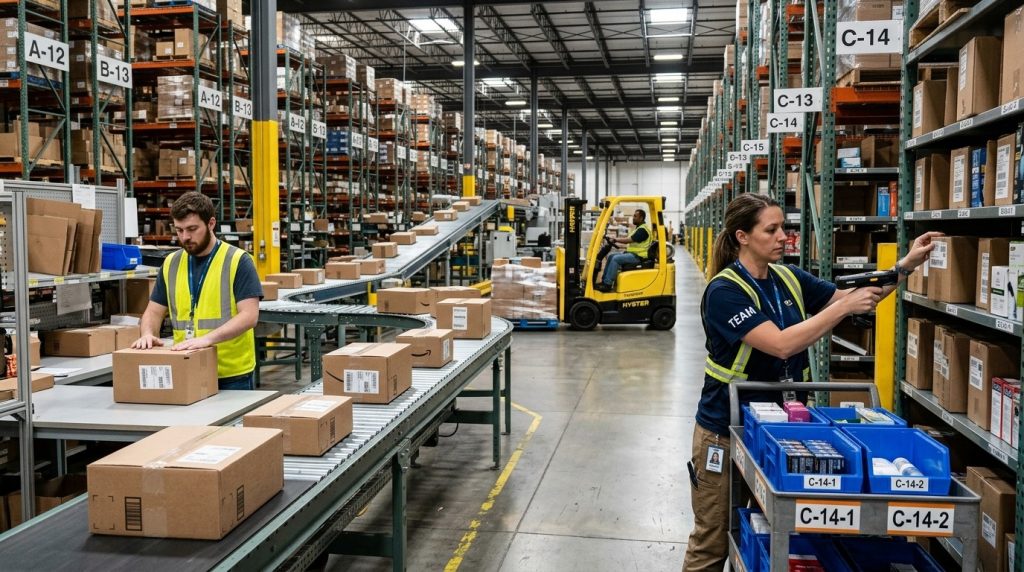
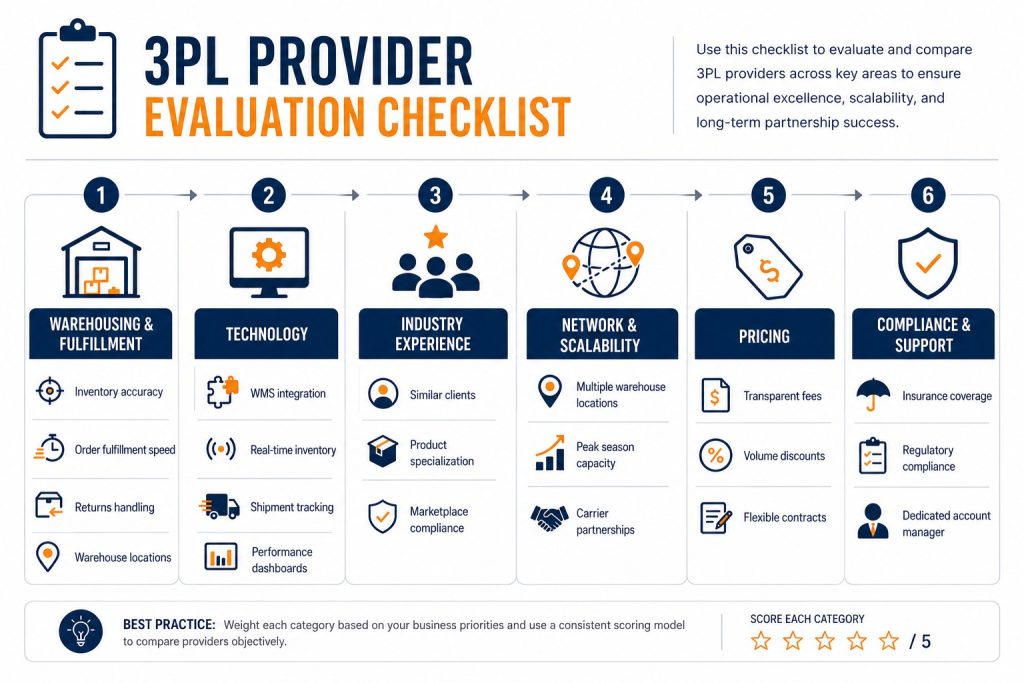
Storage capacity and fulfillment accuracy sit at the core of any logistics partnership. Before committing, ask potential partners about their total warehouse footprint, climate-controlled storage options, and how they handle peak-season volume spikes. A provider with strong warehousing and fulfillment infrastructure should be able to demonstrate real inventory accuracy rates, not just promise them.
It’s also worth understanding how orders move through their facilities — from receiving and put-away to picking, packing, and outbound shipping. Ask about average order turnaround times and how they manage returns processing, since reverse logistics is often overlooked until it becomes a bottleneck. Facility location matters too; a provider with strategically placed warehouses across multiple U.S. regions can significantly cut transit times and shipping costs compared to a single-location operator. If your business ships internationally or handles imports, confirm whether the provider offers integrated customs clearance and cross-border coordination so goods don’t get stuck at ports or held up in transit due to paperwork issues.
Evaluate Technology and Real-Time Visibility
Modern logistics runs on data, and any partner still relying on spreadsheets or manual updates will slow your business down. Look for a provider offering a warehouse management system (WMS) that integrates directly with your existing sales channels, whether that’s Shopify, Amazon, WooCommerce, or an ERP platform. Real-time inventory visibility means you always know what’s in stock, what’s in transit, and what needs replenishing — without waiting on emails or phone calls.
Beyond inventory tracking, ask about shipment visibility tools that let both you and your customers track orders from dispatch to delivery. Automated tracking notifications reduce customer service inquiries and improve the post-purchase experience. Also inquire about reporting dashboards; a provider that gives you access to KPIs like order accuracy, on-time shipping rates, and cost-per-shipment allows you to make informed decisions rather than guessing. Providers who invest in technology tend to also be more transparent, since automated systems leave less room for the kind of manual errors that damage trust between partners over time.
Check Industry Experience and Specialization
Not every logistics company handles every type of product equally well. A provider experienced in apparel fulfillment may not have the right equipment or protocols for handling electronics, perishables, or oversized furniture. Ask potential partners about their experience within your specific industry and request examples of similar clients they currently serve.
E-commerce sellers in particular should confirm whether the provider has direct experience with omnichannel and marketplace fulfillment, since requirements for retail packaging, labeling, and compliance differ from marketplace-specific rules. If you sell through Amazon, it’s also worth checking whether the provider offers dedicated prep and labeling services that meet current marketplace packaging standards, since non-compliant shipments can result in rejected inventory and lost sales momentum. Specialization isn’t just about avoiding mistakes — providers with niche experience often move faster because their teams already understand the operational nuances of your product category, reducing the learning curve that comes with onboarding a generalist partner.
Look at Network Coverage and Scalability
Business growth is unpredictable, and your logistics partner should be able to scale alongside you rather than becoming a bottleneck during busy seasons. Ask potential providers how they handle sudden volume increases, whether during holiday rushes or unexpected demand spikes tied to promotions or viral products. A provider offering broad logistics and distribution network coverage across multiple states can help you reach customers faster while balancing inventory across regional hubs.
Scalability isn’t only about physical space — it also includes staffing flexibility, carrier relationships, and the ability to onboard new SKUs quickly. Ask how long it typically takes to get new products live in their system, since delays here can stall product launches. It’s also worth discussing exit terms upfront. What happens if you need to scale down operations or transition to a different provider later? A transparent partner will walk you through onboarding and offboarding processes clearly, rather than locking you into rigid long-term commitments that don’t accommodate changing business needs.
Review Pricing Structure and Contract Flexibility
Cost is naturally a major factor, but the cheapest quote isn’t always the best value. Request a detailed breakdown of pricing, including storage fees, pick-and-pack charges, receiving fees, and any accessorial costs that might apply for special handling. Hidden fees are one of the most common sources of frustration in logistics partnerships, so clarity upfront prevents budget surprises down the line.
Compare pricing models across a few providers to understand market rates, and don’t hesitate to ask how their fee structure changes as your volume grows — many providers offer tiered discounts for higher shipment volumes. Contract length and flexibility matter just as much as price. Some businesses prefer month-to-month agreements for flexibility, while others benefit from locked-in rates over a longer term. Understanding how outsourcing logistics can reduce overall shipping expenses compared to in-house fulfillment can also help set realistic expectations when comparing quotes side by side.
Ask About Compliance, Insurance, and Customer Support
Regulatory compliance and liability coverage are often overlooked until something goes wrong. Confirm that any provider you’re considering carries adequate cargo insurance and follows proper licensing for interstate and international shipments. If you’re shipping regulated products, such as food, cosmetics, or medical supplies, ask directly about their compliance protocols and any relevant certifications.
Customer support responsiveness is equally important. Ask how quickly they respond to issues like shipment delays, damaged goods, or inventory discrepancies, and whether you’ll have a dedicated account manager or a rotating support queue. Providers with fast, direct communication channels tend to resolve problems before they escalate into larger operational headaches. A company like Universal Shipping Inc. built its reputation on transparent communication and hands-on account management, which is the kind of relationship worth prioritizing over providers that treat support as an afterthought. Before signing anything, request references from current clients so you can hear firsthand how the provider handles both routine operations and unexpected challenges.
Frequently Asked Questions
1. How long does it typically take to onboard a new logistics partner? Onboarding timelines vary depending on inventory volume and system integrations, but most businesses can expect anywhere from two to six weeks. This includes transferring inventory, setting up system integrations, and testing order workflows before going fully live.
2. What’s the difference between a fulfillment center and a full-service logistics provider? A fulfillment center typically focuses on storage, picking, and packing, while a full-service provider often handles broader functions like freight forwarding, customs clearance, and transportation management in addition to warehousing.
3. Can smaller businesses benefit from outsourcing logistics, or is it only useful for large companies? Smaller businesses often benefit the most, since outsourcing removes the need for upfront warehouse investment and staffing while still providing access to established carrier networks and volume-based shipping discounts.
4. How do I know if a provider’s technology will integrate with my sales platform? Ask directly which e-commerce platforms, marketplaces, and ERP systems they support, and request a demo of their inventory dashboard before signing a contract to confirm compatibility with your existing tools.
5. What should I do if my shipping needs change seasonally? Discuss seasonal flexibility during initial negotiations. Reliable providers can typically scale warehouse space and staffing during peak periods, so it’s important to confirm this capability and any related costs in advance.