
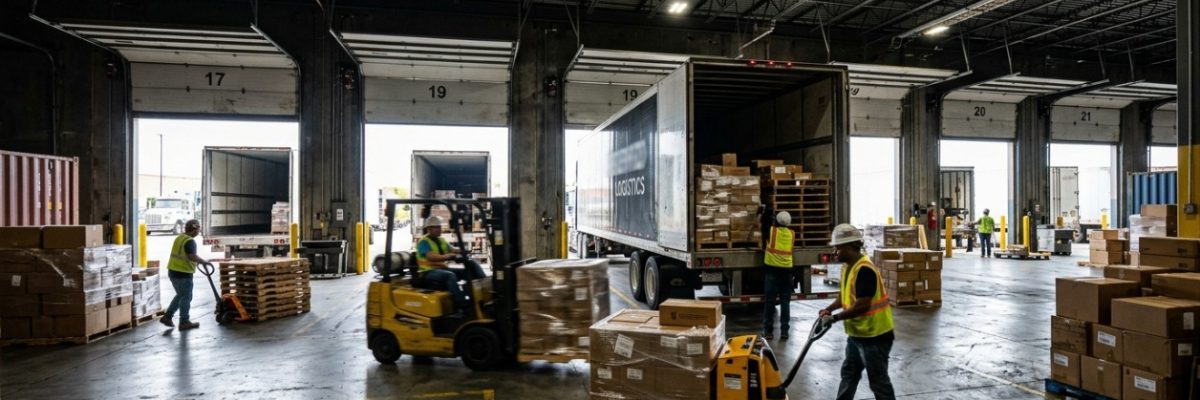
Shipping costs are one of the most persistent budget pressures for growing businesses. Whether you run an eCommerce store or manage B2B distribution, the expenses tied to warehousing, carrier rates, and last-mile delivery can quietly eat into your margins if left unmanaged. Many businesses are now turning to outsourced fulfillment and 3PL warehousing solutions as a practical way to gain cost control without sacrificing speed or service quality. Third-party logistics providers bring carrier relationships, technology, and operational infrastructure that most businesses simply cannot build on their own.
Understanding exactly how this works, and where the savings actually come from, helps you make a more informed decision about whether outsourcing your logistics is the right move.
What Is a Third-Party Logistics Provider?
A third-party logistics provider, commonly referred to as a 3PL, is a company that handles some or all of your supply chain operations on your behalf. This typically includes receiving inventory, storing it in a managed warehouse, picking and packing orders, and shipping them to customers or retail partners.
Rather than managing a private warehouse, hiring fulfillment staff, and negotiating individually with carriers, you essentially plug into an already-running operation. The 3PL absorbs the fixed infrastructure costs and spreads them across multiple clients, which is the foundation of how cost savings are generated.
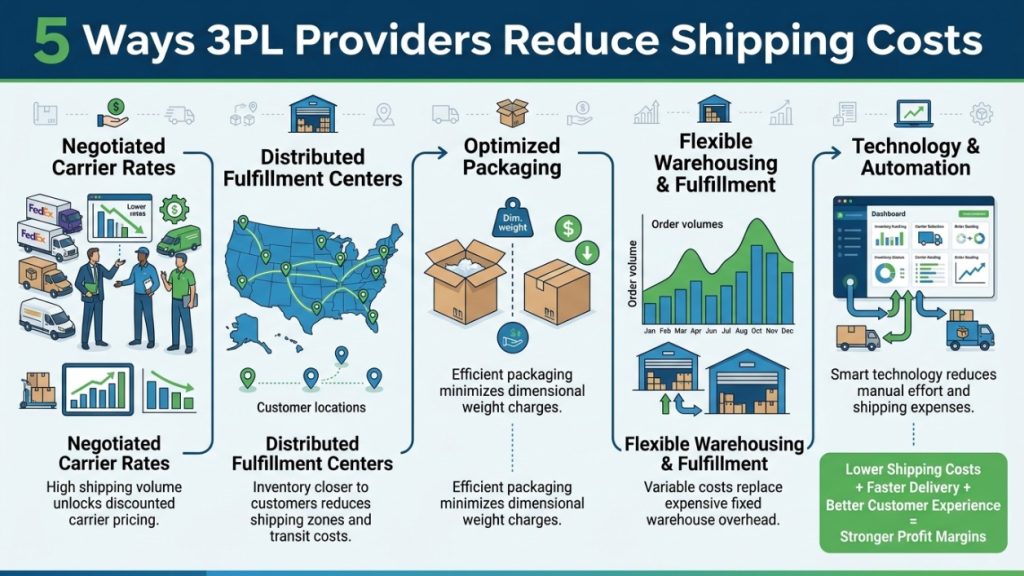
Key Ways 3PL Providers Reduce Shipping Costs
1. Negotiated Carrier Rates Through Shipping Volume
One of the most direct ways a 3PL reduces your shipping costs is through bulk carrier rate negotiation. Because a 3PL ships for dozens or hundreds of clients simultaneously, they move enormous volumes through carriers like FedEx, UPS, DHL, and regional courier networks. This gives them leverage to negotiate rates that a single business could never access on its own.
When you ship through a 3PL, you benefit from these pre-negotiated discounts without needing the volume to qualify for them yourself. For small to mid-sized businesses, this alone can reduce per-shipment costs by anywhere from 15% to 35% depending on the carrier and service level.
2. Distributed Inventory Reduces Transit Zones
Carrier pricing is heavily influenced by shipping zones. The more zones a package crosses from origin to destination, the higher the cost. Businesses that ship from a single warehouse often face high average zone counts, which inflates shipping costs across the board.
Many 3PL providers operate fulfillment centers in multiple locations across the country. By storing inventory closer to your customer base, orders travel fewer zones and arrive faster. This combination of lower shipping costs and improved delivery speed directly improves both your margins and your customer satisfaction.
For example, a business shipping exclusively from one coast will pay significantly more to reach customers on the opposite coast compared to a business with inventory distributed across regional hubs.
3. Optimized Packaging and Dimensional Weight Savings
Carriers charge based on either actual weight or dimensional weight, whichever is higher. Oversized or inefficient packaging means you are paying for air. Many businesses do not audit their packaging regularly and end up consistently overpaying on dim weight charges.
Experienced 3PL operations use systems and trained staff to right-size packaging for each order. Over thousands of shipments, this reduces unnecessary dimensional weight charges and can result in meaningful monthly savings without changing anything about your product.
4. Lower Warehousing and Fulfillment Overhead
Running a private warehouse means fixed costs regardless of order volume. You pay rent, utilities, equipment, insurance, and staffing whether you ship 200 orders or 2,000 that month. For most growing businesses, this creates cash flow pressure during slow periods and operational strain during peak seasons.
With a 3PL, warehousing and fulfillment costs become variable. You pay for the space and labor you actually use. During low seasons, costs drop. During high-volume periods like Q4, the 3PL scales its operations without you needing to hire temporary staff or lease additional space. This model gives businesses much better cost predictability and flexibility.
5. Technology and Automation Without the Investment
Warehouse management systems, order routing software, carrier comparison tools, and inventory tracking platforms are expensive to implement and maintain. Most growing businesses do not have the budget or the technical teams to build this infrastructure in-house.
A 3PL brings this technology as part of the service. Automated order routing selects the lowest-cost carrier and service level for each shipment based on destination, weight, and delivery window. Over time, this systematic carrier selection makes a meaningful difference to overall supply chain management costs.
Cost Comparison: In-House Fulfillment vs. 3PL Outsourcing
The table below illustrates a simplified comparison of common cost categories between managing fulfillment in-house versus using a 3PL provider. Numbers represent approximate monthly costs for a mid-sized eCommerce business shipping around 1,000 orders per month.
| Cost Category | In-House Fulfillment | 3PL Provider |
| Warehouse Rent (per month) | $4,500 – $7,000 | Included in per-unit fee |
| Fulfillment Staff (2–3 FTEs) | $6,000 – $9,000 | Included in pick/pack fees |
| Carrier Rates (avg. per shipment) | $9.50 – $14.00 | $6.50 – $10.50 |
| WMS / Tech Stack | $500 – $1,500 | Included |
| Packaging Waste / Dim Weight Overage | $300 – $800 | Typically reduced by 20–40% |
| Seasonal Scaling Cost | High and unpredictable | Variable and managed |
As the table shows, the cost advantage of outsourcing logistics becomes more pronounced as order volume and complexity grow. The savings on carrier rates and warehousing overhead often outweigh the service fees paid to a 3PL by a noticeable margin.
Additional Benefits That Indirectly Lower Costs
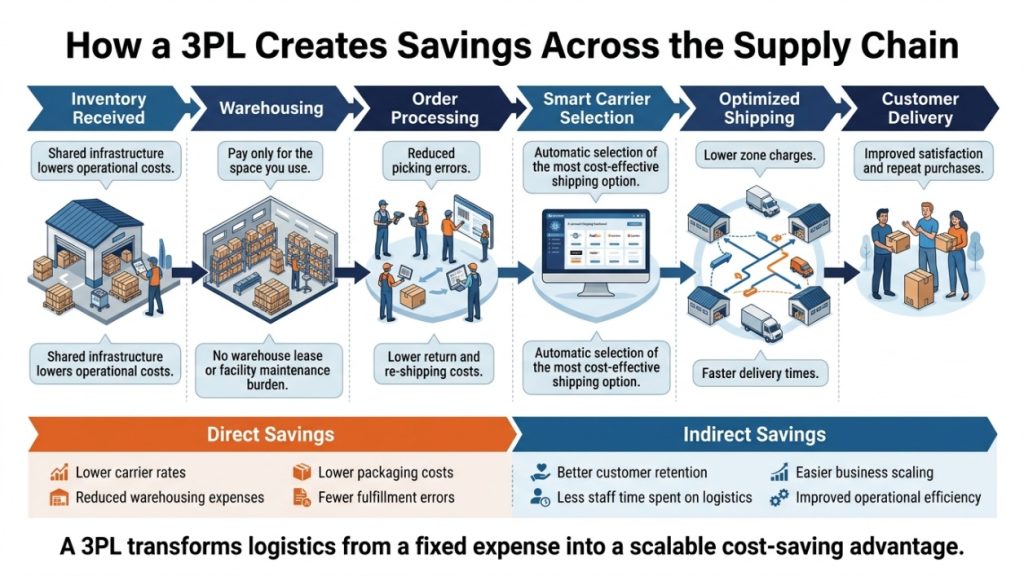
Professional 3PL providers help reduce costly fulfillment errors through barcode scanning, verification workflows, and quality control processes. Fewer mis-picks, labeling mistakes, and damaged shipments mean fewer returns, lower re-shipping expenses, and reduced customer service costs. Improved order accuracy also supports customer satisfaction, encouraging repeat purchases and referrals.
Outsourcing logistics allows your team to focus on activities that directly drive growth. Instead of spending time managing warehouse operations, resolving shipping issues, or handling carrier claims, employees can concentrate on sales, marketing, customer relationships, and product development. This shift often creates value that extends far beyond transportation and fulfillment savings.
A 3PL also makes it easier to scale without significant capital investment. Businesses can expand into new markets, support seasonal demand, or introduce new product lines without committing to additional warehouse space, equipment, or staffing. By leveraging the provider’s established infrastructure and network, growth can be achieved more quickly and with less financial risk.
How to Choose the Right 3PL Partner
Not all 3PL providers are created equal. When evaluating options, pay attention to the following:
- Location of fulfillment centers: Proximity to your customer base directly affects zone-based shipping costs and transit times.
- Carrier network breadth: More carrier options mean better rate comparison and fewer service gaps.
- Technology integrations: Confirm compatibility with your eCommerce platforms such as Shopify, WooCommerce, or Amazon.
- Pricing transparency: Clear, itemized pricing avoids hidden fees that offset the savings you expected.
- Scalability: Can they handle your peak season volume without service degradation?
The right 3PL operates as an extension of your business, not just a vendor. Their performance directly affects your customer experience and your cost structure.
Working With a Trusted Logistics Partner
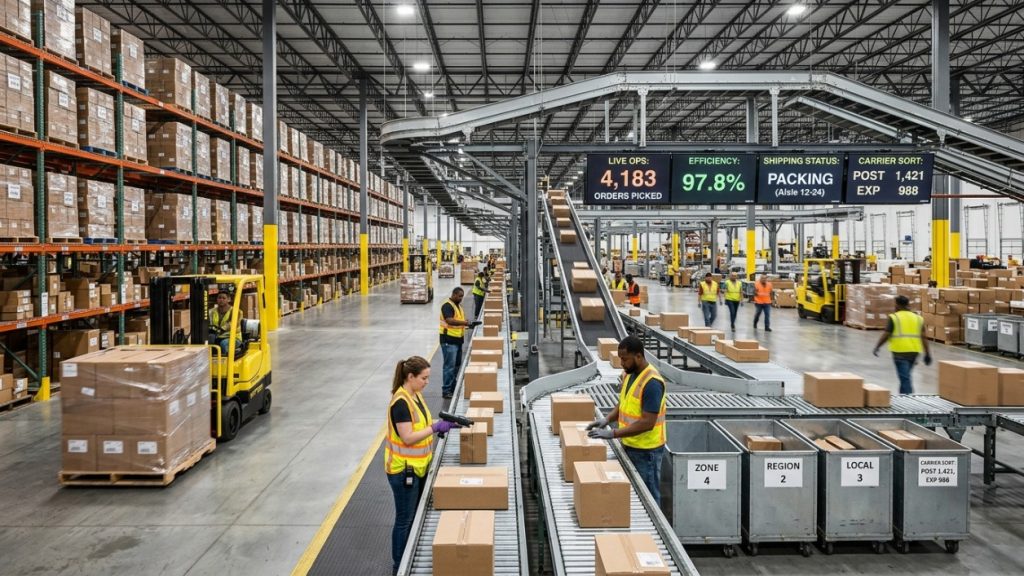
For businesses looking to reduce shipping costs without sacrificing delivery reliability, working with an established logistics partner is a practical first step. Universal Shipping Inc. offers end-to-end warehousing, fulfillment, and carrier-optimized freight shipping solutions designed for eCommerce brands and B2B distributors across the USA.If you are evaluating your options, partnering with a reliable freight forwarding company in the USA gives you access to the infrastructure, rates, and expertise needed to manage shipping costs strategically as your business grows.