
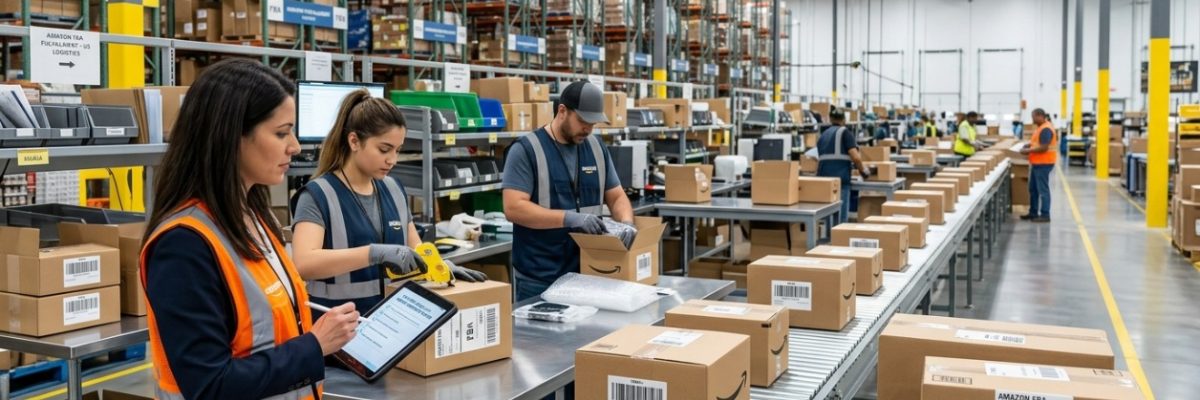
Amazon ended its in-house prep and item labeling on January 1, 2026, which means the work of getting inventory check-in ready now falls on sellers. For most brands, the practical answer is to bring in a professional third-party prep partner rather than build a labeling operation from scratch. The hard part is knowing how to separate a genuinely capable prep center from one that simply has a warehouse and a label printer. This guide walks through what actually matters when you evaluate providers, so you can pick one that protects your margins instead of quietly draining them.
Why the Right Prep Partner Matters More in 2026
Inbound compliance is no longer a nice-to-have. When a shipment arrives at an Amazon fulfillment center without correct FNSKU labeling, suffocation warnings, or proper carton labels, Amazon applies an inbound defect fee per unit. For a high-volume seller, those penalties stack up fast, and a single rejected shipment can stall a product launch. A reliable prep operation is essentially a quality assurance step that keeps your account health intact and your inventory flowing.
The shift also raised the stakes on accuracy. Since you can no longer pay Amazon to fix prep mistakes on your behalf, the burden of getting it right the first time sits entirely with your provider. That makes the selection process a real operational decision, not a simple purchasing task. The provider you choose now influences your landed cost per unit, your replenishment speed, and how confidently you can scale into busy seasons without watching shipments get held at the dock.

Know Your Own Operation First
Before you compare vendors, get clear on your own profile. The right answer for a fragile-goods seller is very different from the right answer for someone moving thousands of identical units through a single channel.
Map out your SKU mix, product categories, average and peak monthly volumes, and how much kitting or bundling you need. Note the split between small parcel and palletized freight. A prep center that excels at simple poly bagging may struggle with multipack assembly or regulated categories such as supplements or electronics. Write down any special handling your products require, like fragile packaging, temperature control, or expiration date tracking. Matching your catalog to a provider’s real strengths is the single biggest predictor of a smooth relationship, and it stops you from paying for capabilities you will never use.
Core Fulfillment Capabilities to Look For
Once you understand your needs, evaluate each candidate against the same checklist. The strongest fulfillment partners share a consistent set of traits, and grading every provider on identical criteria keeps the comparison honest.
Compliance Expertise
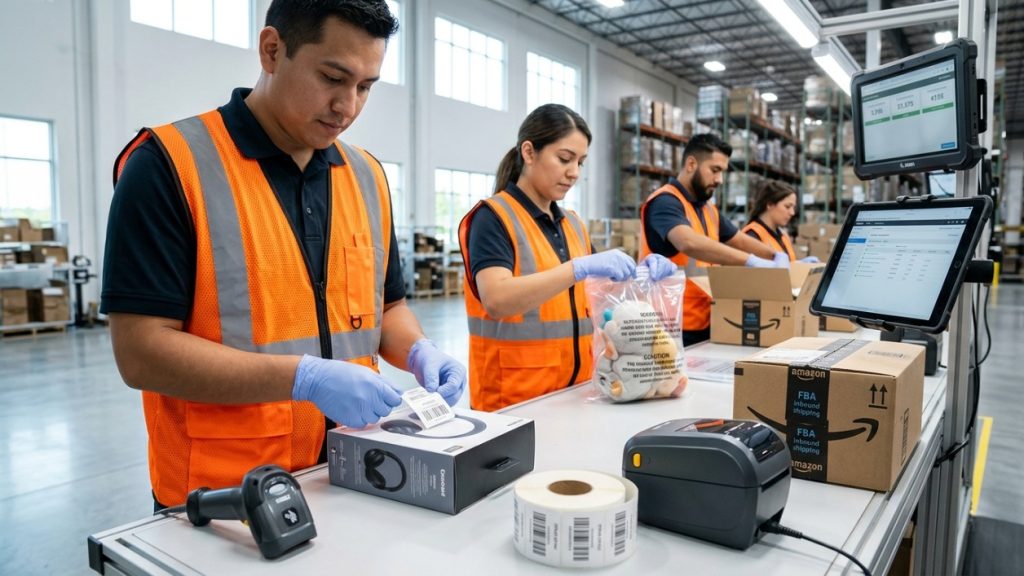
Your provider must handle the non-negotiables without prompting. That means correct FNSKU barcodes that cover the original UPC, suffocation warnings on poly bags with a five-inch or larger opening, master cartons kept under the weight and size limits, and approved dunnage instead of loose fill. Ask how they stay current as Amazon’s inbound standards change, because they change often. Our breakdown of the packaging rules every seller must know in 2026 is a useful reference point for the standards a good partner should already meet.
Transparent Pricing
Per-unit pricing is only half the picture. A trustworthy prep center discloses material costs, storage charges, and any minimum processing fees upfront. Vague quotes that hide add-ons are a red flag. You want a complete fee schedule you can model against your actual volume, so you can forecast cost per unit accurately rather than discovering surprise line items on your first invoice.
Speed and Turnaround
Slow check-ins cause stockouts and lost Buy Box time. Look for documented turnaround windows, ideally measured in hours rather than days, and ask about capacity during peak season when your volume spikes hardest. A provider that handles 48-hour turnaround in March but quietly stretches to two weeks in November is not a partner you can build a Q4 plan around.
Location and Routing
Geography quietly shapes your landed cost. A center positioned within a short drive of a major fulfillment center lets you ship in smaller, more frequent batches, which trims storage fees and keeps replenishment fast. Strategic placement near multiple fulfillment centers also means you are not locked into a single routing path, which protects you when Amazon redirects inventory to a different region. The right location decision can reduce your inbound freight spend more than most sellers expect.
Visibility and Accuracy
Real-time inventory tracking and a documented accuracy rate (aim for 99 percent or higher) tell you the operation runs on systems, not guesswork. Software access lets you see what is happening to your stock without sending an email and waiting for a reply. Strong visibility also makes it easier to catch a discrepancy early, before it becomes a stranded-inventory problem inside Amazon’s network.
Scalability and Multi-Channel Support
Your prep needs today are not your prep needs in eighteen months. A capable partner can flex labor, add capacity, and onboard new product categories without disrupting your existing flow. Many sellers also expand beyond Amazon, so prep support for Walmart, eBay, Etsy, and Shopify becomes valuable as you grow into an omnichannel operation. Choosing a provider that already supports several marketplaces saves you a painful migration later, when switching prep centers mid-growth is the last thing you want to manage.
If you are weighing whether to outsource at all, our guide on when to outsource to a prep centre as you scale covers the tipping points clearly. For a broader view of fulfillment models, the comparison of 3PL versus in-house shipping is worth reading before you commit, especially if you are still deciding whether to keep any prep work in-house.
Questions to Ask Before You Sign
A short interview surfaces most problems early. Ask candidates:
-
- What is your documented inbound accuracy rate, and how do you measure it?
- How do you keep up with Amazon’s compliance changes?
- What does your full fee schedule include, with no exceptions?
- How close are you to a major fulfillment center, and how many do you route to?
- Can you support my peak volume and additional sales channels as I grow?
- What happens if a shipment is rejected, and who absorbs the cost?
Honest, specific answers signal a real operational partner. Hesitation, vague figures, or canned responses signal a liability dressed up as a service provider.
Watch for Red Flags in a FBA Prep Partner
Some warning signs show up before you ever sign a contract. Be cautious if a provider cannot share an accuracy rate, dodges questions about peak-season capacity, or quotes a single per-unit number with no detail behind it. Long response times during the sales process tend to predict long response times once you are a customer. A partner that treats your early questions seriously is far more likely to treat your inventory the same way.
Making the Final Decision
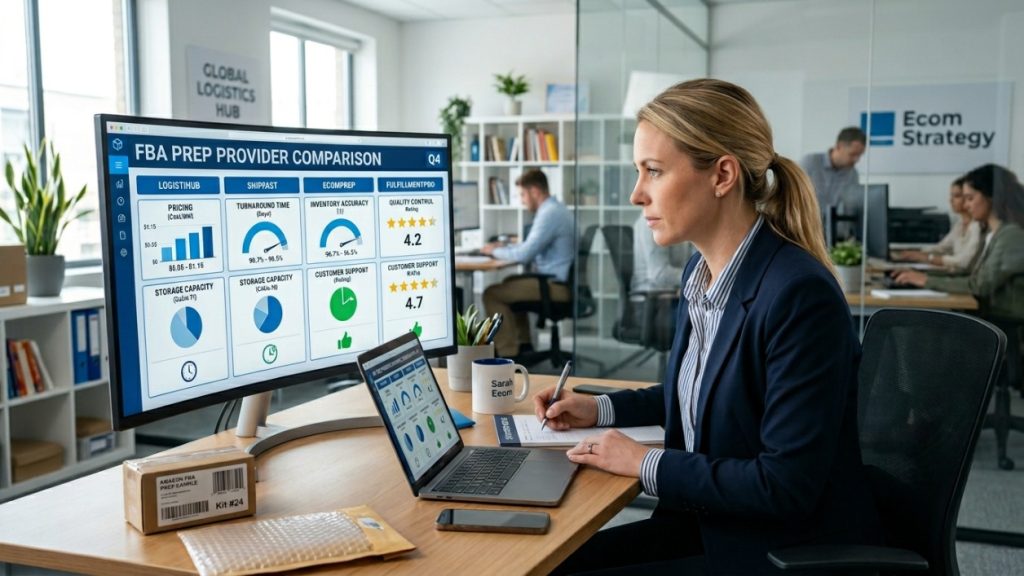
The best provider for you is the one whose strengths line up with your catalog, your volume, and your growth plan. Run every candidate through the same framework so you are comparing on substance, not sales pitches. A prep center that is compliant, transparent, fast, and well located turns a regulatory burden into a quiet competitive edge.
For sellers who want all of this under one roof, Universal Shipping Inc. brings compliant labeling, fast turnaround, strategic routing, and real-time visibility into a single fulfillment operation built for the post-2026 landscape. You can explore the full range of logistics and fulfillment solutions by Universal Shipping Inc. to see how a structured prep workflow fits into your wider supply chain.
Choosing well now saves you from chargebacks, stranded inventory, and the slow margin erosion that comes from a partner who treats prep as an afterthought. Take the time to evaluate properly, and your fulfillment becomes one less thing to worry about.