
Direct Injection Shipping: How It Works and When It Pays
Direct injection shipping means moving your parcels or pallets in bulk to a point near the destination, then handing them to a carrier’s local network instead of paying that carrier to haul each package across the country. Done well, it cuts the per-package cost on long-distance lanes and shortens transit. Done badly, it adds a handoff that nobody owns. The method works when one operator controls the trucking, the warehouse sort and the final delivery, which is how we at Usiship approach it: transportation, warehousing and last-mile delivery under one platform.
TL;DR
- Direct injection (often called zone skipping) means consolidating freight, trucking it to a regional point, and inducting it into a carrier’s local network close to the buyer.
- It pays when you have enough steady volume to a region to fill a truck or pallet, and when the carrier’s long-zone rates are higher than your linehaul cost per parcel.
- The risks sit at the handoff: carrier drop-off rules, labeling, cutoff times and damage in the bulk leg.
- Palletizing, pick-and-pack accuracy and tracking visibility decide whether the savings survive.
- If you landed here looking for shipping injectable medications to patients, jump to the short note near the end of this article.
Table of Contents
- What direct injection shipping means
- How direct injection works, step by step
- When the math works: a worked example
- What you need in place before you start
- Where direct injection goes wrong
- Importers: injection after the port
- A note if you meant injectable medications
- Perspective
- Put your lanes in front of us
- FAQ
- Sources
What direct injection shipping means
Every major U.S. parcel carrier prices a package by weight and by zone, a distance band between the origin and the delivery address. Zones are numbered, and the higher the number, the farther the package travels and, as a rule, the more it costs. A published zone breakdown shows the effect: the same two-pound package costs noticeably more in a far zone than in a near one.
Direct injection changes where the carrier’s clock starts. Instead of handing the carrier 500 individual parcels in Los Angeles that are all headed to the Northeast, you load them on a pallet or into a truck, drive the freight east yourself, and induct it into the carrier’s network in the destination region. The carrier then prices and delivers those parcels as short-zone shipments.
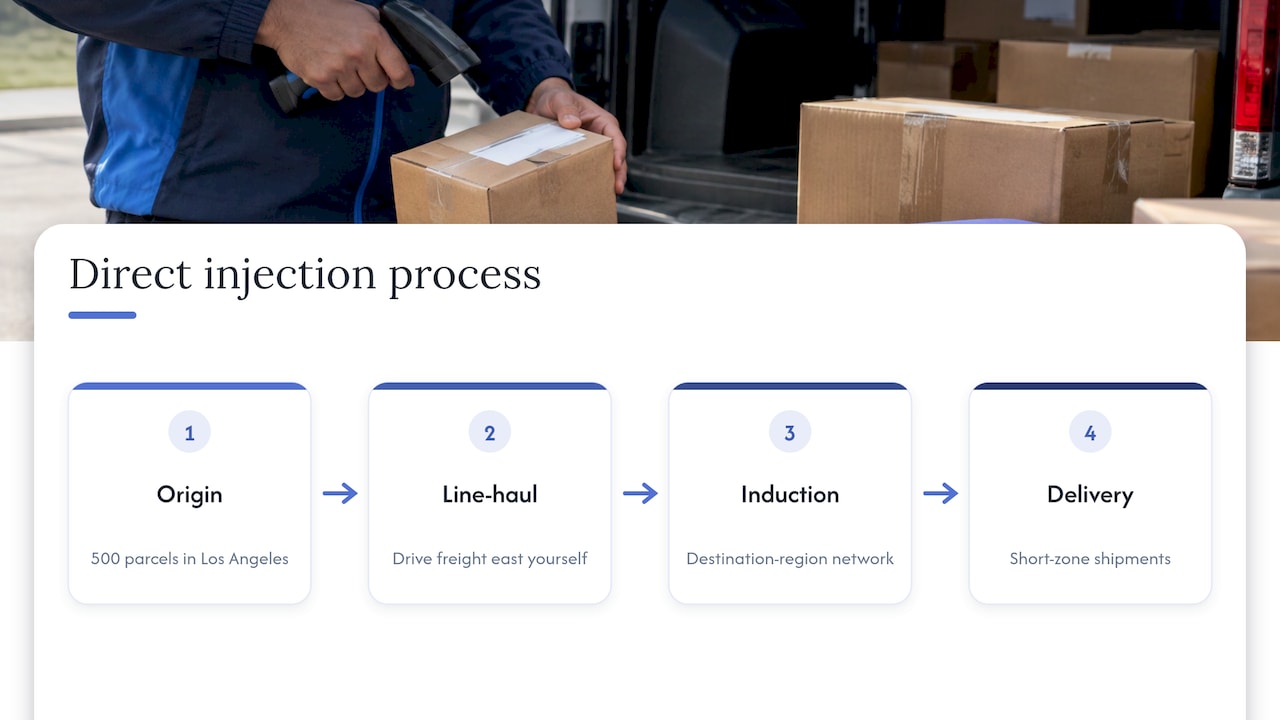
The term is used loosely. You will also hear zone skipping, regional injection, line-haul injection and destination entry. They all describe the same idea: you pay for the long middle leg as bulk freight, which is usually cheaper per unit than parcel pricing, and the carrier only handles the last stretch.
How it differs from regular parcel and LTL shipping
| Standard parcel | LTL freight | Direct injection | |
|---|---|---|---|
| What moves cross-country | Individual parcels in the carrier’s network | Palletized freight on a shared truck | Consolidated parcels or pallets on your own linehaul |
| Who prices the long leg | The parcel carrier, by zone | The LTL carrier, by class and weight | You or your forwarder, as freight |
| Who delivers the last mile | The parcel carrier | Usually delivered to a dock | The parcel carrier or a local last-mile operator |
| Best for | Low or irregular volume | Pallet-size orders to businesses | Steady parcel volume to one region |
How direct injection works, step by step
1. Find the lanes worth skipping
Start with your shipping data. Group last quarter’s orders by destination region and by the zone you paid for. The lanes that matter combine high volume with high zones. A warehouse in the West shipping to Florida, Georgia and the Carolinas every day is a candidate. A handful of orders a week to Maine is not.
2. Consolidate the freight
Parcels bound for the same region are staged together, labeled with the destination carrier’s labels and loaded onto pallets or into a trailer. This is where pick accuracy matters: a mislabeled parcel is now a mis-injected parcel, found only after the truck has already driven 2,000 miles. Our guide to a pick-and-pack pilot that cuts errors covers the checks worth running before volume goes into bulk loads.
3. Build pallets that survive the bulk leg
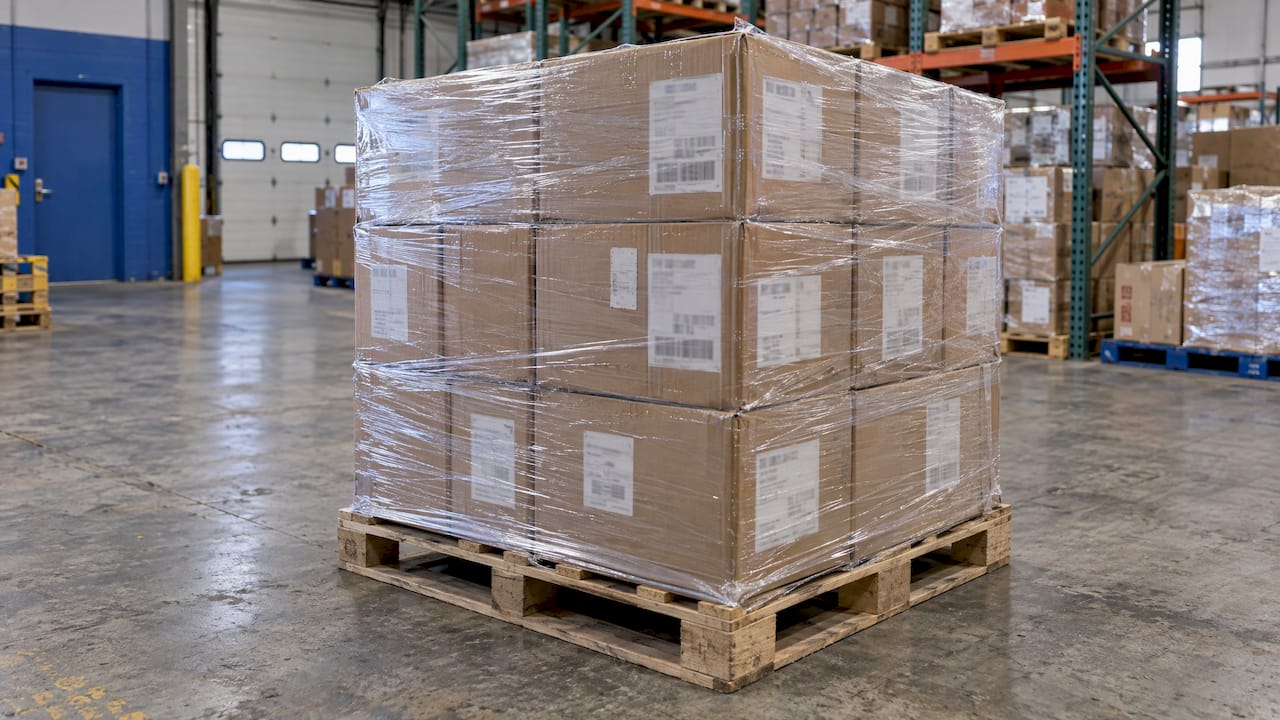
Parcels stacked loosely on a truck get crushed. Pallets that fail LTL inspection get reclassed or refused. Follow the basics of palletizing freight so it passes LTL: stable footprint, squared edges, wrap that holds the load, labels visible on two sides. For the wider picture on losses in transit, see our cargo damage prevention guide.
4. Move the linehaul
The bulk leg is moved by full truckload (FTL) when you fill a trailer, or by less-than-truckload (LTL) when you ship a few pallets. Truckload buys a dedicated trailer and a predictable schedule. LTL splits the cost across shippers but adds terminal stops. Our overview of the freight forwarding process from quote to delivery shows how a booked move is planned and tracked.
5. Induct into the carrier network
This is the injection itself. Each carrier sets its own rules for where freight can be dropped (a regional hub, a sortation center or a local delivery unit), what labeling and manifest format it requires, how parcels must be presented, and the daily cutoff time for same-day sort. Those rules are set in your carrier agreement, so the agreement should be read before the first truck rolls. Missing the cutoff by an hour can cost a full day of transit.
6. Track and reconcile
Once the carrier scans the parcels, you track them as usual. Reconcile what was loaded against what was scanned at induction. A gap between the two is the early warning that something was lost, mislabeled or left behind.
When the math works: a worked example
The figures below are assumptions chosen to show the arithmetic, not carrier quotes. Substitute your own rates.
Suppose you ship 1,000 parcels a month from a West Coast warehouse to customers in the Southeast. Your carrier charges $12.00 per parcel in the far zone. If you inject those parcels near the Southeast, the carrier charges $8.00 per parcel in a short zone. The linehaul, consolidation and handling add $1.50 per parcel.
- Standard parcel: 1,000 x $12.00 = $12,000
- Direct injection: 1,000 x ($8.00 + $1.50) = $9,500
- Savings: $2,500 a month, or $0.25 less per parcel for every dollar… more simply, about 21% on this lane
The result swings on three variables: how full the truck or pallet is, how much the carrier discounts short zones under your agreement, and how many days you hold parcels to build a full load. Waiting a week to fill a pallet can cost you more in customer experience than you save in postage, so many shippers set a fixed daily or twice-weekly departure and accept partial loads.
What you need in place before you start
Direct injection is a logistics workflow, not a rate trick. Four things have to line up.
A carrier agreement that allows it. Confirm drop locations, cutoff times, labeling and manifest rules in writing.
Steady volume to a region. Without it, trucks run partly empty and the per-parcel linehaul cost climbs past the zone savings.
A place to receive, sort and stage. Bulk freight arriving at the destination end often needs a dock, a transload or cross-dock step, and sometimes short-term storage. Warehousing and cross-docking are part of what we offer, and our warehousing and fulfillment solutions page describes the setup. For delivery appointments at receiving docks, see how to book delivery appointment freight and avoid fees.
A last-mile plan. If the carrier’s local network is not the right fit for a heavy, bulky or scheduled delivery, a dedicated last-mile operator can take over. Our explanation of B2B last-mile delivery and what it costs shows what to expect.
Where direct injection goes wrong
- Handoff gaps. Freight sits on a dock waiting for the carrier because no one confirmed the induction slot.
- Label and manifest errors. The carrier rejects parcels whose labels do not match the manifest.
- Damage in the bulk leg. Poorly built pallets compress under load, and claims disputes begin.
- Cutoff misses. Late trucks lose a transit day.
- Unclear ownership. When a parcel goes missing between the truck and the first carrier scan, shipper, trucker and carrier each point at someone else.
The common fix is a single accountable party from pickup to induction, with scans at loading, at unloading and at carrier handoff. That is the practical argument for running consolidation, linehaul and warehousing through one provider rather than three. Our first-mile article on cutting handoff losses with a staged rollout applies the same logic upstream.
Importers: injection after the port
Importers can use the same logic with containers. Instead of moving every carton to one central warehouse and then shipping parcels across the country, you can split a container’s contents at or near the port, transload them and send regional shares to warehouses or carrier hubs closer to buyers. Customs has to be settled first, and clean paperwork keeps the freight moving: see our checklist of packing list requirements that avoid holds and the customs power of attorney checks. If the port is a bottleneck, choosing the right CFS warehouse helps prevent duty and exam delays. We offer customs brokerage and freight forwarding for these moves.
A note if you meant injectable medications
The phrase also appears in healthcare, where it points to shipping injectable drugs to patients or clinics. That is a different, regulated process for pharmacies and manufacturers, and this article is not written for it. For orientation only: under USP chapter 1079.2, refrigerated products held at 2° to 8°C may have a single excursion of up to 24 hours between 8° and 15°C, and anyone moving such products across borders should also read about peptide import restrictions in the USA. Pharmacies answer to their state board of pharmacy for these shipments.
Perspective
Most shippers treat direct injection as a rate negotiation. We see it as an operations question: who builds the pallet, who drives it, who checks it in, and who is on the hook when a scan is missing.
Our approach is to put transportation, warehousing and last-mile delivery on one platform, with real-time tracking, so the handoff that makes injection risky has one owner. Full truckload and LTL linehaul, cross-docking, transloading and inventory management are all part of what we run, across all 50 states.
If you ship steady volume to a region, start with your own zone data, then talk to us about the consolidation and linehaul that would sit under it. The savings are real when the freight arrives intact and on time.
Akbar
Put your lanes in front of us
If your data shows high-zone lanes with steady volume, we can handle the pieces under an injection plan: freight forwarding, FTL and LTL, warehousing and fulfillment, cross-docking, transloading and last-mile delivery. Storage is priced at $5-6 per month per bin and $17-19 per month per pallet, and additional services are $37 per hour, as listed on our pricing page. Our 3PL fulfillment services cover the warehouse side, and the freight forwarding services page covers transportation.
FAQ
Is direct injection the same as zone skipping?
In parcel shipping, yes, the terms are used interchangeably. Both mean moving parcels in bulk to a point near the destination and entering them into the carrier’s network there, so the carrier bills a shorter zone.
How much volume do I need?
There is no fixed threshold. The test is whether you can fill a truck or enough pallets on a regular schedule to a single region, so the linehaul cost per parcel stays below the zone savings. Run your own lane data against your carrier rates.
Does it work for ecommerce orders?
Yes, when orders to a region are predictable. Ecommerce shippers often pair injection with a second warehouse closer to buyers, or with fulfillment that stores inventory regionally. Our omnichannel and ecommerce fulfillment service is built for this kind of setup.
What is the biggest risk?
The handoff. Missed cutoffs, label mismatches and freight damaged in the bulk leg are the usual causes of lost savings. Strong pallet building, manifests that match the carrier’s format and scans at each transfer reduce them.
Sources
- What Are the USPS Zones? Distance Bands and Price Impact
- USP 1079.2 Mean Kinetic Temperature in the Evaluation of Temperature Excursions