
Blanket Wrap Shipping: What Fragile Freight Owners Need to Know
Blanket wrap shipping is a padded, non-crated freight service that wraps furniture, appliances, art, and oddly shaped items in thick moving blankets, straps them inside a trailer, and delivers them without the cost or bulk of a wooden crate. It fits shipments that need cushioning but not a full crate build.
Three signs it’s the right call:
- Your item can be wrapped and strapped flat or upright in a trailer without a custom box
- You want the crew to bring it inside and unpack it, not drop a crate at the curb
- The piece is valuable enough to need padding, but not so fragile it demands multi-carrier crating
Look for a provider that runs USI Ship-style two-person delivery teams, air-ride suspension, and E-track or ratchet strap securement.
Pro Tip: If you’re shipping electronics, medical equipment, or anything vibration-sensitive, ask specifically for an air-ride trailer and no-set-off (direct) routing. Skipping the freight terminal shuffle cuts the number of times your item gets touched.
Key Takeaways
Blanket wrap shipping protects furniture, appliances, and fragile freight using padded blankets and E-track securement instead of a wooden crate, at a lower cost with faster turnaround for most domestic shipments.
| Point | Details |
|---|---|
| Definition | Blanket wrap uses padded moving blankets, stretch film, and E-track straps instead of a wooden crate. |
| Best fit | Furniture, appliances, art, and large electronics moving domestically with one careful carrier. |
| Routing changes timing | Direct routes deliver in days; consolidated routes can stretch to two or three weeks. |
| Ask about equipment | Confirm air-ride suspension, two-person crews, and no-set-off routing before booking. |
| Usiship’s role | Usiship offers blanket wrap furniture shipping with two-person crews, liftgate delivery, and itemized quotes. |
Table of Contents
- What Is Blanket Wrap Shipping, Exactly?
- What Are the Benefits of Blanket Wrap Shipping?
- How Does the Blanket Wrap Shipping Process Work?
- Which Items Work Best for Blanket Wrap, and What Gets Refused?
- How Long Does It Take and What Does It Cost?
- How to Prepare Your Shipment and What Happens at Delivery
- How Do You Choose a Blanket Wrap Provider?
- Why Air-Ride Trailers and Trained Crews Actually Matter
- When Does Blanket Wrap Beat Crating or White-Glove?
- Get a Blanket Wrap Quote With a Two-Person Crew You Can Trust
- Frequently Asked Questions
- Sources
What Is Blanket Wrap Shipping, Exactly?
Blanket wrap shipping (sometimes called pad wrap) means your item gets wrapped in industrial moving blankets, secured with stretch film, and locked into place using E-track rails and straps inside the trailer instead of being built into a wooden crate. Carriers often label it “non-crated” on the bill of lading, and it’s typically run by a two-person crew who handle the wrapping, loading, and eventual unwrapping at delivery.
A few terms worth knowing before you request a quote.
- Pad wrap: another name for blanket wrap, used interchangeably by most carriers
- E-track: the horizontal rail system bolted into trailer walls that anchors straps and prevents shifting
- Air-ride suspension: a trailer system that absorbs road vibration, standard on many specialized carriers but not universal
- No-set-off routing: direct delivery without transferring your freight to another truck or terminal along the way
Blanket wrap sits between two extremes. Crating costs more and takes longer to build, but it tolerates rougher handling and multiple transshipments. Full white-glove service adds assembly, placement, and debris removal on top of the padding, at a higher price point.
What Are the Benefits of Blanket Wrap Shipping?
The appeal comes down to protection without the overhead. You skip the cost and lead time of custom crate construction, and you avoid the extra weight a crate adds to your freight bill. Many carriers also offer room-of-choice delivery, so your item ends up inside your house or office instead of curbside.
- No custom crating fees or build wait time
- Fewer materials to source, store, or dispose of after delivery
- Often includes inside delivery, since the crew is already unwrapping the piece
- Surface protection against scuffs and scratches during normal handling
The trade-off is real: a crate protects better against rough drops, stacking, or repeated transshipment, which is why high-value or international shipments still lean on crating. For a single domestic move handled by one careful crew, blanket wrap usually wins on cost and convenience. For anything crossing multiple carriers or borders, crating buys peace of mind that padding alone can’t match.
How Does the Blanket Wrap Shipping Process Work?
The process runs through five predictable stages, and knowing them helps you spot where things can go right or wrong.
- Quote and booking. You describe the item’s dimensions, weight, and pickup/delivery addresses so the carrier can confirm equipment needs.
- Pickup and wrapping. A two-person crew arrives, inspects the item, wraps it in thick moving blankets, and secures it with stretch film.
- Securement. The crew straps the item to E-track inside the trailer, often reserving upper deck space and forbidding stacking on top of it.
- Transit. The shipment moves either direct (no-set-off) or through a consolidated LTL network, depending on your route and budget.
- Delivery and inspection. The crew unwraps the item on-site so you can inspect it before signing the delivery receipt.
Routing matters more than most shippers expect. A consolidated or “milk run” route waits to fill a truck with multiple shipments along a corridor, which can stretch a cross-country delivery to two or three weeks. Direct routing on a shorter regional lane often lands in three to seven days. If your timeline is tight, ask which model your carrier is running before you book.
Which Items Work Best for Blanket Wrap, and What Gets Refused?
Blanket wrap handles most household and commercial goods that need padding but not a sealed box. Furniture, antiques, framed artwork, appliances, large electronics, and even medical equipment (paired with air-ride) all ship this way regularly.
- Sofas, cabinets, and case goods
- Antique furniture and framed art
- Refrigerators, washers, and large appliances
- Large-screen TVs and server or lab equipment
- Oddly shaped or oversized pieces that don’t fit standard packaging
Some freight gets turned away or surcharged. Hazardous materials are a hard no for most carriers. Extremely high-value pieces often require crating or additional insurance before a carrier will touch them. Items with loose or detachable components, and single-piece machinery too large for standard trailer securement, also tend to get bumped to specialized handling.
Auction houses and fine art sellers routinely recommend blanket wrap and direct-carrier handling for valuable furniture and art on domestic moves, treating it as a legitimate alternative to crating rather than a downgrade.
Disclose fragility up front, remove anything loose, and label glass or delicate edges. Skipping this step is the fastest way to end up with a damage claim and an accessorial charge you didn’t see coming.
How Long Does It Take and What Does It Cost?
Transit time depends less on distance and more on routing. A regional shipment on a direct route can land in three to five days. A coast-to-coast shipment routed through consolidation can take two to three weeks, since the carrier is waiting to fill the truck with other freight along the way.
Cost is driven by a handful of factors:
- Weight, dimensions, and freight class (NMFC classification where applicable)
- Distance and whether the route is direct or consolidated
- Liftgate and inside delivery requirements
- Stair carries or long carries at pickup or delivery
- Residential address surcharges and fuel adjustments
Here’s how accessorials stack up in practice: a base quote for a cross-country dresser might look reasonable until liftgate, a residential delivery fee, and a two-flight stair carry get added. Ask for the full breakdown before you commit, not after the truck arrives.
How to Prepare Your Shipment and What Happens at Delivery
A little prep work upfront prevents most delivery disputes. Photograph your item from multiple angles before pickup, remove any loose hardware or shelving and bag it separately, and tape or wrap exposed glass edges. Tell the carrier about fragility in writing, not just verbally at pickup.
- Photograph the item’s condition before the crew arrives
- Remove and label loose parts, hardware, and glass shelving
- Note any existing damage so it’s on record before transit
- Confirm inside delivery and liftgate needs in writing beforehand
At delivery, the crew unwraps the item on-site and you inspect it before signing anything. Do not sign a clean delivery receipt if you spot damage. Note it directly on the paperwork with specifics.
Pro Tip: Photograph serial numbers and any damage before you sign the proof of delivery. A vague note like “possible damage” holds far less weight in a claim than “two-inch scratch on left rear panel, photo attached.”
How Do You Choose a Blanket Wrap Provider?
Not every carrier that offers blanket wrap runs the same equipment or crew standards, so the questions you ask before booking matter as much as the price quote.
- Do you use air-ride trailers on this lane, or standard suspension?
- Is a two-person crew assigned to wrap, load, and unload?
- Are liftgate and inside delivery included, or billed separately?
- What’s the full accessorial list, and can I see it in writing?
- What’s your claims process if something arrives damaged?
Ask for a written quote that itemizes every accessorial rather than a flat number, and confirm whether the carrier offers a guaranteed delivery window or just an estimate. Red flags include a carrier that won’t put accessorials in writing, can’t give you a local driver contact, or gets vague when you ask how claims get filed and paid. Those gaps tend to surface at the worst possible moment, mid-delivery.
Why Air-Ride Trailers and Trained Crews Actually Matter
Vibration is the quiet damage source most shippers underestimate. Standard trailer suspension transmits road impact directly into the cargo area, and over hundreds of miles that adds up to loosened joints, cracked veneer, and shifted internals on sensitive equipment.
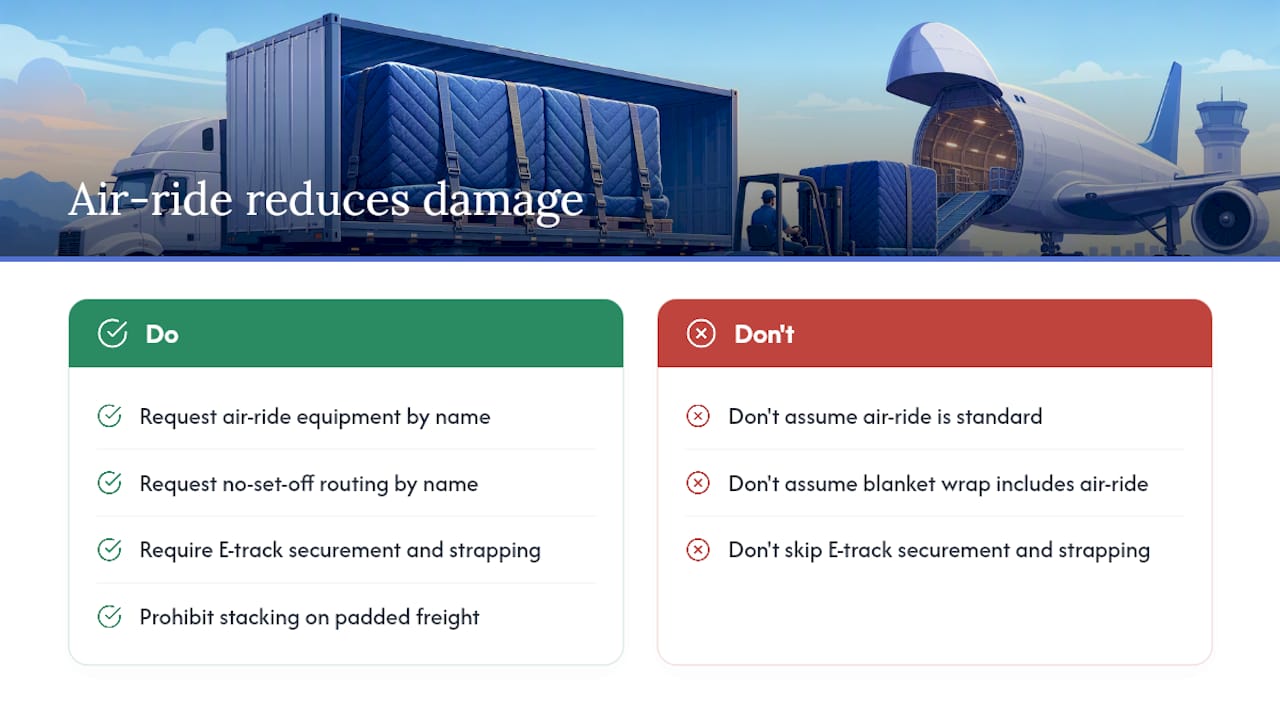
Carriers that run air-ride suspension and prohibit stacking on padded freight consistently report smoother transit and fewer surface claims on long hauls, particularly for electronics and furniture with delicate finishes.
E-track securement does the rest of the work. Strapping an item both vertically and horizontally stops it from sliding or tipping when the truck brakes or turns, which is where most in-transit scuffing actually happens.
Pro Tip: For medical devices or lab electronics, request air-ride equipment and no-set-off routing by name when you book. Don’t assume it’s standard, since plenty of carriers offer blanket wrap without either.
When Does Blanket Wrap Beat Crating or White-Glove?
Blanket wrap earns its keep on domestic, surface-sensitive shipments where a crate would add cost and weight without meaningfully improving protection. A sofa, a dining set, or a well-packed appliance moving state to state rarely needs a crate.

Crating still makes sense for extremely high-value pieces or anything passing through multiple handlers internationally, where rough handling is more likely. If you’re not sure which category your shipment falls into, Usiship’s furniture shipping team can walk through both options and recommend the one that fits your item and budget.
Get a Blanket Wrap Quote With a Two-Person Crew You Can Trust
If you’ve been comparing carriers and running into vague pricing or unclear equipment promises, Usiship builds its blanket wrap service around the specifics that actually protect your freight: two-person crews, air-ride trailers where the lane calls for it, and E-track securement instead of loose straps thrown over a pallet.
Usiship’s furniture shipping services cover liftgate and inside delivery, and the claims process is handled directly rather than routed through a maze of subcontractors. Businesses managing recurring freight can also look at Usiship’s logistics and transportation options if blanket wrap is one piece of a larger shipping need. Request an itemized quote through Usiship that spells out every accessorial before you book, so there’s nothing to guess at when the truck shows up.
Frequently Asked Questions
Is blanket wrap shipping safe for fragile items?
Yes, for most fragile household and commercial goods. The blankets absorb surface impact and the E-track securement stops shifting, though extremely delicate or high-value pieces sometimes still call for a crate.
Does blanket wrap shipping cost less than crating?
Generally yes, since you skip custom crate construction and the added shipping weight. Your final cost still depends on distance, liftgate needs, and any stair or residential accessorials.
How long does blanket wrap shipping take?
Regional direct shipments often arrive in three to five days. Cross-country shipments routed through consolidation can take two to three weeks.
Will the crew bring my item inside?
Many blanket wrap carriers include inside delivery and liftgate service by default, but always confirm this in writing since some carriers bill it separately.
What should I do if my item arrives damaged?
Inspect before signing, note specific damage on the delivery receipt, and photograph it immediately. A vague note weakens a claim; a detailed one with photos strengthens it.