
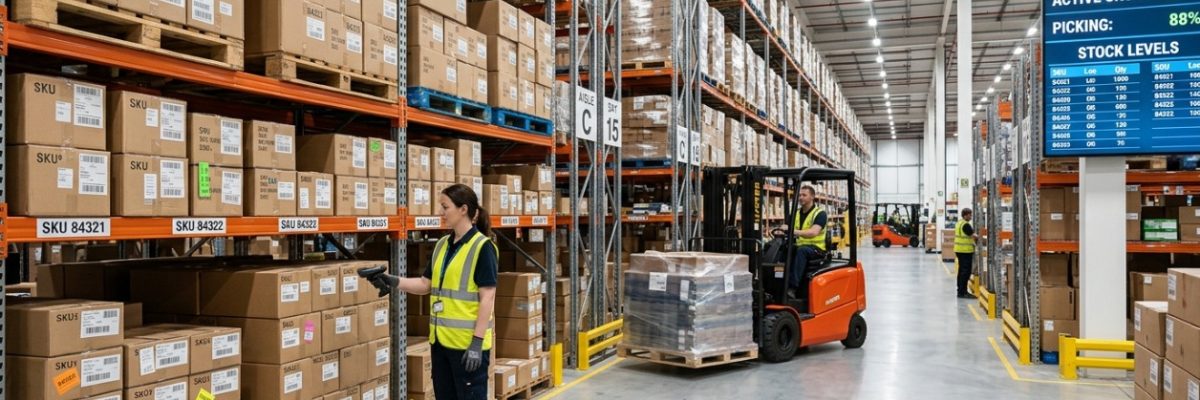
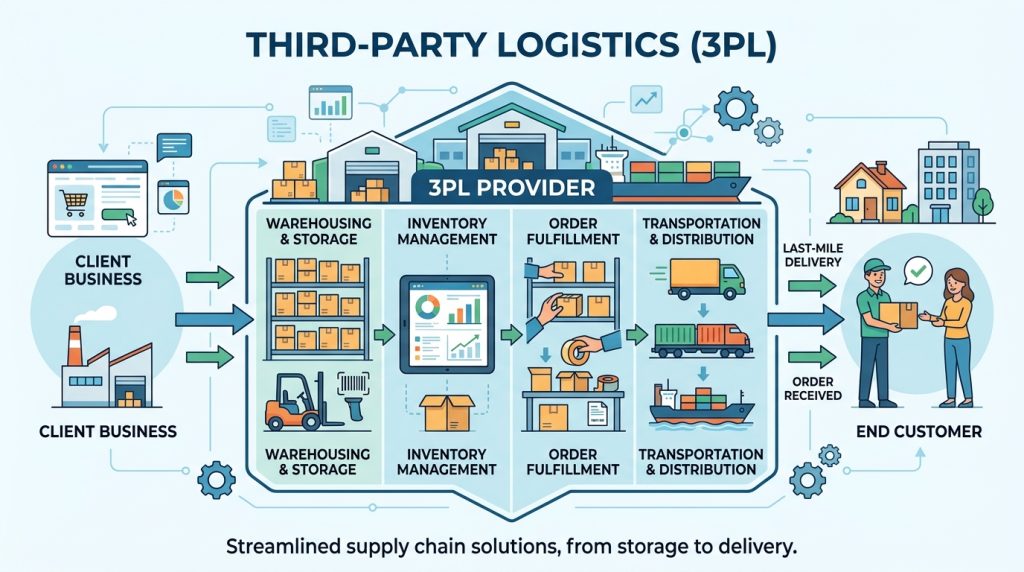
A full-service third-party logistics arrangement bundles every physical step between a finished product and a satisfied customer into one managed solution. Instead of juggling separate vendors for storage, packing, and delivery, brands lean on a single outsourced partner to run the entire flow.
If you have ever wondered what actually sits inside one of these packages, this guide breaks down the core building blocks so you can compare providers with confidence. Whether you sell on Shopify, supply wholesale buyers, or ship across marketplaces, understanding each layer helps you spot gaps and hidden costs early.
Many scaling retailers eventually move their backend to a dedicated outsourced fulfillment and warehousing partner because handling it in-house drains time and capital. Below, we walk through the receiving, storage, order processing, shipping, returns, and technology elements that define a genuinely complete logistics package, and how each one keeps your orders moving smoothly from warehouse shelf to customer doorstep.
Inbound Receiving and Inventory Onboarding
When your stock arrives at a fulfillment center, the first stage of any complete logistics package is inbound handling. Containers and cartons are unloaded, counted, and inspected against your purchase orders so discrepancies surface immediately.
Each item is then scanned, assigned a SKU, and entered into the warehouse system before it ever reaches a shelf. This onboarding step matters more than people expect, because accurate receiving prevents phantom stock, overselling, and the costly fulfillment errors that follow.
Quality checks at this point catch damaged goods and mislabeled units before they ship to a buyer. Good providers also handle barcoding, repackaging, and pallet organization during intake, ensuring everything is shelf-ready.
For sellers importing from overseas, this stage often connects directly to freight arrival and customs release. A well-run receiving process sets the tone for the whole operation, since everything downstream depends on knowing exactly what you have and where it lives.
Organized Storage and Inventory Control
Once goods are received, they need a home. Storage and inventory control form the backbone of a complete logistics package, covering everything from pallet racking and bin locations to climate-sensitive or high-value zones. Professional warehousing services assign each SKU a tracked position so pickers can retrieve items quickly without guesswork.
Beyond shelving, this layer includes cycle counting, stock rotation methods like FIFO, and real-time visibility into available units across every sales channel. Strong inventory control prevents stockouts during demand spikes and stops capital from sitting idle in slow-moving products.
Many partners also offer demand forecasting and low-stock alerts so you reorder at the right moment. Space is billed flexibly, meaning you pay for what you use rather than leasing a fixed building.
This adaptability is one of the biggest reasons brands outsource, because storage scales up for peak season and contracts afterward, keeping overhead predictable and tied to actual sales volume.
Pick, Pack, and Order Processing
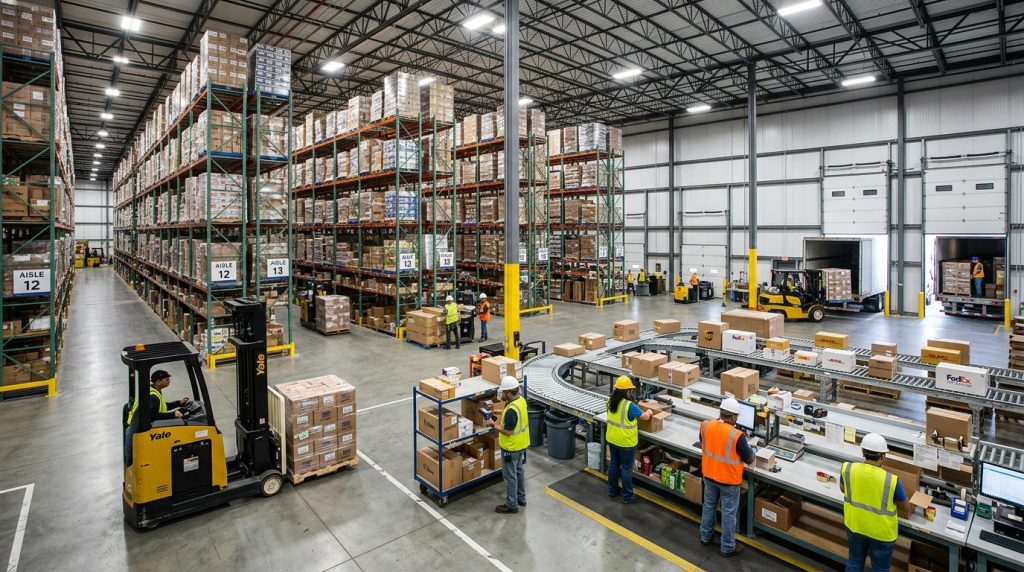
The heart of daily operations is order processing, the pick, pack, and dispatch cycle that turns a customer click into a packed parcel. When an order lands, the system routes it to the warehouse floor, where staff gather the correct items using scanners that confirm accuracy at every touch.
Packing follows, with right-sized boxes, protective materials, and branded inserts where requested. Speed and precision here directly shape customer satisfaction, since wrong or late shipments erode trust fast. A capable package supports same-day or next-day cutoffs, batch picking for efficiency, and automated routing to the most suitable carrier.
Multi-channel sellers benefit when order fulfillment for online stores syncs across Shopify, Amazon, and other platforms automatically. This eliminates manual data entry and the mistakes it breeds. Done well, this stage quietly handles thousands of orders a day while keeping error rates near zero, freeing you to focus on growth.
Kitting, Assembly, and Value-Added Services
Beyond standard picking and packing, a full logistics package usually includes value-added services that customize how products leave the warehouse. Kitting bundles separate SKUs into ready-to-sell sets, think subscription boxes, gift packs, or promotional multipacks assembled before an order even arrives.
Light assembly, labeling, ticketing, and shrink-wrapping fall under this umbrella too. These extras let you launch bundles and seasonal offers without touching the inventory yourself. For brands preparing stock for retail or marketplace channels, prep work such as Amazon FBA preparation ensures shipments meet strict compliance rules and avoid rejection fees.
Custom packaging, gift messaging, and branded unboxing experiences also live here, helping smaller sellers compete with larger ones on presentation. Because these tasks are handled at scale, they cost far less than doing them manually in a back room. Value-added work is often what separates a basic storage vendor from a true end-to-end fulfillment partner.
Outbound Shipping and Carrier Coordination
Getting parcels to the door is where a logistics package proves its worth. Outbound shipping covers carrier selection, rate shopping, label generation, and handoff to delivery networks. A strong provider maintains relationships with multiple carriers, then automatically picks the most cost-effective option for each destination and weight.
This is where negotiated volume discounts pass real savings to you. Coverage spans ground, expedited, freight, and final-mile delivery, with last-mile delivery support ensuring packages reach customers quickly across major regions.
Tracking numbers flow back to your store and to buyers automatically, reducing those repetitive “where is my order” inquiries. For larger consignments, the package may include palletized freight and distribution to retail partners or other warehouses.
Address validation and delivery optimization further cut failed deliveries and reshipment costs. Because shipping is typically the single largest fulfillment expense, intelligent carrier coordination has an outsized impact on both your margins and your delivery experience.
Returns Handling and Reverse Logistics
No complete logistics package is finished without a plan for goods coming back. Returns handling, often called reverse logistics, covers receiving returned items, inspecting their condition, and deciding whether to restock, refurbish, or dispose of them.
A smooth process here protects both your revenue and your reputation, since clumsy returns frustrate customers and lock up sellable inventory. Providers typically issue return labels, log each item back into the system, and update stock counts the moment a parcel is processed.
Damaged or defective units are separated for quality review, while resalable goods rejoin available inventory quickly. For high-volume sellers, automated return authorizations and clear reporting reveal why products come back, exposing trends you can fix at the source.
Efficient reverse logistics also speeds up refunds and exchanges, which directly influences whether shoppers buy again. Treating returns as a managed part of the package, not an afterthought, keeps your operation profitable and customer-friendly.
Technology, Integration, and Supply Chain Visibility
Modern fulfillment runs on software, so technology is a defining part of any serious logistics package. At the center sits a warehouse management system that tracks every unit, automates picking routes, and syncs orders across your sales channels in real time.
Integrations connect this platform to your storefront, marketplaces, and accounting tools, removing manual uploads and the errors they cause. Dashboards give you live inventory counts, order status, and shipping analytics from a single login.
This visibility extends across your whole supply chain operation, helping you forecast demand, monitor performance, and catch bottlenecks before they hurt. Predictive restock alerts, SKU-level reporting, and shipping optimization turn raw data into decisions that protect margins.
The best packages also offer API access so developers can build custom workflows. In short, the technology layer is what ties receiving, storage, fulfillment, and delivery into one transparent system you can actually trust and control.
Choosing a Package That Fits Your Brand
The right logistics package should match your order volume, product type, and growth plans rather than forcing you into a rigid template. Before signing, ask how pricing is structured, which integrations are included, how quickly the partner scales during peak season, and what reporting you receive.
A genuinely full-service arrangement folds receiving, storage, fulfillment, shipping, returns, and technology into one accountable relationship, so you are not stitching vendors together yourself. This consolidation is exactly why outsourcing keeps gaining ground among ecommerce and B2B brands alike.
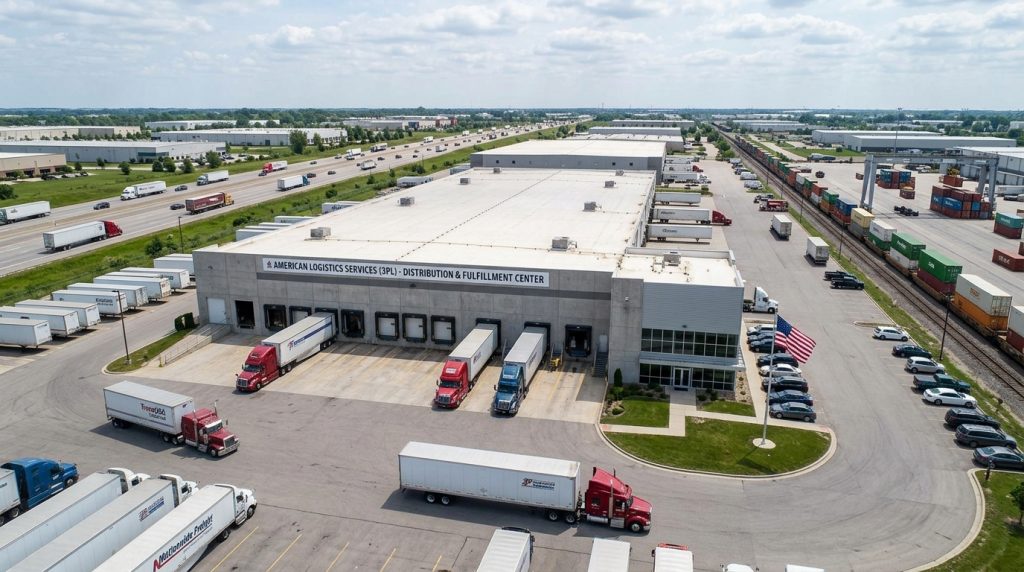
Universal Shipping Inc. combines a large California facility, nationwide distribution, and modern fulfillment technology to deliver that all-in-one experience for scaling sellers. Reviewing each element side by side helps you see how the pieces connect into a single workflow. Choosing wisely here means fewer headaches, lower costs, and a backend that grows in step with your sales.
Frequently Asked Questions
What is a full-service 3PL package?
It is a bundled solution where one provider manages receiving, storage, order fulfillment, shipping, and returns for your brand.
Does a logistics package include returns management?
Yes. A complete package handles return processing, inspection, restocking, and reporting as part of reverse logistics.
Can I scale storage up and down seasonally?
Absolutely. You pay for the space you use, so capacity expands during peak season and shrinks afterward.
What technology comes with a logistics package?
Most include a warehouse management system, sales-channel integrations, real-time tracking, and analytics dashboards.
Is outsourced fulfillment suitable for small businesses?
Yes. Flexible, usage-based pricing makes it accessible to small and fast-growing sellers alike.