
3PL Logistics Services vs. In-House Shipping: Which Is Better for Your Business in 2026?
Choosing the wrong fulfilment model can cost your business more than just money, it can slow your growth and frustrate your customers. In this guide, we compare Third-party logistics against in-house shipping to help you make a smarter, more informed decision for 2026.
What Are 3PL Logistics Services?
3PL services (third party logistics solutions) refer to outsourcing your warehousing, fulfilment, shipping, and supply chain operations to a specialized external provider. 3PL logistics services handle everything from receiving inventory to last mile delivery services, so you don’t have to.
Common services offered by a 3PL provider include:
- Warehousing and inventory management (3PL warehouse services).
- Order picking, packing, and shipping.
- FBA prep services and Amazon FBA prep service support.
- Freight forwarding services for domestic and international shipments.
- Last mile delivery services.
- Returns processing and reverse logistics.
What Is In-House Shipping?
In-house shipping means your business manages all fulfilment operations internally. You lease or own warehouse space, hire staff, purchase equipment, and handle every step of the shipping process yourself.
This model gives you direct control but comes with significant overhead, especially as order volumes grow.
3PL vs. In-House Shipping: How They Compare
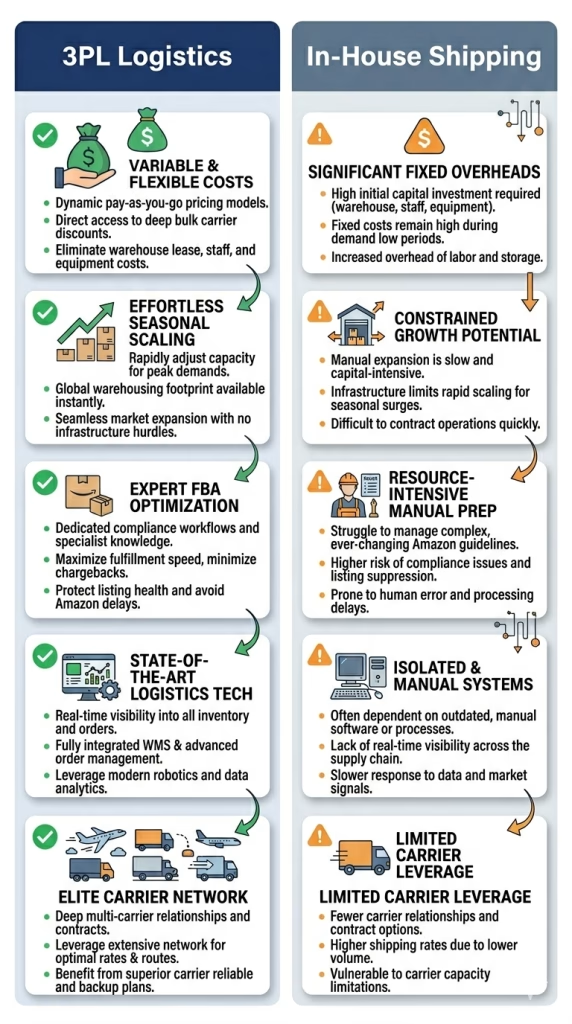
When comparing both models, the differences become clear quickly. 3pl fulfilment services operate on a pay-as-you-go model, meaning your costs scale with demand rather than sitting as fixed overhead. In-house shipping requires heavy upfront investment in warehouse space, staff, and equipment regardless of order volume.
From a scalability standpoint, 3PL warehouse services absorb volume spikes naturally, while in-house operations require new investment every time you grow. A 3PL logistics service provider also brings built-in specialist knowledge, advanced warehouse management technology, and established carrier relationships. For Amazon sellers specifically, most 3PL providers include FBA prep centers as part of their offering, something that requires entirely separate setup and management when handled in-house.
Key Benefits of Using 3PL Logistics Solutions
1. Cost Efficiency Without Compromise
Running your own warehouse means paying for rent, utilities, equipment, and staff year-round, even during slow seasons. With 3PL fulfilment services, you only pay for what you use, converting fixed overhead into a flexible cost model that grows with your revenue.
2. Built-In Amazon FBA Prep Support
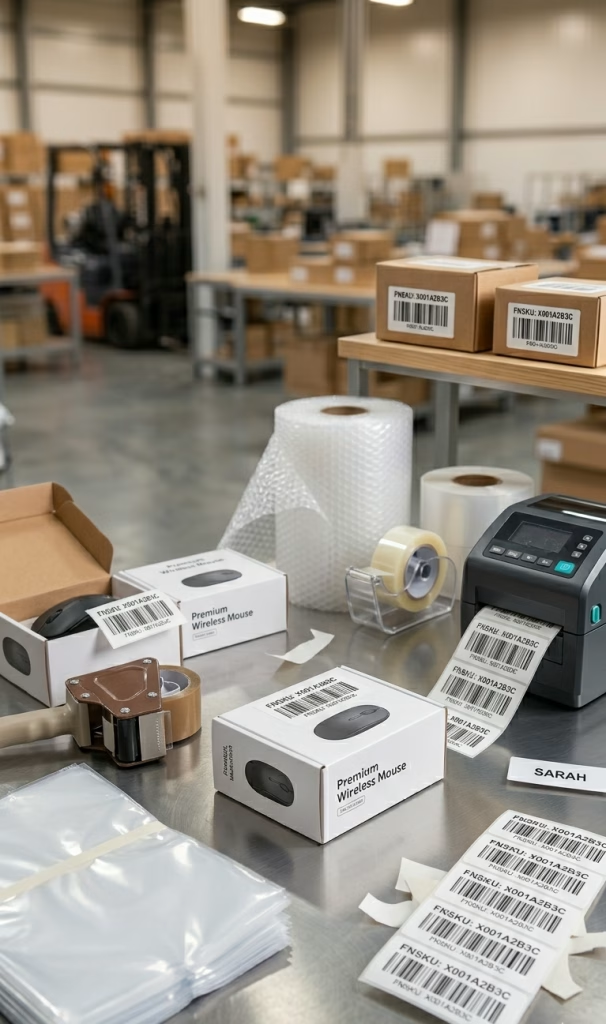
Most 3PL providers include FBA prep centres as part of their offering. From FNSKU labelling to poly bagging and bundling, reliable Amazon FBA prep services ensures your inventory meets Amazon’s requirements before it reaches a fulfilment centre, reducing rejections and costly delays.
3. Access to Advanced Freight Forwarding Services
Established 3PL providers maintain strong relationships with carriers and freight forwarding services. This gives your business access to better shipping rates, faster transit times, and smoother customs clearance, advantages that are difficult to replicate in-house.
4. Scalability During Peak Seasons
Seasonal spikes can overwhelm an in-house operation. 3PL warehouse services are built to absorb volume fluctuations without requiring you to hire temporary staff or expand your facility. Whether it’s Black Friday or a surprise viral product, your fulfilment stays on track.
5. Faster Last Mile Delivery Services
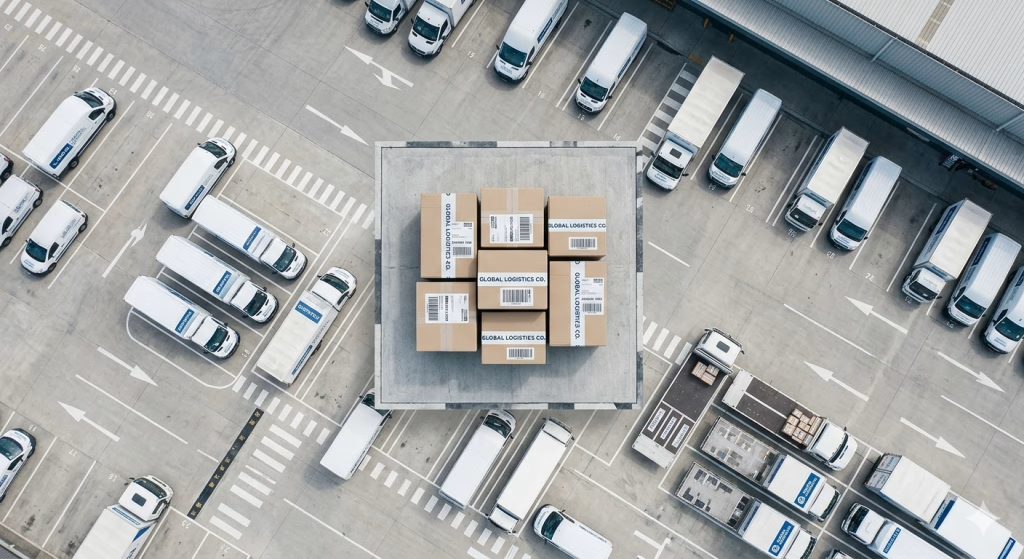
Leading 3PL providers have optimized last mile delivery services through regional distribution networks, ensuring faster and more reliable delivery to customers across the US, directly impacting satisfaction and repeat purchases.
When In-House Shipping Makes Sense
In-house shipping isn’t always the wrong choice. It can work well when you have extremely high and consistent order volume that justifies full infrastructure investment, or when your products require highly specialized handling that most third-party logistics solutions cannot accommodate.
It also makes sense if you have strict brand packaging requirements that demand complete internal oversight. However, for most growing e-commerce brands and small to mid-sized businesses, the cost and effort of building in-house fulfilment rarely outperform outsourcing to a qualified 3PL logistics service provider.
How to Choose the Right 3PL Partner
Selecting the right provider is just as important as the decision to outsource. Here’s what to evaluate:
- Service range: Does the provider offer FBA prep services, freight forwarding, and last mile delivery under one roof?
- Location: Are their 3PL warehouse services positioned near your customers or Amazon fulfilment centres?
- Technology: Do they offer real-time inventory tracking and shipment visibility?
- Experience: Do they have a proven track record with businesses in your industry?
- Pricing transparency: Are costs clearly outlined with no hidden fees?
- Scalability: Can they handle your growth without service degradation?
Industry Insight
The global 3PL market is projected to exceed $1.3 trillion by 2026, driven by e-commerce growth and demand for flexible fulfilment. usiship is positioned at the centre of this growth, helping businesses of all sizes tap into enterprise-level logistics. Businesses outsourcing logistics consistently report improvements in order accuracy, delivery speed, and customer satisfaction.
Step-by-Step: How 3PL Fulfilment Services Work
- Inventory sent to 3PL warehouse: Products ship from your supplier directly to the provider’s facility
- Receiving and inspection: Items are checked, counted, and logged into the inventory management system
- FBA prep and labelling: Products requiring Amazon FBA prep service support are processed and made compliant
- Order fulfilment: As orders come in, items are picked, packed, and shipped
- Last mile delivery: Packages move through the carrier network to reach the end customer
- Returns processing: Returned items are received, assessed, and restocked or disposed of as needed
Conclusion
For most growing businesses, 3pl order fulfilment services offer a smarter, more scalable alternative to managing fulfilment in-house. From cost savings and FBA prep support to faster last mile delivery, the advantages are hard to ignore. Providers like usiship make it straightforward to get started with end-to-end fulfilment solutions built around your business needs. If you’re ready to simplify your operations, contact us today for a custom shipping quote.
Frequently Asked Questions (FAQs)
1. What is the difference between 3PL and fulfilment centres?
A fulfilment centre processes and ships orders. A 3PL operates these centres while also offering broader services like freight forwarding and FBA prep.
2. Are 3PL services suitable for small businesses?
Yes. 3PL eliminates warehouse investment and gives small businesses access to enterprise-level fulfilment.
3. Can a 3PL handle Amazon FBA prep?
Absolutely. Most providers handle labelling, bundling, and packaging to meet Amazon’s requirements.
4. How much do 3PL logistics services cost?
Costs vary by volume and services. Most providers charge per unit or per order, with custom pricing available.
5. What is last mile delivery and why does it matter?
Last Mile Delivery is the final step of getting a package to the customer’s door, directly impacting delivery speed and satisfaction.